36 Hours in Aarhus: Living History, Rainbow Light and the Waterfront
Verified: 16 October 2026. Suggested journey times are approximate planning allowances.
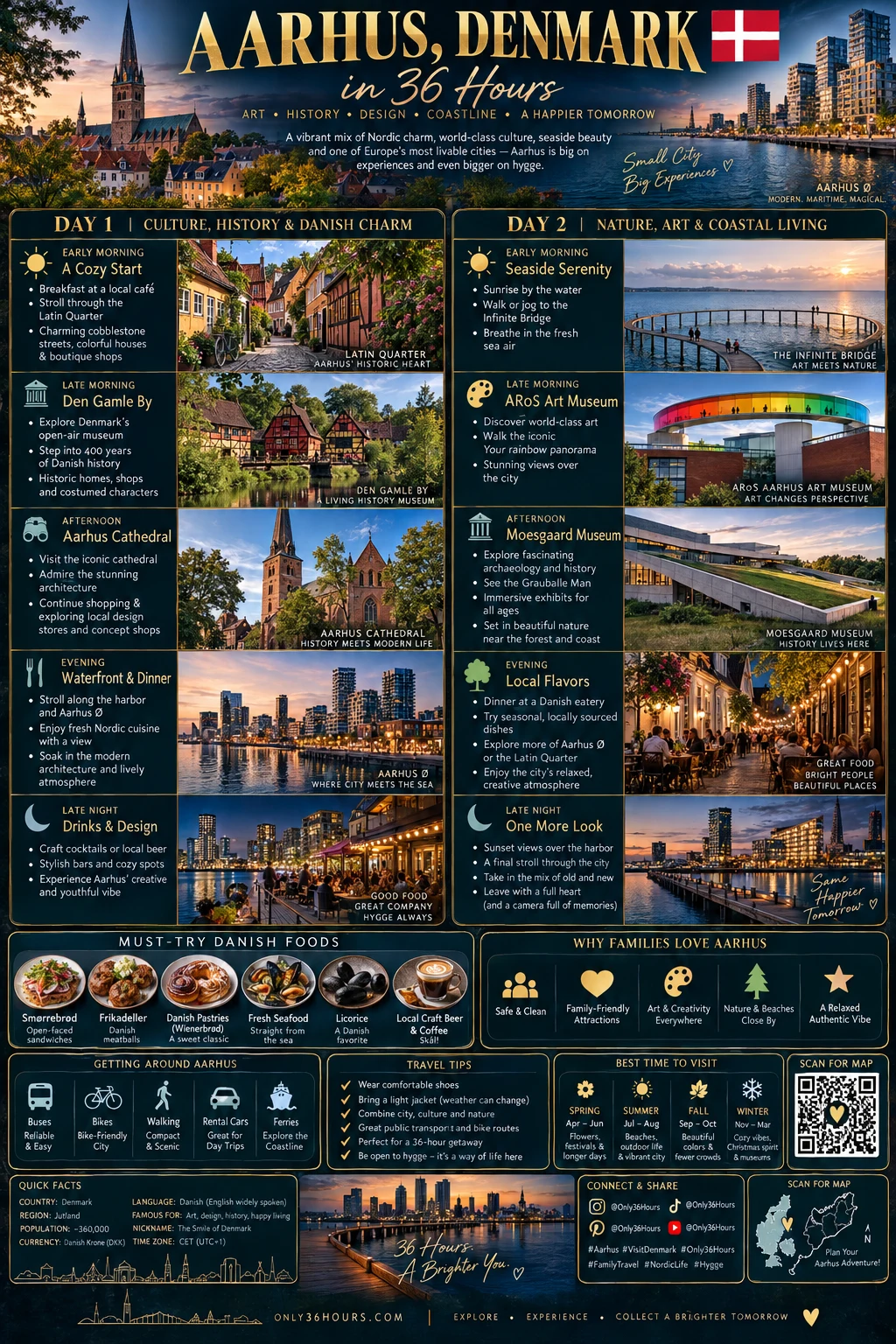
Aarhus makes an unusually satisfying short break because its contrasts are close together. You can move from reconstructed Danish streets at Den Gamle By to contemporary art at ARoS, then finish beside a working, changing waterfront. Do not add every regional attraction simply because the city is their gateway. This route gives two major museums enough breathing space and uses public places between them, making it workable for adults, families and mixed-interest groups.
Set up the stay
Choose a central base near Aarhus H, the pedestrian shopping streets or the Latin Quarter. The itinerary runs from about 09:00 on Day 1 until 21:00 on Day 2, with a hotel night between. It is walkable in sections, though the western museum area and waterfront are far enough apart to justify a bus when weather or tired feet intervene.
For buses and Letbanen, buy your ticket before boarding. VisitAarhus's transport guidance points to the RejseBillet app and the national Rejseplanen journey planner. A day ticket may help if you make several journeys, but compare it with singles for your actual plans. Airport transfers are additional to the city itinerary; check your airport carefully because Aarhus and Billund are different arrivals.
Day 1: History with room to play
09:00–10:00 | Breakfast and a gentle beginning
Drop your luggage and have breakfast near your hotel. Start with coffee, bread or a Danish pastry rather than a rushed attraction queue. If staying near the station, allow approximately 25–35 minutes to walk to Den Gamle By, or choose a bus using the day's journey planner. This is a transfer allowance, not a fixed bus duration.
10:00–13:30 | Den Gamle By
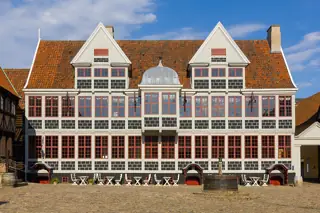
Give Den Gamle By the longest uninterrupted block of the trip. The museum interprets Danish urban life across several periods, including 1864, 1927, 1974 and 2014. That breadth makes it much more interesting than a collection of picturesque facades: compare a household, shop or street across time and let everyday details tell the story.
With children, choose a handful of areas rather than attempting every room. Let them identify an unfamiliar object and work out its purpose. Some historic buildings have thresholds and narrow interiors; ask the museum for its current accessible route if using a wheelchair or substantial pushchair. Buy tickets through the attraction's official booking route and check dated hours, which vary through the year. Lunch can be in the museum or after leaving, according to the current food options and your group's appetite.
13:30–15:00 | Botanical Garden recovery time
The adjacent Botanical Garden is a sensible change of pace. Its outdoor garden is open throughout the year, with benches, picnic space and a playground listed by the tourism office. Find a comfortable patch of park and stop moving for a while. The Tropical Houses are a separate indoor visit with their own hours, not an extension of unlimited outdoor access.
Rain does not require abandoning the whole afternoon. Shorten the garden section, find a café, and save your energy for tomorrow's museum. Avoid filling the weather gap with another large attraction simply because it is nearby.
15:00–18:00 | Latin Quarter and cathedral surroundings
Walk back towards the centre, allowing roughly 20–30 minutes. Wander through the Latin Quarter at your own pace, especially the streets around Graven. Shops and cafés make this a good place to browse without a timed admission. Continue to the cathedral surroundings; enter only when visitor access permits and services are not underway. The tourism board's historical-city overview explains the city's long development around this central area.
18:00–21:00 | A Danish dinner
Book dinner if a particular restaurant matters, especially on a weekend. Smørrebrød is a useful lunch choice earlier in the day; for dinner, look for a menu offering seasonal fish, vegetables or other dishes your group actually wants. These are Danish food directions, not claims that one restaurant defines Aarhus. Leave time afterward for a short riverfront walk, then return to your hotel rather than adding a late transport excursion.
Day 2: Art and the open harbour
09:00–12:30 | ARoS at the right opening time
Have breakfast and arrange your arrival around ARoS's current visitor calendar. At verification, the October–May pattern included Monday closure with holiday exceptions; summer differs. Do not build a universal Monday itinerary around the museum being open. If necessary, put ARoS on Day 1 and move Den Gamle By to Day 2.
Allow two to three hours, choosing exhibitions rather than exhausting every floor. Olafur Eliasson's rooftop Your rainbow panorama offers a vivid way to experience the city through colour, described by VisitAarhus. The museum also has new and changing spaces, including James Turrell's As Seen Below; individual artworks can have temporary restrictions. Check separately if one is the reason for your visit. With children, alternate a gallery with a pause rather than making the roof a reward after hours of forced attention.
12:30–15:30 | Lunch and Dokk1
Eat centrally, then walk approximately 15–25 minutes to Dokk1 and the waterfront. This public-library setting is a good family reset and a place to see contemporary civic Aarhus. Tourist information is available here, according to the official planning page. Interior opening is not guaranteed on public holidays, so retain the waterfront as the fallback rather than promising facilities will always be available.
15:30–21:00 | Harbour air and an unrushed departure
Take a modest waterfront walk, turning back when wind or tiredness suggests it. You do not need to reach every architectural landmark in Aarhus Ø to appreciate the harbour. Reserve time for a final café stop, bag collection and an early dinner. Aarhus H is roughly a 15–20-minute walk from Dokk1 for most walkers; add luggage and train buffers rather than treating that as a connection guarantee.
Three quieter worthwhile pauses
- Botanical Garden's outdoor paths, away from museum-entry bustle.
- Smaller Latin Quarter side streets during daytime, respecting residential doors and courtyards.
- Waterfront benches beyond the immediate Dokk1 entrance, conditions permitting; crowds vary with events.
Seasons, access and family planning
Pack windproof layers even when the forecast looks mild. Winter daylight is short, so put outdoor wandering before late afternoon. Avoid letting two substantial museums turn into two exhausting days: shorten galleries, keep lunches real, and preserve playground time. Ask each museum about current lift access and historic-building limitations. There is no need for a car on this central route, and pre-purchased public-transport tickets make the wet-weather version much easier.
Sources & travel planning
Research checked 2026-10-16. This date describes the guide’s research, not a guarantee of current conditions. Opening hours, prices, access, transport and travel advice can change. Recheck the official sources before booking and departure. Walking and journey times are planning estimates.
- visitaarhus.com ↗
- visitaarhus.com ↗
- visitaarhus.com ↗
- visitaarhus.com ↗
- aros.dk ↗
- visitaarhus.com ↗
- visitaarhus.com ↗
Found a change? Contact Only36Hours about a correction.