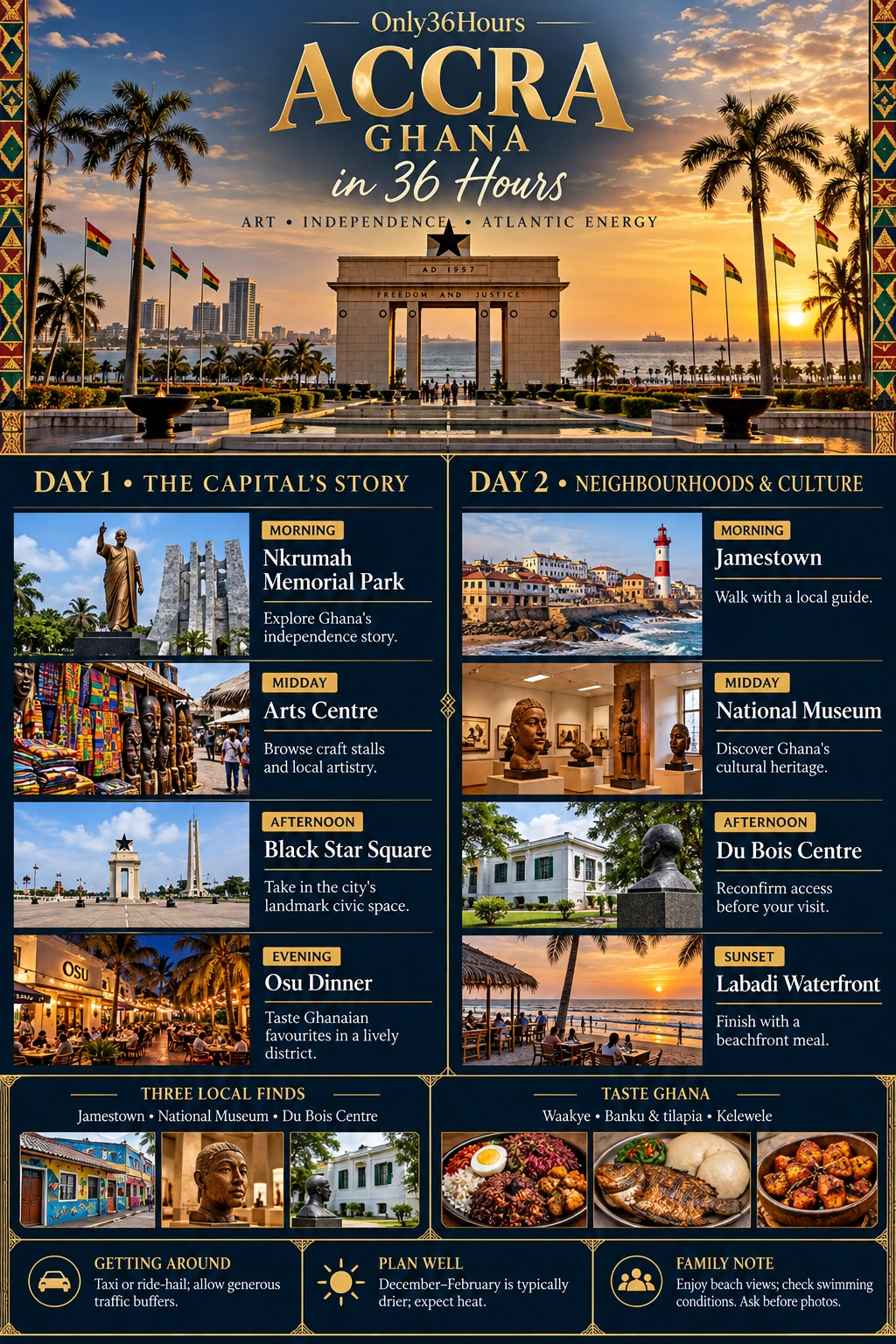
36 Hours in Accra: Independence, Art and a Taste of the Coast
Introduction
Accra rewards a little patience. A morning can move from the story of independence to a bowl of waakye; an afternoon can introduce an artist whose work changes how you read the streets outside. This route pairs the central city’s national landmarks with the more reflective spaces of Cantonments and East Legon. It leaves room for heat, traffic and children who have had enough history for one day.
Treat this as approximately 36 hours from breakfast on day one to dinner on day two, with accommodation arranged beforehand. Car times below are planning estimates, not live routing: congestion can easily push them higher. A trusted, prearranged driver is especially useful for a family. Start each morning after daylight rather than chasing an isolated beach sunrise.
Day 1
Early morning | Breakfast and an introduction to independence
Start around 8am with breakfast near your accommodation. Try waakye, the rice-and-beans dish served with an assortment of accompaniments; ask for pepper sauces separately and check which toppings contain fish or meat. A modest portion is enough before a warm morning outdoors. Ghana’s tourism authority highlights waakye, jollof, banku and kelewele among the country’s dishes. Food guide
Head to Independence Square for a short, daylight orientation stop if public access is available. Arrange a convenient drop-off, stay out of restricted areas and follow security directions. A square is not a guaranteed daily attraction: official events can change access. Let the visit be a broad introduction, then save the detailed history for the museum rather than standing in full sun for an hour.
Late morning | Kwame Nkrumah Memorial Park
Continue west to Kwame Nkrumah Memorial Park, allowing roughly 10–20 minutes by car depending on conditions. Reserve 75–90 minutes for the museum and memorial grounds, with a guide if available. The institution is dedicated to Ghana’s first president and Pan-Africanism; its own website describes guided tours, museum and library facilities. Official park information
Afternoon | National Museum, then a proper break
Have lunch before continuing north to the National Museum on Barnes Road, approximately 15–30 minutes by car. Jollof with a simply prepared protein offers an approachable introduction; keen eaters could try banku with fish, with bones removed carefully for children. Ask about shellfish, groundnuts and other allergens rather than relying on the dish name.
Give the National Museum around 60–90 minutes. Its archaeology, ethnography and art collections broaden the day beyond a single political story. The museum’s official page currently lists daily visiting from 9am to 4.30pm, so plan an early-afternoon arrival and recheck for exceptions. National Museum visitor information
Evening | Dinner in Osu or close to home
If staying centrally, eat in Osu; otherwise choose a well-reviewed restaurant near your accommodation and reduce the driving. Banku’s tangy fermented dough works well alongside grilled fish, while kelewele brings ginger-and-pepper warmth to fried plantain. Confirm spice levels before ordering for children. Ghana Tourism Authority food overview
Book your return transport before dinner. This itinerary does not depend on walking between venues after dark. If you want music, choose a seated, early performance with a confirmed programme and family admission policy, rather than assuming every nightlife venue welcomes children.
Day 2
Early morning | An easy start in Cantonments
Have breakfast around 8am and travel to Cantonments, leaving enough time for the Du Bois Centre’s opening. From Osu, budget approximately 15–35 minutes by car. Keep the morning comfortable: water, sun protection and a small day bag are more useful than trying to squeeze in a market before the main visit.
Late morning | W. E. B. Du Bois Centre
Spend about an hour at the W. E. B. Du Bois Centre, then pause in its gardens. The centre connects Accra to a wider history of Pan-African thought through its museum, library and memorial grounds. Its visitor page recommends guided tours and currently lists Monday–Friday opening, shorter Saturday hours and Sunday closure. Swap days if necessary, and check access before setting off. Plan your visit
Afternoon | Contemporary Ghana at Nubuke
After lunch in Cantonments, continue to Nubuke Foundation in East Legon. Allow 30–60 minutes or longer for this transfer; if traffic is severe, shorten the visit rather than rushing the journey. Budget 60–90 minutes for the current exhibition and a café break. Nubuke supports Ghanaian art and culture, making it a valuable counterpoint to yesterday’s historical collections.
The foundation currently lists Tuesday–Saturday, 10am–5pm, with no admission charge. Exhibitions change, and special events can alter the atmosphere. Confirm what is on, ask about guided visits and check the suitability of any particular exhibition for your children. Nubuke visitor FAQ
On a Sunday or Monday, do not travel there expecting ordinary opening. Rearrange the two days where possible; otherwise use the afternoon for an unhurried lunch and a return to an open museum from day one.
Evening | Finish without another long transfer
Eat in East Legon if convenient for your accommodation or onward journey, or return before dinner. Keep the last meal simple and leave room for the dish you enjoyed most. If you have an evening flight, replace dinner with your airport transfer and allow the buffer recommended by your airline and accommodation; city traffic is not a dependable countdown clock.
Three worthwhile quieter pauses
- National Museum: focus on a small selection of objects rather than treating the building as a checklist.
- Du Bois Centre gardens: reflective surroundings that complement the guided history.
- Nubuke Foundation: space to look carefully at contemporary work, outside exhibition openings and events.
These are suggestions for a gentler pace, not promises of silence or undiscovered places.
Before you go
Heat, humidity and heavy rain can change a day’s comfort quickly. Carry water, take indoor breaks and avoid flooded streets. Arrange a vehicle with suitable child restraints in advance; uneven pavements and busy crossings make a stroller an imperfect substitute for transport. Ask individual venues about step-free entry and toilets.
Read current entry, health and security advice before booking. Official guidance highlights crime and transport precautions in Accra, particularly after dark and around beaches; this short route does not require sea swimming or isolated coastal walks. Ghana travel advice, Australian government safety guidance
AI-assisted guide, checked against the linked primary sources on 16 October 2026. Travel times and suggested visit lengths are estimates. Reconfirm openings, access and transport for your dates; no on-the-ground visit is claimed.
Sources & travel planning
Research checked 2026-10-16. This date describes the guide’s research, not a guarantee of current conditions. Opening hours, prices, access, transport and travel advice can change. Recheck the official sources before booking and departure. Walking and journey times are planning estimates.
- visitghana.com ↗
- knmp.gov.gh ↗
- gmmb.gov.gh ↗
- visitghana.com ↗
- duboiscentreghana.com ↗
- nubukefoundation.com ↗
- gov.uk ↗
- smartraveller.gov.au ↗
Found a change? Contact Only36Hours about a correction.