36 Hours in Aizu-Wakamatsu: Castle Country at a Human Pace
Verified: 16 October 2026. Travel times are suggested allowances and must be checked against the day's services.
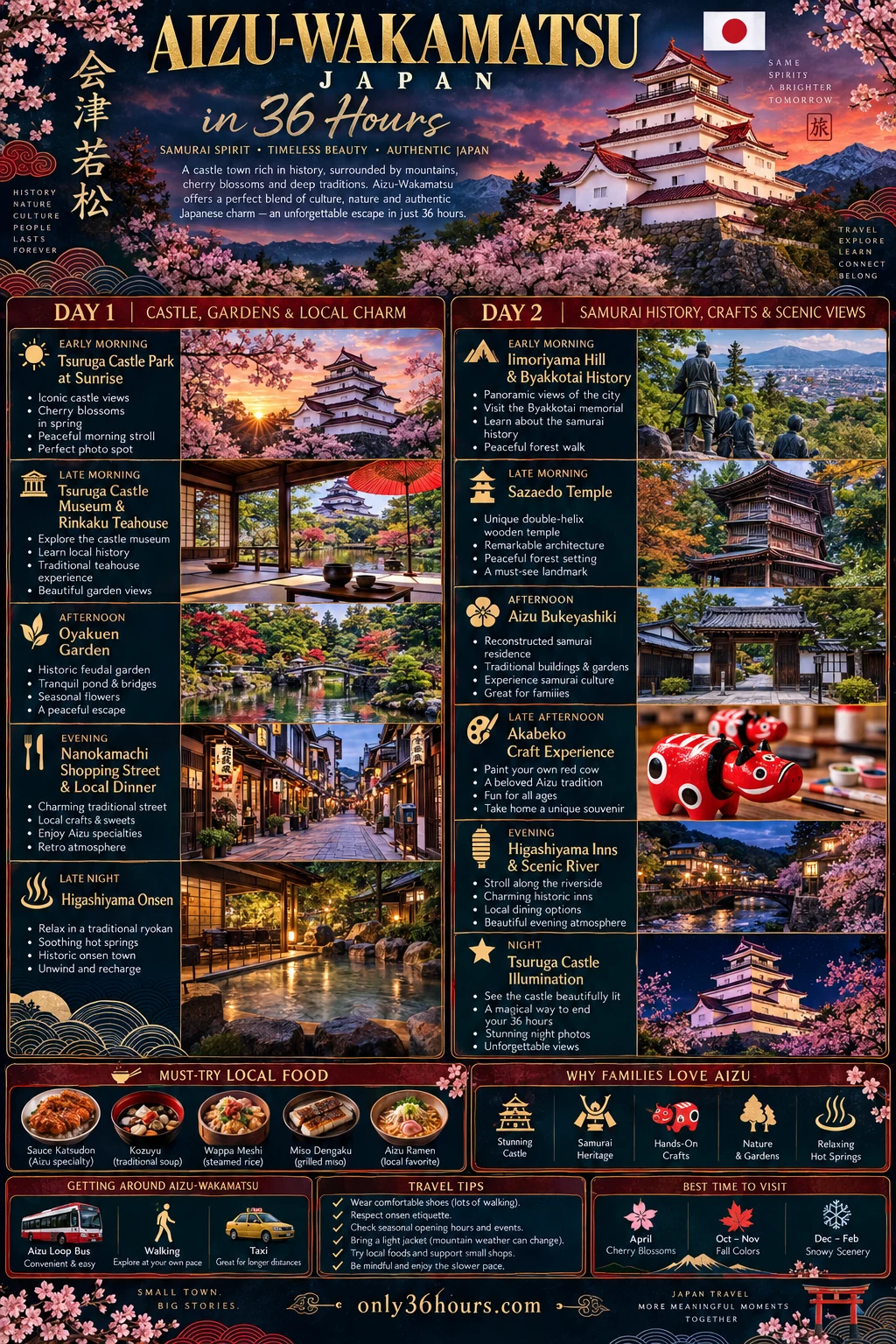
Aizu-Wakamatsu offers more than a castle photograph. Its story brings together the final years of samurai government, craft workshops, medicinal gardens and a mountain-basin landscape that changes dramatically with the seasons. A short stay works best when you accept that its sights are spread out. Use the sightseeing buses or occasional taxis, put the castle and garden together, and leave the distant excursions for another trip. This is a city itinerary, not a compressed tour of all Fukushima.
Arrival and the shape of the trip
Stay centrally for restaurants and station access, or choose Higashiyama Onsen only if the ryokan experience is a priority and you have checked transfers and meal times. A ryokan dinner can require an early arrival, changing the entire evening. The Japan National Tourism Organization destination guide describes the rail approach via Koriyama and the sightseeing-bus network.
Aim to arrive the previous evening or early on Day 1; a roughly three-hour journey from Tokyo consumes a substantial part of a 36-hour visit. The schedule below runs about 09:00 to the following 21:00, including a night's rest. Check the 2026 official Aizu transport map for stops and current products. Do not rely on an older tourism-page fare. Allow 30–45 minutes for a typical sight-to-sight transfer once waiting and walking are included, and more if the next departure is inconvenient.
Day 1: The castle and a slower garden
09:00–10:00 | Breakfast and orientation
Leave luggage at your accommodation and collect current bus information near the station. Have breakfast before boarding; food stops are easier when they are deliberate rather than squeezed between infrequent departures. Choose the correct loop direction for your first destination instead of boarding whichever sightseeing bus appears first.
10:00–12:30 | Tsurugajo
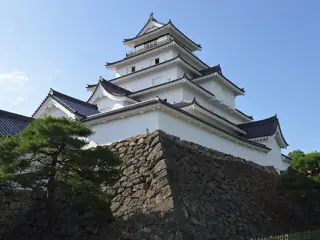
Begin at Tsurugajo Castle, the city's defining landmark. Allow roughly two hours for the grounds and tower museum, adding time if you want the associated tea experience. The present tower should not be presented as an untouched medieval survivor: use the museum to distinguish the historic fortress, the 1868 conflict and the later reconstruction.
Walk the grounds before or after the interior to see the scale of the defences. With children, one focused museum visit plus outdoor exploration is plenty. Confirm current lift arrangements and the route inside if steps are difficult; a general description of a reconstructed castle does not establish that every display or viewpoint is accessible. Cherry-blossom season is attractive but busy, so allow more time for crowds rather than assuming the same route takes the same number of minutes.
12:30–14:00 | A substantial Aizu lunch
Try sauce katsudon, a pork cutlet over rice with cabbage and a savoury sauce, highlighted in JNTO's regional food account. Ask about portion sizes before ordering separate large bowls for small children. Those avoiding pork or gluten should check ingredients carefully; sauce and breading complicate an apparently simple dish. Choose a restaurant on your route rather than spending the lunch window crossing town for one famous name.
14:00–16:00 | Oyakuen
Transfer to Oyakuen, allowing around 20–30 minutes on foot from the castle area or a suitable bus/taxi alternative. Its pond garden and medicinal-plant tradition tell a different story from the military exhibits. Spend an hour or so following the paths, watching the reflections and reading a few plant labels rather than treating the herb garden as a shopping catalogue of remedies.
The operator explicitly warns that there is no garden lighting and winter sunset comes early. Visit in daylight, not at an invented sunrise or evening opening. At verification, the published last entry was 16:30, with the garden closing at 17:00; recheck before travel and arrive earlier in winter. Snow and wet stones require good footwear.
16:00–21:00 | Rest, then a simple dinner
Return to your accommodation before setting out again for dinner. If staying at a ryokan, follow its agreed meal schedule. Otherwise, eat centrally and keep the evening flexible. Aizu sake can be a considered adult addition, but a tasting is optional and never necessary to enjoy the city's craft culture. Do not drive after drinking. Buy bottles for home only after checking luggage and transport restrictions relevant to your onward trip.
Day 2: Remarkable woodwork and merchant streets
09:00–12:00 | Iimoriyama and Sazaedo
After breakfast, take a bus or taxi to Iimoriyama. Sazaedo is the architectural highlight: a wooden structure built in 1796 with separate spiralling routes for ascent and descent. Give the site and surroundings 90 minutes to two hours rather than rushing the building as a novelty.
The hillside also contains memorials to the Byakkotai cadets who died during the 1868 conflict. This is a place of mourning as well as history. Explain the story sensitively to children and decide whether detailed museum interpretation suits their age. Do not frame the deaths as an adventure. The spiral interior and hillside paths are unsuitable for assuming step-free access; ask locally about accessible alternatives and remain outside if necessary.
12:00–16:00 | Lunch and Nanukamachi
Return towards the centre for lunch, then spend the afternoon around Nanukamachi, also rendered Nanokamachi. The official transport map includes its stops, and the tourism bureau's Nanukamachi walking route provides a direct guide to the district. Browse lacquerware and local goods, taking time to ask about care and use before buying. Individual workshops and shops keep their own hours, so do not promise a live demonstration without an appointment.
16:00–21:00 | Leave a useful margin
Enjoy tea, collect luggage and have an early dinner if your train permits. Check the Koriyama connection as a complete journey, especially in winter; missing one regional service can disrupt a carefully planned shinkansen connection. If departing before evening, cut shopping time rather than the transfer buffer.
Three quieter worthwhile places
- Oyakuen's pond circuit, especially outside peak foliage periods.
- Less-busy edges of the castle grounds, away from the main tower approach.
- Nanukamachi's smaller shops, visited respectfully and without entering private workspaces.
Family and seasonal essentials
Winter brings real snow, not merely decorative scenery. Leave extra transfer time and choose warm, grippy footwear. Summer can be hot and humid; keep water and indoor pauses in the plan. A pushchair may work on some streets but not throughout Sazaedo or all garden paths. Confirm any ryokan's child arrangements and bathing rules directly. Skip Ouchi-juku and long scenic-rail excursions on this schedule: each deserves its own travel allowance and would displace the relaxed city visit promised here.
Sources & travel planning
Research checked 2026-10-16. This date describes the guide’s research, not a guarantee of current conditions. Opening hours, prices, access, transport and travel advice can change. Recheck the official sources before booking and departure. Walking and journey times are planning estimates.
- japan.travel ↗
- aizukanko.com ↗
- aizukanko.com ↗
- japan.travel ↗
- tsurugajo.com ↗
- japan.travel ↗
- aizukanko.com ↗
Found a change? Contact Only36Hours about a correction.