36 Hours in Alcalá de Henares: Cervantes, Courtyards and Long Lunches
Verified: 16 October 2026. Journey ranges are approximate planning allowances.
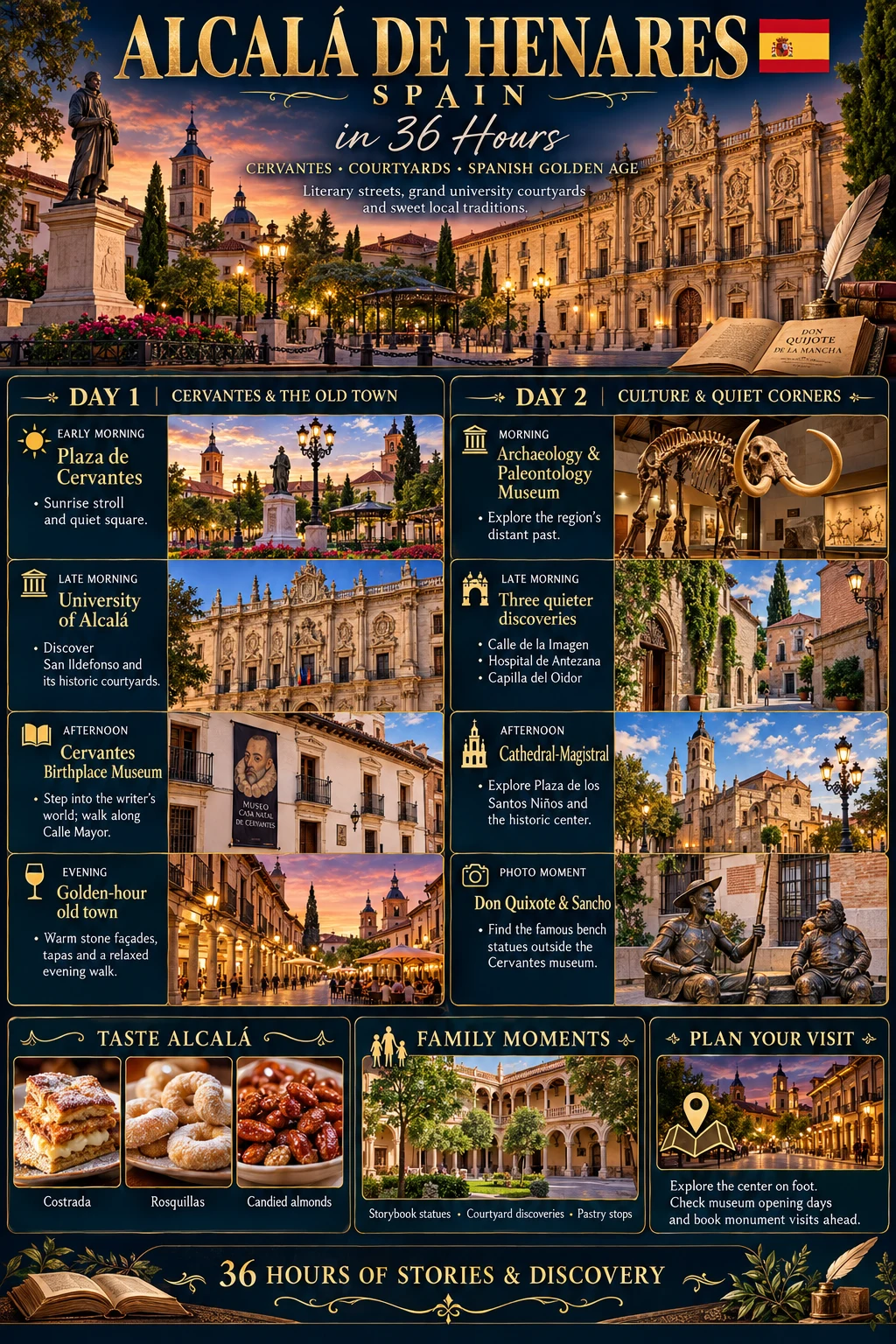
Alcalá de Henares is often reduced to a Madrid day trip and a photograph beside Don Quixote and Sancho Panza. Staying overnight changes the balance. You can visit the university without hurrying, let the literary connections emerge from domestic rooms and streets, and enjoy the centre after the busiest touring hours. The main route is compact; the right ambition is to understand a few places well rather than bolt on Madrid sightseeing or distant archaeological sites.
Arrival and planning
Use the central Alcalá de Henares station, checking the actual service in Renfe's planner. The operator's station page confirms its location on Paseo de la Estación and Cercanías connections. Allow roughly 15–20 minutes to walk to Plaza de Cervantes. Rail works can change routes and journey times; avoid assuming a specific Madrid line always follows the same pattern.
Stay near the historic centre for a visit from about 09:00 on Day 1 to 21:00 on Day 2. Book the university visit first if its interior is important. The Cervantes birthplace museum closes on Mondays, while other institutions have separate calendars. Swap the days as needed rather than presenting Monday as an ordinary museum day.
Day 1: The university city
09:00–11:00 | Breakfast and Plaza de Cervantes
Leave bags, have a simple café breakfast, and begin in Plaza de Cervantes. Walk the square slowly before turning towards the university. The buildings around it reveal Alcalá as a working city of students, theatre and civic life, not merely a literary memorial. The municipal tourism site is the best starting point for current guided walks and events.
Give children a small observation task, such as comparing coats of arms or finding architectural animals, rather than delivering every date at once. Keep a snack and water available; a Spanish lunch may be later than your normal routine.
11:00–13:00 | San Ildefonso and the university
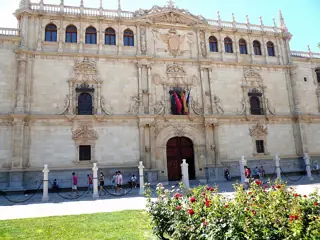
Follow your confirmed visit arrangements at the Colegio Mayor de San Ildefonso. The official tourism description identifies the Paraninfo and university chapel as central to the experience. Allow around 60–90 minutes, plus arrival time, rather than assuming the impressive facade is the entire visit.
This is a functioning university. Academic ceremonies and other events can change access, and a courtyard open on one visit does not establish unrestricted access to every room. Ask which spaces and language are included before paying. If an interior is unavailable, enjoy the exterior and use the time for a municipal walk rather than inventing an alternative entrance.
13:00–16:00 | Lunch and a real pause
Choose a restaurant in the centre for a leisurely lunch. Alcalá's gastronomy page highlights Castilian cooking including garlic soup, migas and roast lamb or kid, alongside contemporary restaurants. Order for appetite and weather: a substantial roast is not compulsory on a hot day. Check ingredients if avoiding pork, which can appear in otherwise vegetable-looking dishes.
Return to your hotel or sit in a shaded café afterward. This pause is particularly valuable in summer, when exposed squares become uncomfortable. It also prevents the second half of the day from turning into a sequence of dutiful museum stops.
16:00–18:30 | Calle Mayor and Cervantes at home
Walk Calle Mayor's arcaded stretch and visit the Museo Casa Natal de Cervantes, timing entry well before the last admission. The museum recreates an affluent household of the sixteenth and seventeenth centuries on the identified family-house site; it should not be described as untouched rooms containing all Cervantes's original possessions.
Allow 45–75 minutes. Domestic objects make an approachable family visit: discuss sleeping, cooking and work rather than expecting children to know the novel. Admission is listed as free, but capacity and activity-related changes still apply. Mondays and specified holidays are closed. Take the familiar bench photograph outside afterward if you want it, leaving room for others.
18:30–21:00 | Pastries and an evening meal
Try a portion of costrada or rosquillas alcalaínas from a local pastry shop, both identified by the tourism office as local sweets. Sharing is sensible if dinner follows. Reserve a restaurant if a particular meal matters; otherwise choose from the centre's current menus and finish with a short walk back through the square.
Day 2: A deeper history beyond the writer
09:00–12:30 | Cathedral quarter and archaeology
After breakfast, walk towards the Cathedral-Magistral and the surrounding streets, entering only when worship and visitor access permit. Then continue to Plaza de las Bernardas. These are short links, generally 5–15 minutes each, so allow time to look up and stop rather than hurry.
The regional archaeology museum is a useful second-day choice, with material spanning prehistory, Roman life and later periods. Allow 75–90 minutes and check its current opening, especially Sunday afternoon or Monday. It broadens the visit beyond Cervantes without requiring a long excursion to another part of the city.
12:30–16:00 | Lunch and an unstructured centre
Have lunch, then use the smaller streets between the main monuments for an easy walk. Return to whichever square appealed most, browse bookshops or take a long café break. Do not add a distant Roman-site visit unless you deliberately replace this block and confirm its transport and opening. The slower version is especially useful for families after two historical interiors.
16:00–21:00 | One last choice, then departure
If a guided theatre visit or performance interests you, check the current Corral de Comedias programme through the tourism office and reserve the appropriate event; access is not guaranteed just because the building is on the square. Otherwise leave the time open for shopping, an early dinner and luggage collection. Allow a station buffer beyond the walking estimate and verify the return train before lingering over dessert.
Three quieter worthwhile pauses
- Plaza de las Bernardas outside museum-arrival peaks.
- Smaller streets beside the cathedral quarter, keeping clear of private entrances.
- The university's permitted courtyards during your visit, when academic activity and access allow a quiet pause.
Family and seasonal notes
The historic centre is manageable on foot, but thresholds and individual interiors need separate accessibility checks. Summer calls for shade, water and a midday rest; winter evenings can be cold. Cervantes-related festivals and university ceremonies can produce crowds and altered access. Check the city's Cervantes-week programme for your dates rather than assuming a normal weekend. A themed Cervantes train is a scheduled package, not the everyday commuter service, and is unnecessary for this overnight plan.
Sources & travel planning
Research checked 2026-10-16. This date describes the guide’s research, not a guarantee of current conditions. Opening hours, prices, access, transport and travel advice can change. Recheck the official sources before booking and departure. Walking and journey times are planning estimates.
- renfe.com ↗
- turismoalcala.es ↗
- turismoalcala.es ↗
- turismoalcala.es ↗
- comunidad.madrid ↗
- turismoalcala.es ↗
- semanacervantina.ayto-alcaladehenares.es ↗
Found a change? Contact Only36Hours about a correction.