36 Hours in Ålesund: Art Nouveau Streets and Atlantic Air
Verified: 16 October 2026. Travel ranges are planning estimates; weather and current services determine the final route.
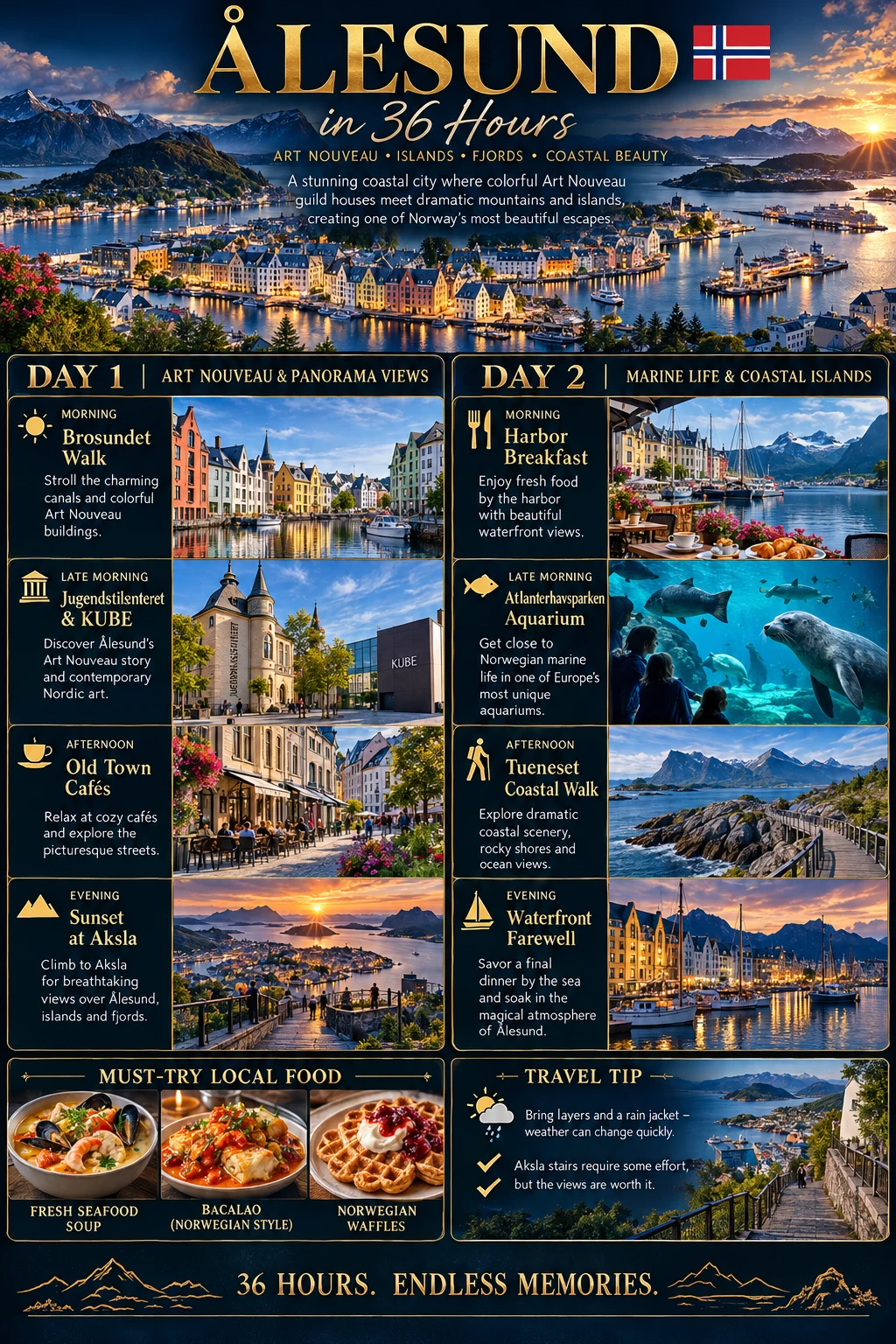
Ålesund's appeal is immediate: colourful buildings crowd a narrow waterfront, mountains rise behind the town, and the sea appears at the end of ordinary streets. Its architecture is not an accidental collection of pretty facades. Much of the centre was rebuilt after the 1904 fire in Art Nouveau style, as explained by Fjord Norway's city guide. Spend your short stay connecting that story with the town's maritime life. A full-day Geiranger excursion would consume the second day; leave it for a longer visit.
Make weather part of the plan
Stay centrally around Brosundet or within an easy walk of the main waterfront. This itinerary runs from roughly 09:00 to 21:00 the following day. It includes one indoor cultural visit, one aquarium visit and one weather-dependent hill, which can be rearranged without undermining the trip.
Use FRAM's journey planner and timetable guidance for local transport. The operator specifically recommends live planning for disruptions and holiday changes. Airport-express tickets are not automatically included in ordinary FRAM products. Leave airport arrival and departure buffers outside sightseeing blocks, and do not book a non-refundable excursion against a tight flight connection.
Day 1: Learn to look at the town
09:00–11:00 | Breakfast and Brosundet
Drop your bags and begin with breakfast near the water. Walk around Brosundet and across Hellebroa, then take the smaller central streets at an unhurried pace. Most links here take 5–15 minutes, so two hours includes plenty of stopping rather than continuous walking. Look at rooflines, ornaments and window shapes; photographing only the harbour misses much of the reconstruction's character.
For children, this is a good architectural treasure hunt. Choose a few details to find and keep warm café breaks available. A waterfront route is not automatically safe for unsupervised children: working quays, traffic and exposed water edges need attention.
11:00–13:00 | Jugendstilsenteret and KUBE
Visit Jugendstilsenteret and KUBE, allowing 90 minutes to two hours. The former Swan Pharmacy building provides an especially appropriate setting for learning about Art Nouveau, while KUBE adds changing art exhibitions. Choose depth over coverage if the current exhibition requires more time.
At verification, the operator listed Tuesday–Sunday opening, so a Monday requires a day swap or an exterior-led alternative. Children under 15 must be accompanied by an adult. KUBE has lift access; Jugendstilsenteret uses a separate rear entrance and stairlift for wheelchair access. Contact the museum about your precise needs rather than assuming the street entrance is the accessible route.
13:00–15:00 | Coastal lunch and rest
Look for fish soup, a seasonal seafood dish or a klippfisk preparation, depending on the menu. Salted and dried cod is part of the region's trade story, documented by the Fisheries Museum's exhibition. Ask about shellfish in soups and stocks if allergies matter. Good bread and a simple lunch can be a better choice than a large meal before a climb.
Take a hotel break or a long coffee stop. Rain and wind can be tiring even without much distance, and this buffer lets you move the hill visit to the best available conditions.
15:00–17:30 | Aksla, if conditions suit
From Byparken, the direct ascent to Aksla uses 418 steps. Allow 30–45 minutes up at a relaxed pace, time at the viewpoint, and a careful descent. This is an optional viewpoint, not a fitness requirement. Taxis can use the road approach, although access to a particular terrace or café should be confirmed separately.
Skip the steps in ice, strong wind or poor visibility. Do not force a sunset visit that leaves your group descending slippery steps in darkness. In summer you have more daylight flexibility; in winter put the hill earlier or omit it. Families can turn back at an intermediate comfortable point rather than treating the top as compulsory.
17:30–21:00 | Dinner and the waterfront at ease
Return, change out of wet layers if needed, and have dinner centrally. Reserve a preferred restaurant ahead, particularly during busy cruise or festival periods. A short waterfront walk afterward is enough; the atmosphere matters more than finding another attraction still open. Try a svele, the regional pancake-like treat noted in the Aksla visitor information, when available at a convenient café rather than making it a separate expedition.
Day 2: The coast beyond the central streets
09:00–13:00 | Atlantic Sea-Park
After breakfast, travel to Atlanterhavsparken. Allow approximately 15–25 minutes by taxi from the centre, or more for a bus journey including waiting and the final walk; check the exact stop and pedestrian approach in FRAM. Plan two to three hours at the aquarium and marine-science centre.
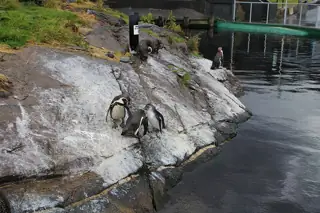
Choose the day's actual programme rather than promising a feeding at a fixed time. Indoor tanks and outdoor animal areas make this a strong family block, but weather still affects comfort outside. The official website has dynamic programme fields and occasional inconsistent dated notices, so confirm your visit date directly before planning around a special activity. Ask about age-specific activities separately; ordinary admission categories are not proof that every activity suits every child.
13:00–16:30 | Lunch, then Molovegen
Return to town for lunch and explore Molovegen's older waterfront character. If open, the Fisheries Museum or Cooper Workshop adds a smaller-scale account of working life. The workshop's published ordinary opening is weekend-based, with appointments otherwise, so do not assume weekday access. The exterior streets still reward a walk.
16:30–21:00 | A weather reserve and departure
Use the late afternoon for Aksla if Day 1 was unsuitable and today's conditions are safe, or return to a favourite café. Collect bags and eat before your onward journey. Keep the final block flexible: coastal transport deserves a larger margin than a last-minute dash from a viewpoint.
Three quieter worthwhile pauses
- Molovegen away from the immediate main-harbour bustle.
- Byparken, useful even when Aksla's steps are unsuitable.
- A short, signed Aksla path beyond the main viewpoint in good daylight and safe conditions, turning back before it becomes a hike your group did not plan.
Practical essentials
Pack waterproof and windproof layers, grippy shoes and a dry spare layer for children. Check museum closures before choosing your arrival day. A rental car adds little to the compact centre; local transport or a planned taxi works better for the aquarium. No boat trip is essential to this itinerary, so cancellations need not unravel the stay.
Sources & travel planning
Research checked 2026-10-16. This date describes the guide’s research, not a guarantee of current conditions. Opening hours, prices, access, transport and travel advice can change. Recheck the official sources before booking and departure. Walking and journey times are planning estimates.
- fjordnorway.com ↗
- frammr.no ↗
- vitimusea.no ↗
- vitimusea.no ↗
- fjordnorway.com ↗
- en.atlanterhavsparken.no ↗
- vitimusea.no ↗
Found a change? Contact Only36Hours about a correction.