36 Hours in Angers: A Great Tapestry, a River and a Softer City
Verified: 16 October 2026. Walking times are approximate planning allowances.
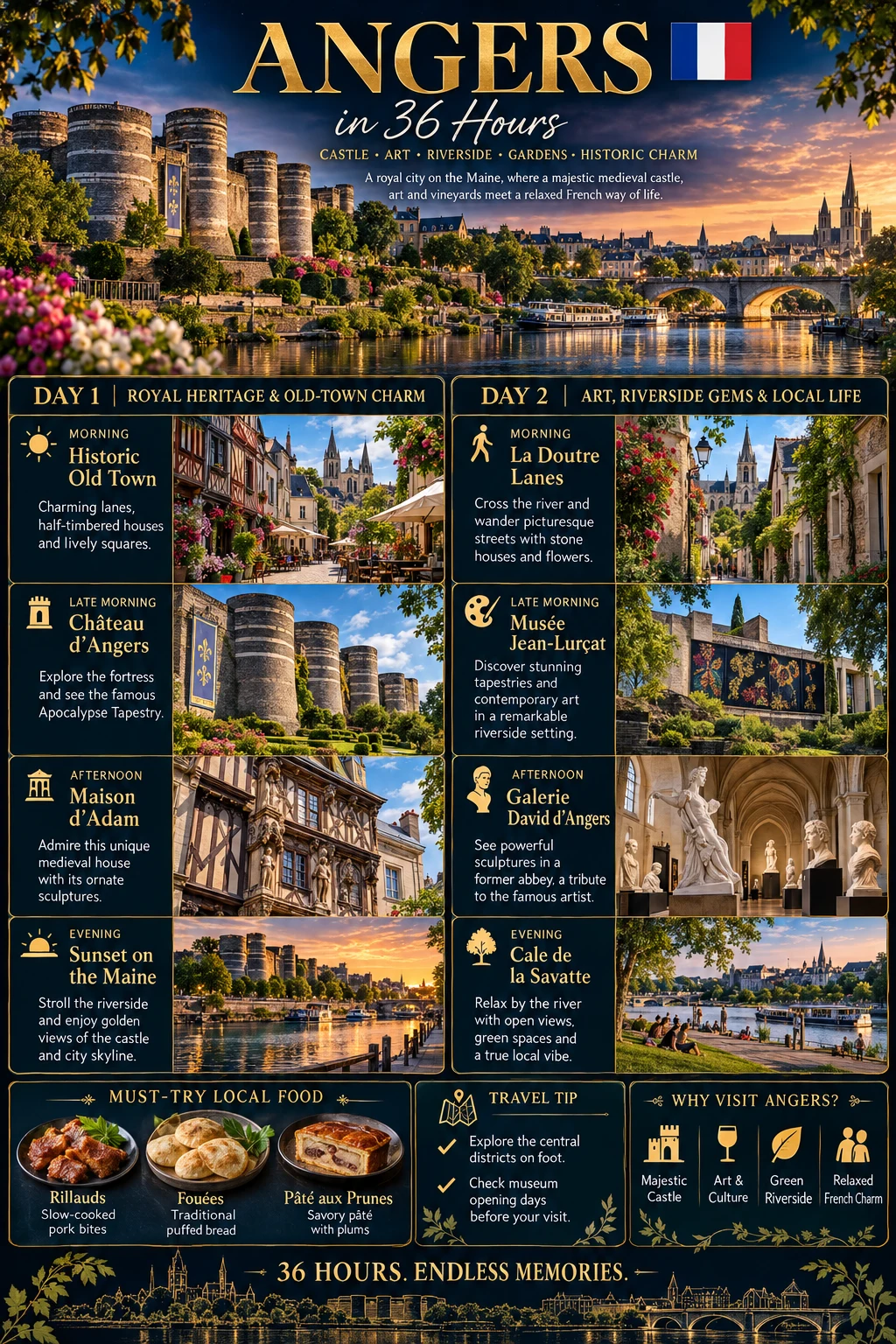
Angers is a rewarding place to stop trying to visit the whole Loire Valley. Its formidable château contains an extraordinary textile narrative, while the streets around it lead quickly to sculpture, gardens and the Maine. Across the river, the Doutre changes the scale again. Give this city its own day and a half: one major monument, one carefully chosen museum, and enough time between them to enjoy the ordinary streets.
Set up your 36 hours
Base yourself near the centre or between Angers-Saint-Laud station and the château. The castle operator gives a roughly 15-minute walk from the station; allow more with luggage. Most of this itinerary works on foot. For a rainy transfer or a more distant hotel, use Irigo's current planner rather than an old tram map.
The schedule runs approximately 09:00 on Day 1 to 21:00 on Day 2. Municipal museums generally close on Mondays, while the château has its own calendar. Crucially, at verification Jean Lurçat's Le Chant du monde was on loan, with return advertised from December 2026. Do not buy a trip around seeing it before confirming the museum's current notice.
Day 1: The fortress and its surprising contents
09:00–10:00 | Breakfast and the château approach
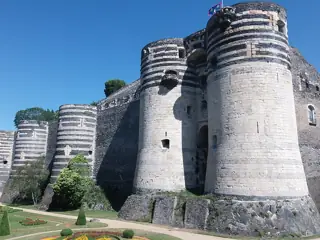
Drop bags at your accommodation, eat breakfast and walk towards the château. Approach from the city streets before following the exterior view of its towers. You will have time inside, so there is no need to circle the whole perimeter before opening. The nearby tourist office can clarify dated events and accessible approaches if these affect your visit.
Families should keep this first hour simple. A castle can generate plenty of enthusiasm without adding a long historical introduction before everyone has entered.
10:00–13:00 | Château d'Angers and the Apocalypse Tapestry
Give the château a full two to three hours. Move between the gardens, permitted ramparts and the Apocalypse Tapestry gallery rather than treating the tapestry as a brief final room. Choose several scenes and look closely at their storytelling. An audio guide or family guide can help, but the entire visit need not become a continuous listening exercise.
The monument's practical page says children under 15 must be accompanied by an adult. Ramparts and the Mill Tower are not accessible to pushchairs or visitors with reduced mobility, though other parts of the site have adapted access. Large luggage is not accepted and there is no luggage storage. Leave suitcases at your hotel before arriving.
Weather affects the route: strong winds and heat can close elevated areas. The operator publishes specific heatwave arrangements, including altered hours at the highest warning level. Check these on hot travel dates rather than assuming the usual afternoon schedule applies.
13:00–15:00 | Lunch and a change of pace
Leave time for lunch near the centre. Choose an Anjou-oriented menu with seasonal produce, fish or a simple regional meat dish according to your appetite. A glass of Loire wine is an optional adult addition, not a reason to arrange a vineyard transfer on this short visit. Ask for the current menu and vegetarian options before sitting down if these matter to your group.
After eating, pause in the garden area by the Musée des Beaux-Arts or take a café break. The castle operator lists this garden and the nearby Jean-Turc promenade among useful picnic alternatives outside the monument. Avoid assuming picnics are permitted inside the château itself.
15:00–17:00 | Sculpture under glass
Visit the Galerie David d'Angers, allowing 60–90 minutes. The former Toussaint abbey church, covered by a modern glass roof, makes the relationship between architecture and sculpture part of the experience. Look at the difference between a small study, a portrait and a monumental work rather than trying to identify every sitter.
For children, scale is the easy entry point: which figure feels largest, and what changes when you stand farther away? The museum has partial accessibility, so ask about the route if the mezzanine matters to you. Monday closure requires moving this block to the other day or replacing it with an outdoor walk.
17:00–21:00 | Cathedral quarter and dinner
Walk past the cathedral and through the adjoining streets, entering the church only when visitor access and services permit. The hill and steps down towards the Maine are scenic but not essential; take a less steep route if needed. Return to your hotel, then have dinner centrally. Keep the evening short enough to enjoy the next day rather than trying to fit in a late out-of-town excursion.
Day 2: Across the Maine
09:00–12:00 | The Doutre at walking speed
After breakfast, cross the Maine and explore the Doutre. Budget roughly 20–30 minutes from the château quarter to the Jean-Lurçat museum area, plus time to wander. Notice how the river changes your view of the city and how the streets feel away from the main shopping axis.
The Jean-Lurçat and Contemporary Tapestry Museum is a good option if the actual display interests you. Until the advertised return of Le Chant du monde, evaluate the temporary programme on its own merits rather than expecting the usual masterpiece. Allow 75–90 minutes. On a Monday, retain the neighbourhood walk and skip the interior.
12:00–16:00 | Lunch and river time
Have lunch on this side of the river or return centrally, then walk a manageable stretch of the riverside. A 45–60-minute stroll with benches and a café stop is enough. In hot weather, seek shade; during high water or maintenance, respect closed sections and use the street-level route.
If rain makes the river unappealing, choose the Musée des Beaux-Arts after checking its current opening calendar. This is a replacement, not an additional obligation. Families may prefer a shorter museum visit and a longer snack break.
16:00–21:00 | Finish locally
Use the remaining time for shops, a final drink or a return to a favourite square. Collect bags and eat early if your departure permits. Leave the vineyards, Terra Botanica and distant châteaux for another stay unless you consciously replace a substantial part of this route; they are not effortless add-ons.
Three quieter worthwhile pauses
- The garden beside the Musée des Beaux-Arts, when its public access is open.
- Smaller Doutre streets, without entering private courtyards or gardens.
- The Jean-Turc promenade for a short riverside break outside busy event periods.
Practical essentials
Verify Monday and public-holiday closures separately for each institution. Keep the château's weather-dependent elevated routes optional. Book a preferred restaurant, carry water in summer and use shoes that handle paving and slopes. The essential experience here is the contrast between monumental art and a relaxed riverside city, not a maximum admission count.
Sources & travel planning
Research checked 2026-10-16. This date describes the guide’s research, not a guarantee of current conditions. Opening hours, prices, access, transport and travel advice can change. Recheck the official sources before booking and departure. Walking and journey times are planning estimates.
- chateau-angers.fr ↗
- irigo.fr ↗
- musees.angers.fr ↗
- chateau-angers.fr ↗
- chateau-angers.fr ↗
- musees.angers.fr ↗
- musees.angers.fr ↗
Found a change? Contact Only36Hours about a correction.