36 Hours in Antigua Guatemala: Courtyards, Ruins and Coffee Country
Verified: 16 October 2026. Antigua's most memorable moments often happen between landmarks: a courtyard glimpsed through an open public doorway, coffee served with an explanation of its origin, or afternoon cloud gathering above a tiled roof. Its monumental ruins reflect a history shaped by earthquakes and colonial power, while its streets remain places where people live, work and worship. Give the city a full day before looking beyond it. This route runs from 9 a.m. to 9 p.m. the following day, with one overnight and an optional prebooked coffee outing.
Arrive with time to spare
Arrange a reputable airport transfer rather than improvising an unfamiliar journey after a late flight. Allow roughly 1½–3 hours between Guatemala City's airport and Antigua as a planning range, with extra contingency for congestion, roadblocks or disruption. Do not schedule a paid tour immediately after landing. Official travel advice records armed robberies on tourist routes, including between Guatemala City and Antigua; use current advice and local professional transport arrangements, without assuming a tourist route is risk-free. Guatemala travel advice
A central hotel reduces evening transfers. Ask about vehicle access during processions, stairs and street noise. Cobbles are genuinely awkward for small stroller wheels and some mobility aids. The 10–20-minute central walking legs below allow for a slow pace but not every accessibility requirement.
Day 1: Understand the city before collecting sights
9–10:30 a.m. | Breakfast and Parque Central
Start with eggs, beans, tortillas and coffee, then walk to Parque Central. Take in the surrounding civic and religious facades before heading into the streets. A licensed local guide can make this first circuit more useful than a list of building dates: ask about Indigenous communities, the colonial capital and the consequences of the 1773 earthquakes. UNESCO's account explains the city's planned layout and surviving monumental architecture, but the place is more than a preserved stage set. UNESCO's Antigua Guatemala description
10:30 a.m.–noon | Capuchinas, at a human scale
Walk northeast to the Capuchinas convent ruins, allowing 10–20 minutes. Spend around an hour with the courtyards and surviving spaces rather than rushing to photograph every angle. Follow barriers and staff instructions: an old wall or ruined stair is not a climbing opportunity. The national protection council lists Capuchinas among monuments open to visitors, but its office hours are not the monument's admission timetable. Confirm current visitor hours locally before setting out. CNPAG visitor monuments
Noon–2 p.m. | Lunch and a courtyard pause
Seek out pepián, a richly flavored Guatemalan stew, accompanied by rice and tortillas. Recipes vary, so ask about meat, seeds and other allergens rather than assuming a vegetarian-looking sauce is suitable. The dish has a strong local presence, including the nearby community of San Juan del Obispo; tasting it does not require another excursion. Government account of local pepián traditions
Return to your hotel afterward. A rest makes the afternoon better, especially if your arrival involved an early flight or a long road journey.
2–4 p.m. | Santa Clara and the southern streets
Walk to Santa Clara for a second, deliberately different ruin visit. One hour is enough to compare its larger open spaces with Capuchinas without making the day an architectural endurance test. If rain is heavy or admission has changed, replace it with a cafe and a shorter central walk. The protection council also lists Santa Clara among visitor monuments; restoration can restrict particular sections even when the site remains open. Conservation projects
4–6 p.m. | The arch and La Merced
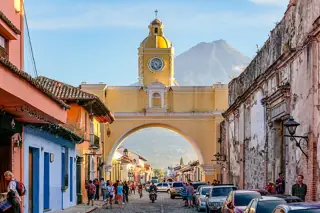
Head back through the center toward the Santa Catalina arch and La Merced. Allow 25–40 minutes with stops, rather than taking the most direct route as an obligation. Look at the church exterior and enter only when visitors are welcome around worship. Processions are living religious events: stand back, ask before close-up photographs and follow steward directions. Buy something from a bakery or pause for chocolate instead of adding a third major ruin.
6–9 p.m. | Supper close to home
Choose dinner within a comfortable, well-used route of your hotel. A courtyard restaurant is particularly pleasant when afternoon rain has passed. Use reputable transport for a longer nighttime journey and keep valuables discreet. Finish the day rested; tomorrow's optional tour starts earlier than the rest of this itinerary.
Day 2: Coffee with its growers, or more time in town
8–8:45 a.m. | An early breakfast only if touring
For the coffee option, book in advance with De La Gente and reach its specified pickup point before departure. At verification, its morning shuttle leaves at 8:45 a.m. from La Ermita de Santa Lucía. Reconfirm the location and timing with the booking rather than waiting at a similarly named church.
8:45 a.m.–1 p.m. | A producer-led coffee visit
The operator's San Miguel Escobar experience includes transfers, interpretation, fields, processing demonstrations and coffee with a producer. Budget the full 3½–4 hours. The usual walk is approximately five kilometers with uneven ground and some steep sections, so this is not simply a seated tasting. Request adaptations before paying if needed. The published price category begins at age five; ask directly about younger children's participation rather than interpreting that as automatic admission. Reservations are requested at least the day before, and late cancellations carry charges. De La Gente's current tour details
If that outing does not suit your family or mobility, stay in Antigua. Have a later breakfast, visit a currently open exhibition at the Spanish Cooperation Training Centre and spend time with a coffee roaster in town. The center occupies the restored former Colegio de San Lucas and Compañía de Jesús complex; its public cultural program needs checking separately from its professional training schedule. Center and facilities
1–4 p.m. | Lunch, rest and one last choice
Return for lunch and a proper break. Later, choose either a small museum with confirmed hours or shopping for textiles and coffee. Ask who made an item and where; a convincing sales story is not verification of origin. Pay fairly, ask before photographing craftspeople and leave time to pack purchases carefully.
4–9 p.m. | A gentle final evening
Revisit a favorite square while it is light, then settle into dinner. Keep airport or onward transfers outside this final sightseeing block. This short visit does not include Acatenango or Fuego: volcano excursions need separate preparation, current hazard information, suitable equipment and substantial time, not a spare afternoon.
Three quieter worthwhile places
- Santa Clara's permitted interior courtyards, away from the busiest arch photographs.
- The Spanish Cooperation Centre's public exhibition areas when a program is open.
- Colegio de San Jerónimo, a smaller monument listed by CNPAG, as a replacement for another ruin rather than an additional compulsory stop.
Season and family checks
Carry rain protection and shoes with grip. The coffee operator identifies May–November as its rainy season, especially afternoons; wet cobbles need extra care. Holy Week brings remarkable processions but also major crowds, accommodation pressure and road closures, so simplify the route and prearrange transfers. For children, alternate ruins with food and courtyard breaks. Check official regional advice and local conditions again before departure, including volcanic activity; clear skies and a pleasant central square do not establish conditions outside the city.
Sources & travel planning
Research checked 2026-10-16. This date describes the guide’s research, not a guarantee of current conditions. Opening hours, prices, access, transport and travel advice can change. Recheck the official sources before booking and departure. Walking and journey times are planning estimates.
Found a change? Contact Only36Hours about a correction.