36 Hours in Aosta: Roman Streets and Alpine Tables
Verified: 16 October 2026. Aosta makes an unusually satisfying short city break because the mountains are present even when you never leave town. Roman gateways interrupt shopping streets, medieval sculpture rewards close inspection, and dinner can be as substantial as a mountain walk. This plan runs from 9 a.m. until 9 p.m. the next day, with one overnight. It concentrates on the walkable center and leaves ski lifts, castles and high-altitude outings for a longer stay or a deliberate substitution.
Before setting off
Choose a central base and ask where to unload luggage legally if arriving by car; a hotel inside the pedestrian area does not automatically give driving permission. Most central sightseeing legs take about 5–20 minutes on foot, before stops. SVAP operates local buses for destinations farther out, with current diversions and timetables on its site. SVAP transport information
Do not assume a normal train journey into Aosta in 2026. Trenitalia's regional service charter lists the Aosta–Ivrea interruption through 31 December 2026 for works. Search the actual travel date, including replacement-bus segments and stops, and leave a generous connection margin. The planned end date is not proof that service will resume unchanged the following morning. Trenitalia's 2026 Valle d'Aosta service charter
Day 1: Enter through the ancient city
9–10 a.m. | Breakfast and the Arch of Augustus
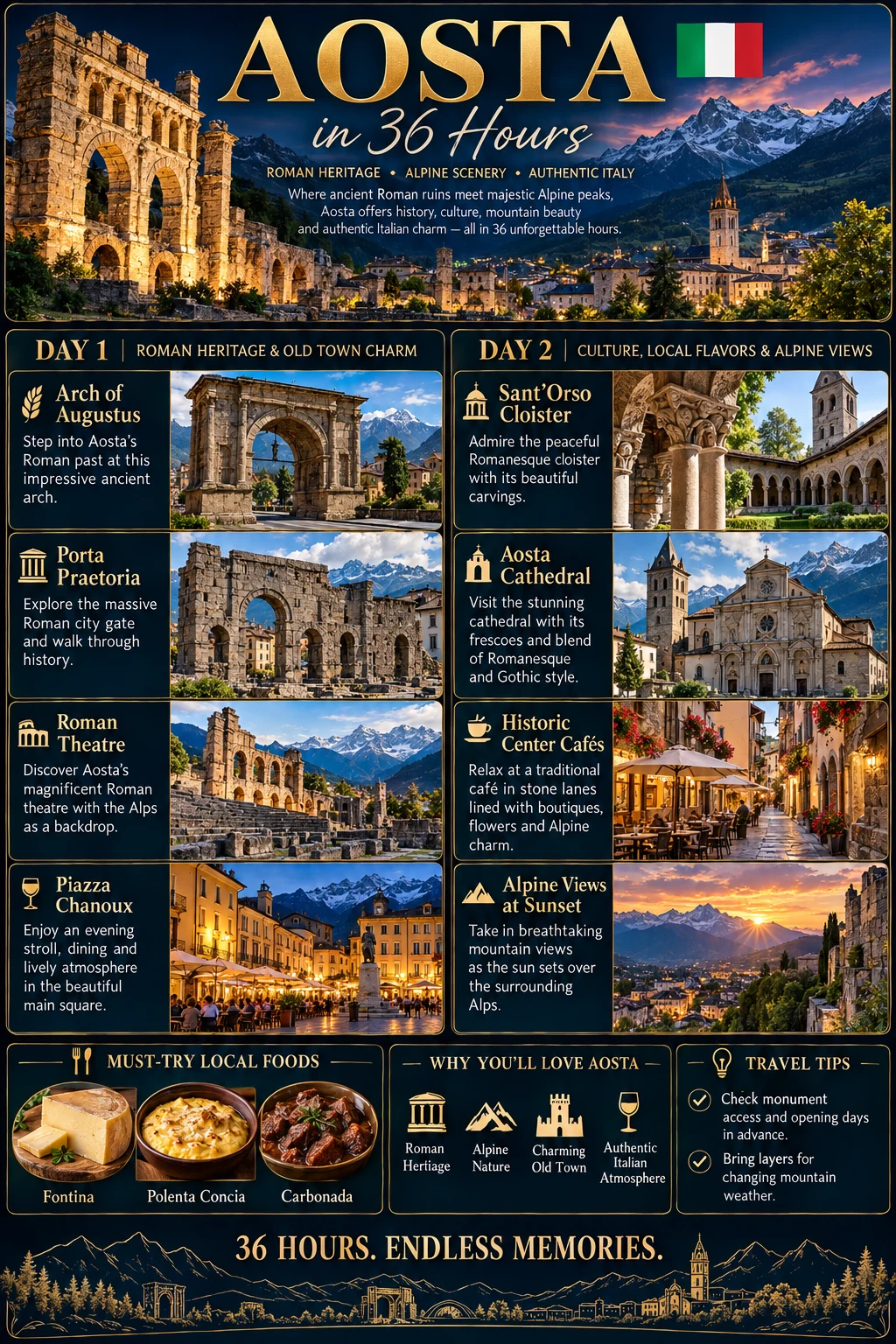
Begin with coffee and a pastry, then walk to the Arch of Augustus at the eastern approach. A short look is enough: the point is to understand the direction from which travelers entered the city. Continue along Via Sant'Anselmo, noticing how shops and everyday life occupy the route between monuments. The regional visitor guide links the arch, Sant'Orso and the Roman center into a sensible walking circuit. Official Aosta city guide
10–11:30 a.m. | Sant'Orso's quieter world
Turn into the Sant'Orso complex for the church and cloister. Spend time looking closely at the carved capitals instead of treating them as a backdrop. Admission to the church and admission to the cloister are separate questions, and special areas such as the frescoes and priory chapel may require a guided visit. Confirm available tour times directly. The official tourism listing describes church and cloister access as partial for visitors with disabilities who are accompanied, so ask about your exact route rather than assuming full step-free access. Sant'Orso visitor details
11:30 a.m.–1 p.m. | Porta Praetoria and a Roman theatre update
Walk back to Porta Praetoria and continue to the Roman Theatre. Older pages may still say the theatre is closed: the region announced a partial reopening on 3 July 2026, with a new visitor route while the wider Aosta Est redevelopment continues. Expect the permitted route, not unrestricted access across the whole archaeological area. Allow 45–60 minutes. In the October–March schedule the regional information page includes a midday closure, so arrive before lunch rather than relying on continuous admission. Reopening announcement, Theatre visiting information
1–3 p.m. | A Valdostan lunch and a pause
Choose a proper sit-down lunch. Fontina is the region's emblematic cheese and appears in fonduta and polenta dishes; seupa à la Vapelenentse combines bread, cheese and broth, often with cabbage. Ask about the broth if avoiding meat, and do not assume every cheese dish is vegetarian. Order one rich specialty rather than several, then give yourself time back at the hotel. Regional food guide, Regional Fontina information
3–5 p.m. | Cathedral quarter and the Cryptoporticus
Return to the cathedral area and descend into the Cryptoporticus when open. Its vaulted galleries form a striking contrast with the bright streets above. This is a Roman structure associated with the forum area, not an underground escape tunnel; its precise ancient uses are more nuanced than a simple label. Allow 30–45 minutes inside, then visit the cathedral if worship permits. Check admission arrangements for any separate treasury or archaeological area rather than assuming one doorway includes everything. Official Cryptoporticus description
5–9 p.m. | Piazza Chanoux and dinner
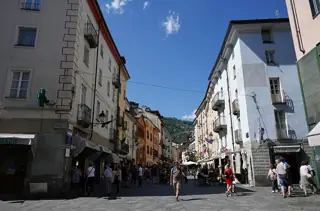
Leave the late afternoon for Piazza Chanoux and the central shopping streets. A cafe pause is useful here: you have already seen enough stonework for one day. Reserve dinner during holiday periods and weekends, and ask about kitchen opening time rather than arriving on another country's dining schedule. Finish with a short central stroll, layering up as the temperature drops.
Day 2: Put the discoveries in context
9–10 a.m. | Breakfast without a rush
Have a leisurely breakfast and walk toward Piazza Roncas. This is a good morning for buying cheese or other food gifts, provided you can store and transport them appropriately. Ask the seller about packing, and check the rules of your destination before buying animal products for an international flight.
10 a.m.–noon | Regional Archaeological Museum
Spend 90 minutes to two hours at the MAR, the Regional Archaeological Museum. After yesterday's monumental remains, smaller objects and interpretation help explain the people and communities behind them. Its admission is part of the regional archaeological ticket system; check what your ticket includes and retain it rather than paying anew at each stop. Temporary exhibitions in the same building can have different arrangements. Regional museum visitor information, Municipal museum guidance
Noon–3 p.m. | Lunch and a choice
Eat in the center, then decide how much history you still want. Enthusiasts can replace the afternoon stroll with the MegaMuseo in Saint-Martin-de-Corléans, reached by a planned local-bus or taxi journey. Its archaeological site reaches well beyond the Roman story. Allow a substantial visit, not a quick detour. Families who have reached their museum limit should keep the afternoon outdoors instead. MegaMuseo overview
3–9 p.m. | Return to the parts you liked
Choose a gentle walk around the eastern old town or revisit Sant'Orso's neighborhood, then rest before supper. There is no requirement to take a cable car merely because the mountains are visible. A lift outing needs its own seasonal operating check and weather decision; this city itinerary works in shoulder season without it. End with dinner by 9 p.m., leaving onward travel outside the sightseeing plan.
Three quieter worthwhile places
- Sant'Orso's cloister, where a slower look reveals details missed on a quick circuit.
- Piazza Roncas before or after the museum, an easy pause away from the main shopping flow.
- The Cryptoporticus galleries, a compact change of atmosphere beneath the cathedral quarter.
Family and seasonal practicalities
Cold, rain and icy surfaces can make short walks feel long; carry layers even when the daytime forecast looks mild. Historic interiors, underground galleries and cloister thresholds have different access constraints, so contact each venue for specific mobility needs. Children often do better with one paid interior per half-day and a snack between them. Winter archaeological opening hours can include lunch breaks, and 25 December and 1 January closures affect the theatre. Use the regional ticket office's current rules for child concessions and reservations rather than extrapolating from a single attraction's age policy.
Sources & travel planning
Research checked 2026-10-16. This date describes the guide’s research, not a guarantee of current conditions. Opening hours, prices, access, transport and travel advice can change. Recheck the official sources before booking and departure. Walking and journey times are planning estimates.
- svap.it ↗
- trenitalia.com ↗
- lovevda.it ↗
- balteus.lovevda.it ↗
- regione.vda.it ↗
- regione.vda.it ↗
- lovevda.it ↗
- regione.vda.it ↗
- lovevda.it ↗
- regione.vda.it ↗
- comune.aosta.it ↗
- lovevda.it ↗
Found a change? Contact Only36Hours about a correction.