36 Hours in Bridgetown: Harbour Stories, Bajan Food and Carlisle Bay
Verified: 18 October 2026.
Bridgetown rewards a visit that gives its history as much attention as its coastline. The harbour, streets and Garrison belong to the UNESCO-listed historic property, but they are also part of a working capital. This route combines two manageable museum visits with time to sit, eat and look at the sea. It stays around central Bridgetown, the Garrison and Carlisle Bay instead of trying to tour the whole island in a day and a half.
The suggested times are planning blocks, with one overnight between the two days. They are not booked activities.
Before you arrive
For the simplest version, start Monday to Friday, avoiding public holidays. Nidhe Israel currently publishes weekday access, while the Barbados Museum lists Monday–Saturday opening. A Friday–Saturday visit fits both; a Saturday–Sunday version needs rearranging and should not assume either museum will open specially.
Choose accommodation with a practical connection to town and the south-coast stops. Walk within the centre when comfortable, but take a taxi or suitable bus between clusters if heat, luggage or mobility makes the longer link unappealing. The Barbados government's transport guidance distinguishes buses, route taxis and taxi cabs. Cabs are not metered, so agree the fare and currency before the journey. Confirm child seats or wheelchair arrangements when booking rather than expecting them on arrival.
Day 1
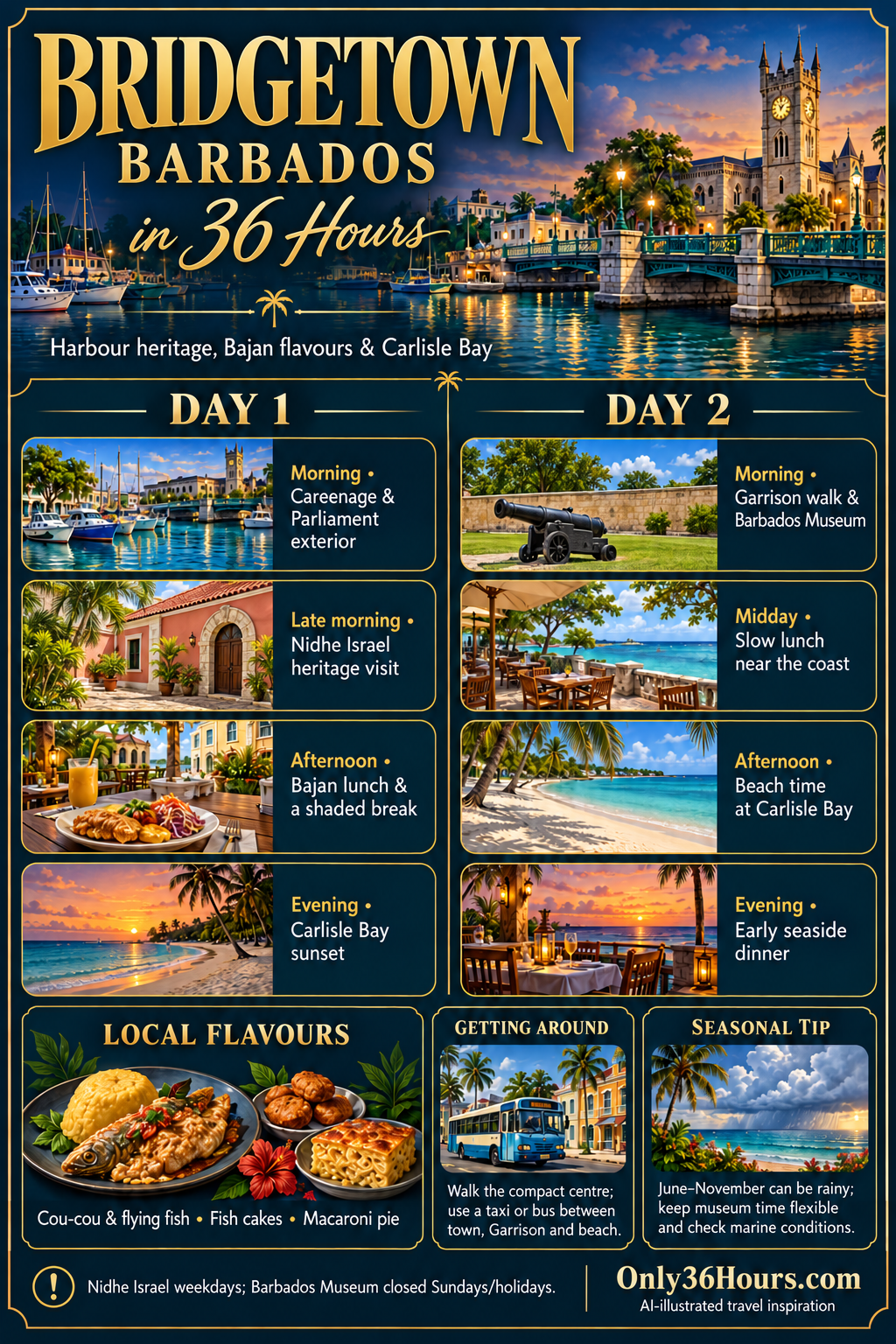
09:00–10:15 | Read the harbour from the Careenage
Begin around the Careenage and Chamberlain Bridge, using the waterfront to understand the city's relationship with shipping. View Parliament's exterior from public areas; this itinerary does not depend on access to parliamentary rooms or a particular tour. Keep children back from the water and leave space for people working or passing through.
The official heritage introduction connects Bridgetown's growth with sugar, maritime trade and the traffic in enslaved people. Talk about the labour and coercion behind the buildings as well as their architectural appearance. A local heritage guide can add context and help make difficult history age-appropriate without leaving it out.
Pause in Independence Square, the first of three slower places in this route. The tourism authority identifies its benches and waterfront outlook. Use it for water and a conversation about what you have seen, rather than immediately pushing on to another attraction. Shade and available seating vary with the time of day.
10:30–12:00 | Nidhe Israel's heritage district
Continue to the Nidhe Israel synagogue and museum. The operator currently lists both for Monday–Friday visits from 09:00 to 15:00, with admission covering the museum, mikvah and synagogue. Confirm holiday closures, guided options and the route through the site before travelling.
Allow time to read the interpretation rather than treating the district as a quick photograph. Follow dress, photography and religious-site instructions, and explain to children why voices and behaviour should change in a place of worship. Access to any particular room remains subject to the day's arrangements.
The district's Historic Fire Brigade Station Café is the second slower stop. Its own listed hours differ from the museum's, so check separately; a café opening at a weekend does not mean the synagogue is open too. If it is operating, sit for a drink or lunch before returning to the busier streets.
12:15–14:30 | A Bajan lunch and time out of the heat
Look for cou-cou and flying fish if available, or choose fish cakes and a more substantial side. Barbados Tourism Marketing's food guide describes cou-cou's cornmeal-and-okra base, fish cakes made with salted fish, and macaroni pie as a baked, seasoned dish. These are menu ideas, not a promise that every café serves them daily.
Ask about spice before ordering for children; macaroni pie can contain hot sauce, while fish cakes are not suitable for someone avoiding fish. Explain allergies and ask about preparation, including shared frying oil. Afterwards, return to your accommodation or choose a shaded seated break.
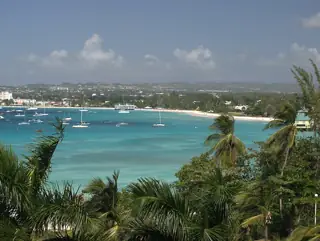
15:30–18:30 | First look at Carlisle Bay
Transfer to a convenient public access point at Carlisle Bay. Let the afternoon be a short beach visit or a sea-view stop, depending on weather and energy.
Stay on shore if conditions or supervision are uncertain. Finish with an early meal nearby or back at your accommodation. Sunset is an optional pleasure, not a reason to swim after lifeguard hours or remain on an isolated beach after dark.
Day 2
09:00–10:00 | The Garrison at a walking pace
Start with a short walk around publicly accessible parts of the Garrison area. Its military buildings help explain how colonial power protected trade and controlled the island. Keep to pavements and permitted paths rather than entering buildings or assuming that an open-looking space is unrestricted.
A brief stop at the edge of the Garrison Savannah is the third slower place. Watch the wider setting and compare it with yesterday's enclosed harbour streets. Events can change access and noise, so there is no promise of solitude, horse training or racing. If activity is under way, follow staff directions and shorten this stop.
10:00–12:00 | Barbados Museum, with choices for children
Visit the Barbados Museum & Historical Society, within the historic Garrison property. Its current Visit page lists Monday–Saturday opening and closure on Sundays and bank holidays. Check before leaving, especially if your dates coincide with a holiday.
The gallery directory includes African, military and children's galleries. Ask staff what is open and choose two or three sections rather than trying to exhaust the collection. The history should connect people, resistance, cultural life and change, not just uniforms and prominent buildings. With younger children, let each person choose one object and explain why it caught their attention.
12:15–17:00 | Lunch, rest and a weather-dependent beach finish
Take a slow lunch, then decide whether Carlisle Bay deserves a longer return. Sand play and a shoreline break can be enough; snorkelling, boat trips and wildlife sightings are not essential parts of this itinerary. If booking a water activity, check the operator, safety equipment, age requirements and cancellation conditions separately.
Current Canadian travel advice warns that not all beaches have lifeguards or warning flags. Seek local advice, respect restrictions, supervise children closely and never infer safe swimming from clear water. Keep valuables attended and allow time to change before your departure transfer.
Weather and access
June–November is the wetter period and overlaps the Atlantic hurricane season, according to the same travel advice. Monitor local forecasts and be ready to change plans during heavy rain or storm warnings. Carry water, sun protection and a rain layer. Historic thresholds, uneven surfaces and sandy access can complicate a visit: confirm toilets, step-free routes and drop-off points directly with each venue. On a difficult weather day, one museum and a leisurely meal make a better finish than forcing the beach.
Sources & travel planning
Research checked 2026-10-18. This date describes the guide’s research, not a guarantee of current conditions. Opening hours, prices, access, transport and travel advice can change. Recheck the official sources before booking and departure. Walking and journey times are planning estimates.
- whc.unesco.org ↗
- gov.bb ↗
- visitbarbados.org ↗
- nidhe.squarespace.com ↗
- visitbarbados.org ↗
- visitbarbados.org ↗
- barbmuse.org.bb ↗
- barbmuse.org.bb ↗
- travel.gc.ca ↗
Found a change? Contact Only36Hours about a correction.