36 Hours in Canterbury: Cathedral Stories, Roman Rooms and Riverside Pauses
Verified: 18 October 2026.
Canterbury is compact enough for a rewarding overnight stay, but its history is deeper than a quick photograph of the cathedral towers. Roman domestic life, medieval pilgrimage and the remains of an early monastery sit within reach of ordinary shopping streets and the River Stour. This itinerary starts with breakfast on Day 1 and ends after dinner on Day 2. It leaves room for family breaks, tea and gardens.
Plan around the calendar first
Check which station your train uses: Canterbury East and Canterbury West are different arrival points. The cathedral’s getting-here page explains rail connections, city parking and Park and Ride. A central base simplifies walking, but historic paving and crowds may affect access. Do not assume parking is available inside the cathedral precincts; its limited Blue Badge spaces require prior arrangement.
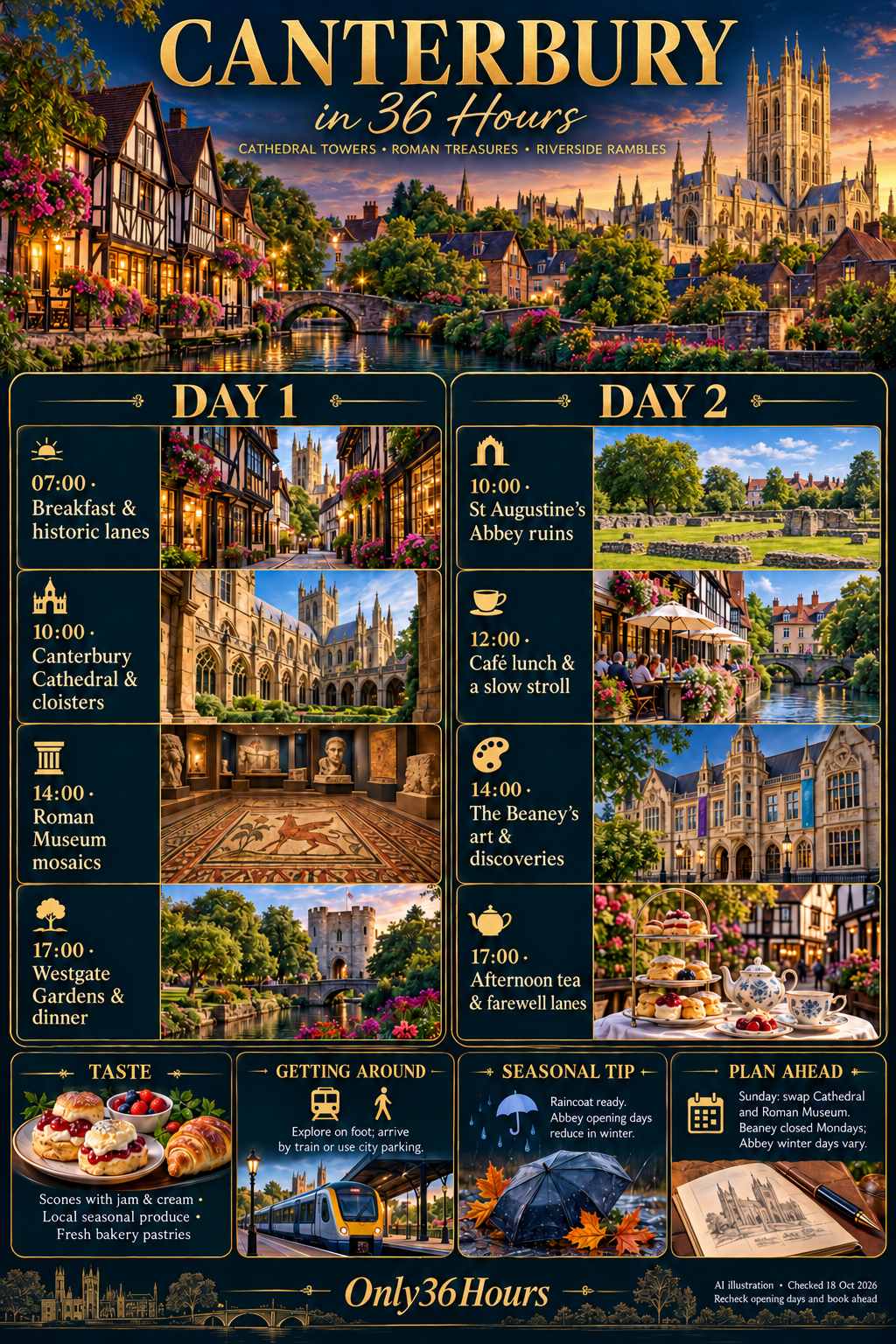
Three calendar details matter. Cathedral sightseeing starts later on Sundays. The Beaney museum is normally closed Mondays, while St Augustine’s Abbey reduces its opening days in winter. For a Sunday–Monday stay, visit the Roman Museum Sunday morning, the cathedral around 12:30–2:30 p.m. and the Beaney around 2:45–4 p.m.; put the abbey on Monday only if its calendar permits. That is a fuller Sunday, so shorten the market-street wandering. In winter, a weekend stay is simpler if the abbey is essential.
Bring a raincoat and shoes suitable for wet paths. Keep riverside walks in daylight during the shorter months, and give indoor alternatives priority in heavy rain rather than treating the route as compulsory.
Day 1: From cathedral precincts to Roman Canterbury
8:30–10 a.m. | Breakfast and the lanes
Begin with a bakery breakfast or a café near your accommodation. Follow the central streets toward the cathedral entrance, leaving time to look up at the varied façades instead of racing between landmarks. Mercery Lane and the surrounding lanes offer a compact introduction, but remember that shops, homes and deliveries belong to the working city. Keep doorways clear and respect private passages.
10 a.m.–noon | Canterbury Cathedral
Allow a generous visit to Canterbury Cathedral. Choose a few features to examine closely: a window, a carved detail, the changing scale of the interior. Ask about available family trails rather than promising a particular activity. Explain that this is an active place of worship, with quiet areas and occasional restrictions.
Regular sightseeing is Monday–Saturday, 10 a.m.–5 p.m.; on Sunday the grounds open at 11:30 a.m. and the church at 12:30 p.m. Last admission is normally 4 p.m. Check the specific closure list, which currently includes a revised visitor route on 20–24 October and possible afternoon Quire closures on 24–30 October. These dated notices matter more than a generic opening-hours box. Attendance at worship is separate from sightseeing and should not be used as a shortcut around visitor arrangements.
Noon–1:30 p.m. | Lunch without a detour
Stay in the centre for lunch. A sandwich, soup or a seasonal plate is sufficient before the afternoon museum. Canterbury’s food guide offers leads for cafés and restaurants, but check the individual menu and opening day before committing. Kent produce can be part of the experience without driving into the countryside for a supposedly essential meal. Ask about ingredients and allergens.
1:30–3 p.m. | A Roman house beneath the city
The Canterbury Roman Museum is on Butchery Lane, making it a natural next stop. Its in-situ mosaic corridor and underfloor heating remains help turn an abstract period into a domestic space. With children, compare what a household needed then and now: heat, water, storage and decoration.
Current regular hours are daily, 10 a.m.–5 p.m., with last entry at 4:30 p.m. Advance booking is recommended. Check the museum’s access information if stairs, lifts or sensory conditions affect your visit; a central location alone does not establish accessibility.
3–7 p.m. | Westgate Gardens, tea and dinner
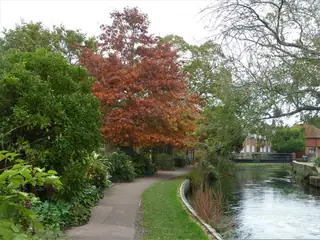
Walk toward Westgate Gardens for a change from interiors. Keep children close beside the water and turn back when the group has had enough; no boat trip is needed to enjoy the Stour. The tourism board’s garden guide identifies several central green spaces and café gardens. If afternoon tea appeals, book it where required and leave room for dinner. Scones with jam and cream are a pleasant British tea-room choice, not a dish unique to Canterbury. Return to your accommodation for a break before an easy evening meal.
Day 2: Monastic ruins and a cabinet of curiosities
10 a.m.–noon | St Augustine’s Abbey, when open
After breakfast, head to St Augustine’s Abbey on Longport. English Heritage dates its foundation to AD 598; the ruins and site museum trace later transformation rather than a single unchanged building. Let children reconstruct the outline of a room in their imagination, while staying on permitted paths and off fragile masonry.
The published 2026–27 schedule lists daily opening through 1 November, then weekends only from 2 November to 12 February, with further seasonal changes. Confirm your exact date on the booking calendar. If closed, substitute a relaxed central walk and longer café break; do not plan to enter an unattended ruin or assume the daily summer banner applies all year.
Noon–3:30 p.m. | Lunch and The Beaney
Return to the centre for lunch, then visit The Beaney. Art, objects and changing displays make a useful contrast to the morning’s ruins. Pick a small number of things that invite questions rather than trying to exhaust the collection. General admission is free, although some exhibitions or events charge.
The museum normally opens Tuesday–Saturday, 10 a.m.–5 p.m., and Sunday, 11 a.m.–4 p.m. Its current notice makes an exception for Monday 26 October 2026. The Best Lane visitor lift is presently unavailable; staff can provide access through the Orange Street Car Park entrance. Contact the museum if this affects your plans.
Three quieter options and a final meal
Choose one small pause from the city’s garden suggestions: Solly’s Orchard beside the river; Dane John Gardens for a different green setting; or the rear garden at Café No.35 on St Margaret’s Street, subject to customer access and its own hours. None is a promise of solitude. Finish with tea or an early dinner, collect luggage and leave a comfortable margin for your train. The best extra hour here is often an unhurried one.
Sources & travel planning
Research checked 2026-10-18. This date describes the guide’s research, not a guarantee of current conditions. Opening hours, prices, access, transport and travel advice can change. Recheck the official sources before booking and departure. Walking and journey times are planning estimates.
- canterbury-cathedral.org ↗
- canterbury-cathedral.org ↗
- canterbury-cathedral.org ↗
- canterbury.co.uk ↗
- canterburymuseums.co.uk ↗
- canterburymuseums.co.uk ↗
- canterbury.co.uk ↗
- english-heritage.org.uk ↗
- english-heritage.org.uk ↗
- canterburymuseums.co.uk ↗
Found a change? Contact Only36Hours about a correction.