36 Hours in Charleston: Harbor Walks, Living Craft and a Fuller History
Verified: 18 October 2026.
Charleston rewards a slower visit than its postcard reputation might suggest. The waterfront and colorful houses are an introduction, but the city’s history also demands attention to enslavement, resistance, African American achievement and the people keeping local traditions alive. This route combines those stories with an aquarium, food breaks and enough breathing room for families. Start at breakfast on Day 1, stay overnight on the peninsula, and finish after dinner on Day 2. Leave distant excursions for another visit.
Before you arrive
A central base reduces transfers, although a peninsula address does not mean every stop is a short walk. Use the free CARTA Downtown Area Shuttle when it fits your route, checking the live map and individual stops rather than assuming a bus will arrive immediately. Arrange a taxi or rideshare when luggage, weather or tired children make walking impractical. Airport arrivals should check CARTA’s current routes or arrange a separate transfer; the airport is not part of the historic walking circuit.
Reserve timed aquarium and International African American Museum tickets before building the rest of the day around them. The Charleston Museum opens at noon on Sundays, and IAAM is closed Mondays. For a Sunday–Monday stay, put the aquarium on Sunday morning and IAAM on Sunday afternoon; visit Charleston Museum on Monday morning, followed by the market and southern waterfront walk. Summer heat and humidity make water, hats and indoor midday breaks worthwhile. Check coastal weather and local alerts before waterfront walks, and never walk or drive through flooded streets.
Day 1: Meet the city from the waterfront inward
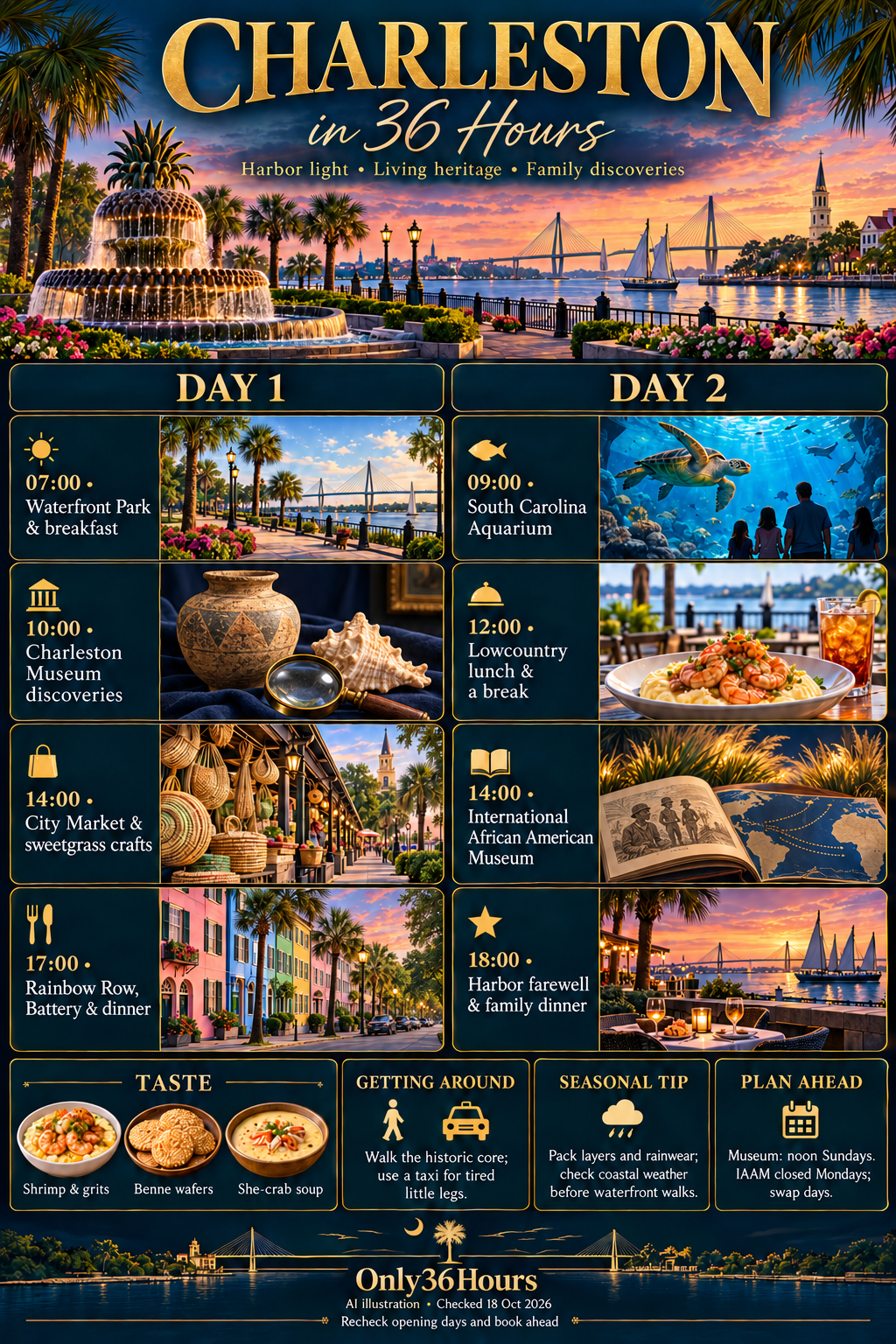
8–9:30 a.m. | Breakfast and Waterfront Park
Have breakfast near your accommodation, then begin at Waterfront Park. Its harbor-edge paths, lawns and pier make an uncomplicated first orientation. Watch working boats and let children choose a detail to follow: a sail, a bird or a changing reflection. Keep the stroll modest; today’s museum and the southern end of the peninsula still lie ahead. Take photographs without blocking the path, and treat waterfront edges as places requiring ordinary supervision rather than a playground without boundaries.
10 a.m.–noon | Charleston Museum
Travel north to the Charleston Museum, allowing time for the transfer and admission. Choose a few galleries that connect with your interests instead of trying to absorb every case. Lowcountry history and natural history offer different ways into the region; the hands-on Kidstory area provides a family-friendly change of pace. Discuss whose labor and knowledge shaped the city, not only who owned its most conspicuous houses.
The museum normally opens Monday–Saturday at 9 a.m. and Sunday at noon. For a Sunday–Monday stay, use the reordered route above instead of this morning slot. Compact strollers are permitted, but check accessibility arrangements against your own needs. Museum photography is for personal use, with no flash or tripods; respect the posted rules.
Noon–2 p.m. | Lowcountry lunch and a proper pause
Look for a menu offering shrimp and grits or she-crab soup, with a vegetable-based alternative for anyone avoiding seafood. These are regional dishes rather than a reason to commit to a particular restaurant before checking its current menu. Ask about shellfish, dairy and stock where relevant. Charleston’s visitor bureau also highlights benne wafers: a small sweet to share rather than another substantial course. Leave time after eating to rest, especially in hot weather.
2–4 p.m. | City Market and living craftsmanship
Explore the Charleston City Market at an unhurried pace. Sweetgrass baskets connect contemporary makers with a craft historically used in rice processing. Look at construction, materials and individual variation; ask before photographing a maker or handling a piece. Shopping and demonstrations are optional. The market’s local-made certification can help distinguish locally produced items. Keep children close in the busier passages and take a drink break before the next walk.
4–7 p.m. | Rainbow Row, the Battery and dinner
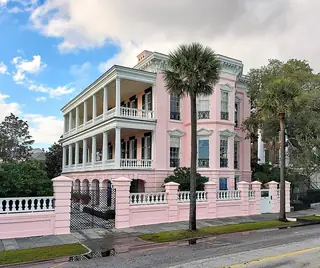
Continue toward Rainbow Row, viewing the colorful houses from the public street, then make your way toward the Battery and White Point Garden. This is an exterior walk, not an invitation into private courtyards. Shorten it if the weather or family energy calls for an earlier dinner. The city’s lower-peninsula park map helps place the waterfront spaces in relation to one another. Return to your accommodation after dinner rather than adding an evening tour simply to fill the schedule.
Day 2: Water, memory and reflection
9–11:30 a.m. | South Carolina Aquarium
Book a morning entry at the South Carolina Aquarium. Its current regular hours are 9 a.m.–5 p.m., with last entry at 3:30 p.m.; holiday changes apply. Give the visit room to unfold rather than timing every exhibit. Let children select a few animals to revisit, and check the day’s program board without assuming a demonstration is included at a particular hour. An early visit leaves space for lunch and the more reflective afternoon ahead.
11:30 a.m.–1:30 p.m. | Lunch and a reset
Choose lunch nearby or take a short transfer to somewhere that suits the group. Keep the meal and walk manageable: the afternoon deserves attention rather than exhausted box-ticking. Allow a bathroom break and time to sit before your next timed entry.
1:30–4:30 p.m. | International African American Museum
Visit the International African American Museum with enough time for its galleries and the African Ancestors Memorial Garden. The museum suggests roughly 1.5–2 hours inside plus additional garden time. The specific July 2026 notice at the foot of its FAQ changes Sunday opening to noon; it remains closed Mondays. The afternoon slot works with that Sunday schedule, but always check your date.
The garden at historic Gadsden’s Wharf connects the site to the African diaspora and the history of slavery. Approach its memorial features as places for reflection. With children, use clear, age-appropriate language and make room for questions or a pause. Do not rush difficult material merely to finish every gallery.
Three quieter pauses, then farewell dinner
- Washington Square offers a small stop near the civic buildings; use the Parks Conservancy’s description to orient yourself.
- Theodora Park combines art and planting in Ansonborough, suitable for a short seated pause rather than another major attraction.
- Waterfront Park’s smaller garden spaces offer an alternative to standing in the busiest fountain area.
Choose whichever fits your route; these are options, not three additional obligations. Finish with dinner and a final short harbor walk if conditions allow. Charleston’s history is more rewarding when the visit leaves room to think about it.
Sources & travel planning
Research checked 2026-10-18. This date describes the guide’s research, not a guarantee of current conditions. Opening hours, prices, access, transport and travel advice can change. Recheck the official sources before booking and departure. Walking and journey times are planning estimates.
- ridecarta.com ↗
- ridecarta.com ↗
- charleston-sc.gov ↗
- charlestonmuseum.org ↗
- charlestoncvb.com ↗
- thecharlestoncitymarket.com ↗
- gis.charleston-sc.gov ↗
- scaquarium.org ↗
- iaamuseum.org ↗
- iaamuseum.org ↗
- charlestonparksconservancy.org ↗
- theodorapark.com ↗
Found a change? Contact Only36Hours about a correction.