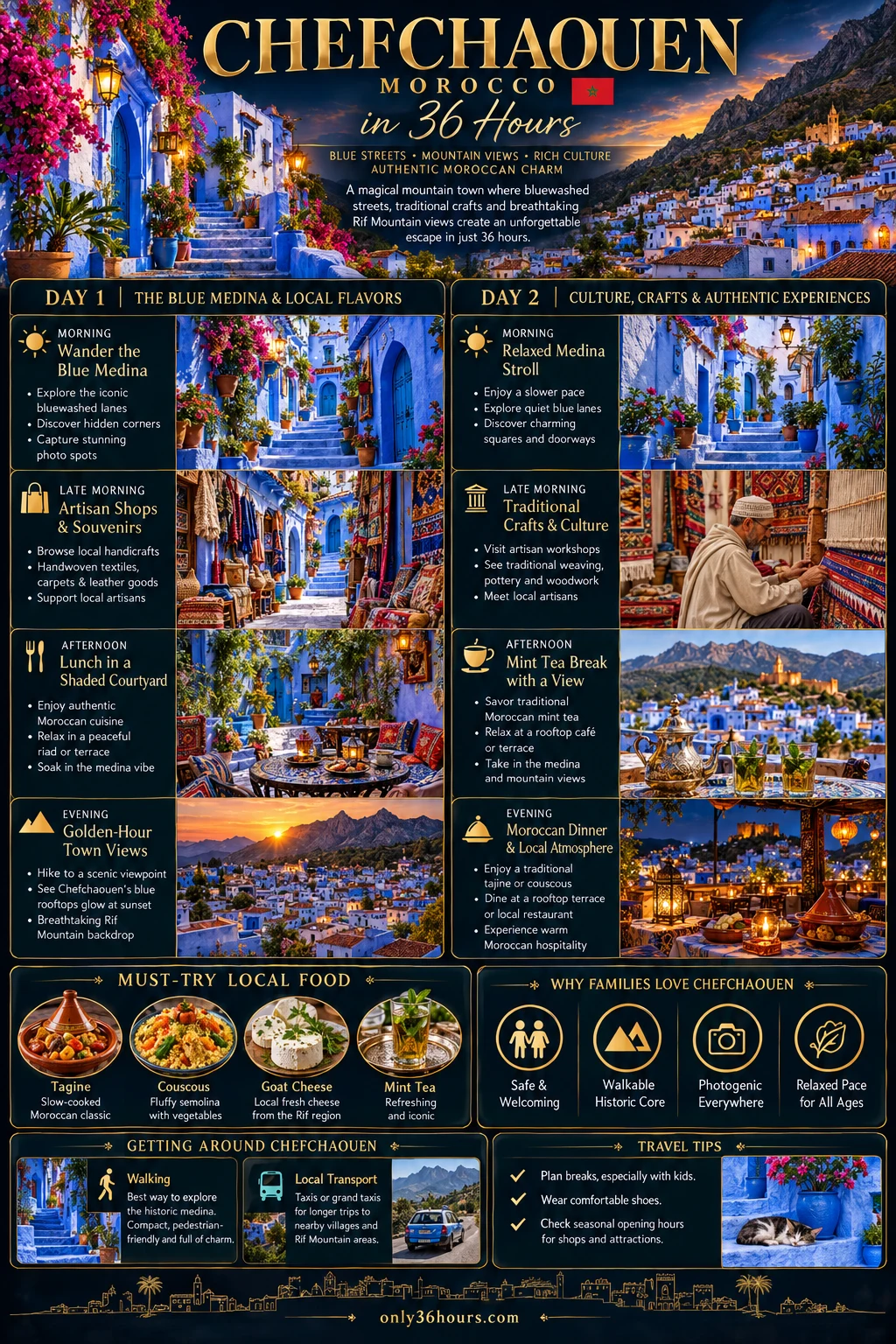
36 Hours in Chefchaouen: Blue Lanes, Kasbah Gardens and a Slower Mountain Town
Verified: 16 October 2026. Walking times are flexible planning estimates for a steep, pedestrian town.
Chefchaouen is best approached as a place to spend time, not a collection of blue backdrops. Its appeal lies in moving between the busy central square, quieter working lanes and the water at the edge of the medina. The surrounding Rif mountains are part of the setting, but a short stay does not need a rushed waterfall excursion. This plan gives the town two mornings and an overnight, with room for conversation, food and breaks between the climbs. Arrive the evening before Day 1 if you want the full 36 hours.
Getting here and choosing your base
CTM operates coaches between Tangier and Chefchaouen; allow roughly 2½–3 hours for planning, then check the dated booking result for your actual departure and arrival. The operator’s general route article contains conflicting departure information and old pandemic text, so use its live booking search rather than copying those hours. Book onward travel before your final morning if a connection matters. CTM route information, operator booking search.
Ask your accommodation which vehicle-accessible meeting point to use and whether someone can help with luggage. A taxi can get you to an appropriate edge of the medina, not necessarily to the front door of a hillside guesthouse. Allow an additional 20–40 minutes between coach arrival and being settled, depending on your address. Choose accommodation by the number of steps and access route as well as the rooftop view. Download a map and save the property’s phone number before setting off.
Day 1: Find the town’s rhythm
09:00–10:30 | Breakfast and Outa el Hammam
Start with breakfast at your accommodation, then walk to Place Outa el Hammam. The square, Kasbah and Grand Mosque form a useful orientation point; agree to meet here if travelling companions separate. Look at the mosque from public space and do not assume sightseeing entry is permitted. Leave people room to move and worship.
Take a short loop through nearby lanes, noticing doors, small shops and changes in the blue paint rather than searching for a single famous staircase. These are residential streets. Ask before photographing people, especially children, and do not enter private courtyards or rearrange objects for a picture. The national tourism board identifies the medina’s narrow winding streets and craft traditions as central to the visit. Chefchaouen overview.
10:30–12:00 | Kasbah and its garden
Return to the Kasbah for a compact visit. Its enclosed garden offers a different atmosphere from the square; the museum’s ethnographic displays include textiles, historical photographs and weapons. Give yourself approximately an hour and treat any tower climb as optional. The national tourism board confirms the attraction and collections, but a reliable current operator timetable and child tariff were not established during verification. Ask your accommodation to confirm the day’s opening, ticket conditions and which areas are accessible before you commit. Official heritage description.
If it is closed, keep the exterior stop short and move the visit to the following day if possible. Do not replace it automatically with an unplanned mountain excursion. A longer café break and a guided explanation of the medina are better uses of a limited window.
12:00–15:00 | Lunch, then a proper pause
Choose a restaurant with a clearly displayed menu and order a tagine, couscous if available, or cooked vegetable dishes with bread. Zaalouk, made with aubergine, is a useful dish to look for; confirm ingredients and preparation rather than assuming every vegetable dish is vegan. Mint tea makes a leisurely finish, and you can ask about sugar before it is prepared. These are Moroccan foods, not dishes exclusive to Chefchaouen. National tourism food guide.
Return to your room for the warmest part of the afternoon if needed. A midday break is especially helpful with children, after a winding coach journey or when your accommodation requires repeated stair climbs. Carry water for the next walk rather than relying on finding an open shop at the exact moment you need one.
15:00–17:30 | Ras El Ma in daylight
Walk toward Ras El Ma at the medina’s eastern edge, allowing roughly 20–30 minutes from the central square with pauses. The water and the meeting of town and hillside offer a welcome change from enclosed lanes. Stay on established public paths, keep children away from slippery edges and view the water rather than treating it as a swimming opportunity. The national tourism office includes Chefchaouen’s Ras Elma among the city’s essentials. Official destination guide.
Return by a familiar route before darkness. The point is a pleasant town walk, not reaching an isolated viewpoint after sunset. In heavy rain, omit the waterside section and spend the afternoon in a café or with your host instead.
18:30–20:30 | An easy evening
Have dinner close to your accommodation or on a well-used route back from the central square. Try a different dish from lunch, perhaps soup and cooked vegetables with bread, and leave time for tea. Confirm the total and any extras before ordering. Rooftop dining is optional: check steps, railings and weather rather than choosing a terrace only for its photograph.
Day 2: Craft and the less photographed town
09:00–11:30 | A licensed-guide walk
Arrange a roughly two-hour medina walk through your accommodation with a licensed guide. Ask for history and working streets rather than a shopping-only tour, agree the fee and scope in advance, and request a route suited to your walking ability. An informed guide can help distinguish a shop selling regional work from an actual workshop, and explain the buildings you otherwise pass as decoration. Official tourism information highlights weaving, woodworking and leather-related crafts in Chefchaouen. Medina and crafts.
Include the Souika lanes if they suit the route. This is a historic residential quarter, not an attraction with a ticket or a guaranteed demonstration. Keep visits to any working studio brief unless invited, and ask before taking photographs. The architectural research record identifies Souika among the medina’s historic neighbourhoods. RIPAM architectural heritage proceedings.
11:30–15:00 | Lunch and deliberate shopping
Return for lunch, then revisit one shop you genuinely liked. Ask where an item was made, what material it uses and whether the price is for the piece you inspected. You do not need to buy because someone offered tea. Keep receipts for substantial purchases and think about luggage space before buying bulky textiles or pottery.
If the Kasbah was closed yesterday and is now open, use this block for it instead. Families can make the craft walk shorter and leave more time for food and rest; a pleasant two-hour morning is better than an exhausted all-day circuit.
15:00–20:30 | Leave a buffer, not a mountain deadline
Use the afternoon for a final familiar lane, tea or rest before an early dinner. Collect bags well ahead of the onward coach. If transport departs earlier, move dinner to your next destination rather than planning a tight connection. Akchour and Talassemtane deserve separate weather, guide and transport planning; they are not included in this town-focused 36 hours.
Three quieter worthwhile places
- Kasbah garden: a sheltered pause away from the square, during confirmed opening hours.
- Ras El Ma: worthwhile earlier in the day or outside peak visiting periods; it is popular, not a secret spot.
- Souika’s public lanes: a slower residential walk with a guide, without intruding into homes.
Family, access and safety essentials
Stairs, slopes and uneven paving can make a stroller difficult; discuss the exact hotel approach before booking. No minimum age was verified for the Kasbah, so confirm child admission and tower suitability locally. Bring layers for cooler mountain evenings and non-slip shoes for wet streets.
Use an officially licensed guide, avoid isolated areas after dark and protect valuables in busy lanes. Cannabis remains illegal despite local offers. Heavy rain can cause dangerous flooding around rivers and mountains; follow local warnings. During Ramadan, confirm restaurant and attraction hours and ask your host about respectful daytime arrangements. Read the full current advice for your own nationality and circumstances before travelling. UK official Morocco safety guidance.
Sources & travel planning
Research checked 2026-10-16. This date describes the guide’s research, not a guarantee of current conditions. Opening hours, prices, access, transport and travel advice can change. Recheck the official sources before booking and departure. Walking and journey times are planning estimates.
Found a change? Contact Only36Hours about a correction.