36 Hours in Colonia del Sacramento: Old Streets, Small Museums and River Light
Verified: 16 October 2026. Walking and taxi times are planning estimates; museum openings require local confirmation.
Colonia works best when you let the day visitors leave without joining them. Its compact historic quarter becomes a different experience when there is time to return to a square, linger over dinner and see the river in changing light. The town's Portuguese and Spanish layers are central to its UNESCO recognition, but a good short stay should also include ordinary streets and somewhere beyond the old peninsula. This plan assumes arrival before the first morning and departure after dinner on Day 2. UNESCO heritage account.
Arriving and settling in
From Buenos Aires, this is an international ferry journey, not a domestic excursion. Colonia Express currently describes its direct crossing as approximately 75 minutes; allow considerably longer for reaching the terminal, checking in, immigration and disembarking. Follow your chosen operator's boarding instructions. For Buquebus, plan to arrive approximately two hours before departure and follow the deadline on your ticket; its published pages differ on the final cutoff, which should never be treated as a target arrival time. Colonia Express routes, Buquebus boarding guidance.
Check travel-document and child-consent requirements for each traveller's nationality and family circumstances before buying. Weather can disrupt crossings, so do not build a tight same-day flight connection around the return ferry. From Colonia's terminal, allow about 15–25 minutes to walk to the historic quarter, or use a taxi with heavy bags. Stay centrally if possible; a car adds little to Day 1.
Day 1: The historic peninsula
09:00–11:30 | Gate, lanes and Plaza Mayor
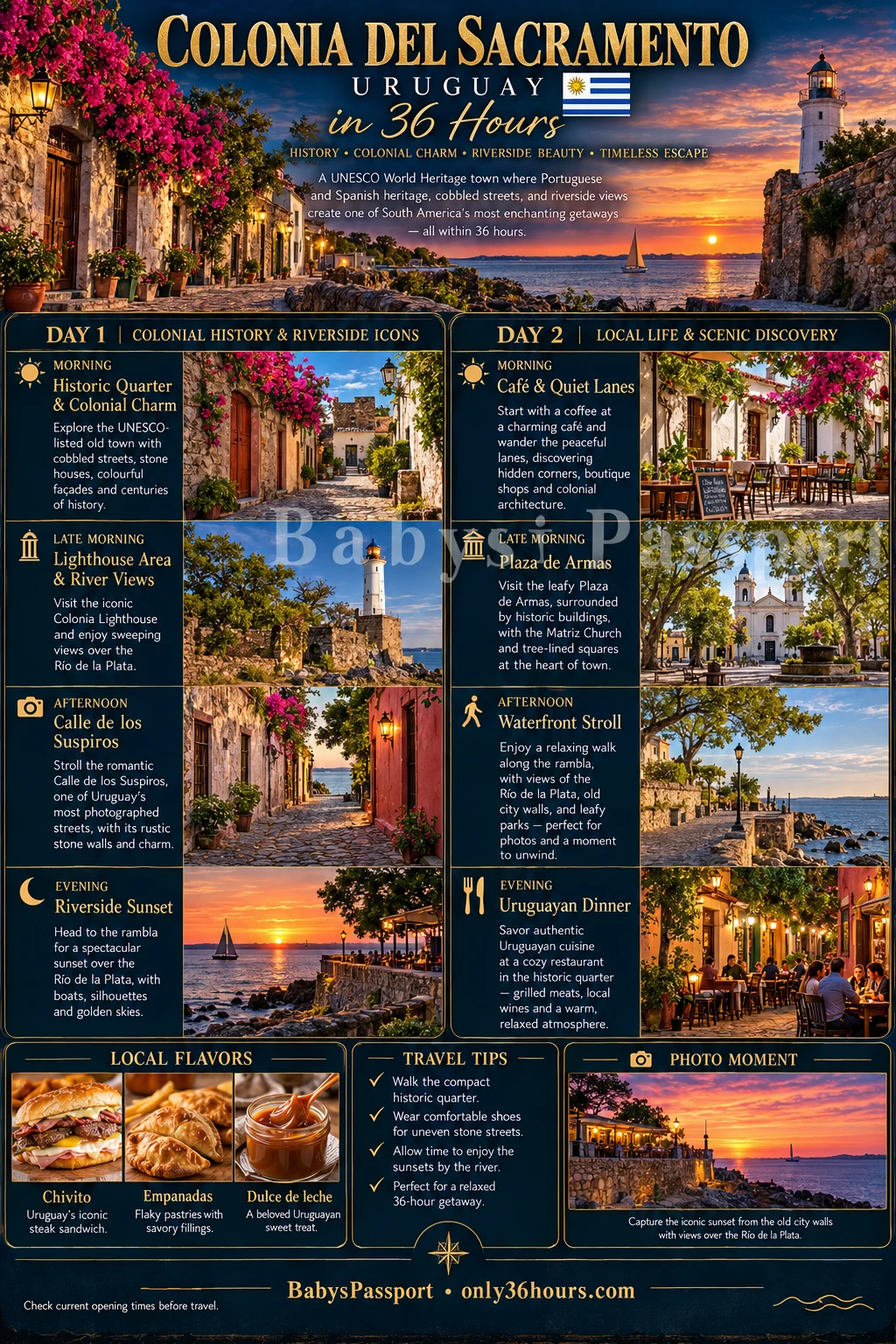
Have breakfast before walking toward the Portón de Campo and the old quarter. Move slowly through the streets toward Plaza Mayor and Calle de los Suspiros. The uneven paving is part of the experience, but it is also a reason to look where you are stepping instead of spending the whole walk behind a camera.
A short guided walk can help separate documented history from the many romantic stories attached to the streets. Ask the tourist information centre for the day's actual departures and language options rather than relying on a longstanding online timetable. The national UNESCO commission identifies the BIT visitor centre at Odriozola 434 and the Portón del Campo information point as useful orientation resources. Uruguay UNESCO visitor guidance.
11:30–14:00 | One small museum and lunch
Choose an open branch of the Museo de Colonia rather than attempting every collection. Casa de Nacarello, on Calle del Comercio opposite Plaza Mayor, is particularly suited to a short visit: its domestic rooms and objects help you imagine life inside a Portuguese-period house. Allow 30–45 minutes, then stop for lunch. National museum-register description.
Museum branches can have different opening days and changing arrangements. Confirm which houses are open, the current combined-ticket coverage and where to buy it locally. The older municipal museum web domain was not a reliable source at verification, so this guide does not reproduce its timetable. If Casa de Nacarello is unavailable, ask about the central Rebuffo collection or save the museum time for Day 2. The national museum register provides official contact details. Colonia museum directory.
14:00–17:00 | Lighthouse surroundings and the western shore
After lunch, see the lighthouse and nearby ruins from ground level, then wander toward Paseo de San Gabriel. This is an easy afternoon to shorten if the heat is strong. The lighthouse climb is optional: the national UNESCO commission lists an under-12 restriction, and current admission, weather and stair suitability should be checked at the entrance. Do not promise the climb to younger children.
If open, the small tile collection at the corner of Paseo San Gabriel and Misiones de los Tapes makes a gentle second museum stop. Look for differences in pattern and colour rather than expecting a long exhibition. Otherwise, find a place to sit by the river without climbing on historic walls or shoreline rocks. Official tile-museum listing.
17:00–20:30 | River light and dinner
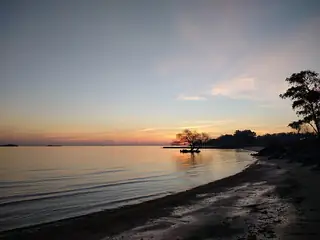
Return to your accommodation for a break. If sunset falls before dinner and conditions are pleasant, revisit the public waterfront for the changing light; the western side of the peninsula is a practical place to look across the Río de la Plata. Keep this optional and stay on safe public paths.
For dinner, try a parrilla meal or a chivito. Despite its name, the Uruguayan chivito is generally a beef sandwich, often with cheese, salad and additional toppings. Ask about size before ordering one per child. These are national traditions rather than dishes unique to Colonia. Uruguayan municipal food guide. Finish with something containing dulce de leche if you want a sweet course, or simply take a short walk back through the centre.
Day 2: Real de San Carlos and a slower return
09:30–12:00 | The restored Plaza de Toros
After breakfast, take a taxi to Real de San Carlos, allowing approximately 15–20 minutes from the old quarter and arranging the return beforehand. Do not mistake its map position for a short walk. The restored Plaza de Toros offers a different chapter of Colonia's history: an ambitious early-twentieth-century tourism complex, now used for cultural events and visits. Allow around 60–90 minutes if an interior visit is available. Uruguay XXI's account of the restored site.
Check the current visitor calendar before travelling out. Published schedules differ between tourism listings, and performances can change access. Book a confirmed tour if interpretation is important; otherwise, make the exterior the guaranteed part of the outing. Ask which areas are step-free and whether an event affects the normal route.
12:00–15:00 | Optional fossils, then lunch
If the nearby Espacio Paleontológico Armando Calcaterra is confirmed open, spend 30–45 minutes there instead of extending the bullring visit. This small municipal collection is in Real de San Carlos, so it fits geographically without another distant excursion. It can be a useful family alternative to a second architecture-focused stop. National museum-register entry.
Return by taxi for lunch. If neither site is open, stay in town instead: revisit an open museum branch, browse local shops and take a short waterfront walk. Do not replace the morning with an unplanned rural winery trip, which needs separate transport and appointments.
15:00–20:30 | Leave space for the town, and the terminal
Spend the final afternoon around the central streets or the riverside near Bastión del Carmen, checking whether its cultural spaces are open before entering. This is time for an ice cream, a shop visit or simply another look at the river. The cultural centre is documented by Uruguay's public investment and promotion agency as part of Colonia's contemporary offer, beyond the old houses.
Choose dinner according to the departure time. If the last convenient ferry leaves earlier, shorten this block and eat before check-in; the itinerary should serve your confirmed ticket, not the other way around. Keep passports and travel documents accessible, and leave a substantial terminal buffer.
Three quieter worthwhile places
- Casa de Nacarello: an intimate domestic-history visit, conditional on the branch being open.
- The tile museum: a compact collection near Paseo San Gabriel, worthwhile for a short, focused stop.
- Espacio Paleontológico: a modest collection in Real de San Carlos that complements the bullring outing when open.
Practical and family notes
Historic cobbles make wheelchair and pushchair travel uneven; the UNESCO commission describes the quarter as only partly accessible. Ask accommodation about thresholds and bathroom access, and confirm each museum separately. Bring sun protection and water in warmer months, a windproof layer by the river, and shoes with grip for wet paving. Riverfront sightseeing does not imply that swimming is safe or permitted at that spot. Keep valuables close in busy terminal areas, use licensed transport, and confirm prices in Uruguayan pesos before ordering or accepting a ride.
Sources & travel planning
Research checked 2026-10-16. This date describes the guide’s research, not a guarantee of current conditions. Opening hours, prices, access, transport and travel advice can change. Recheck the official sources before booking and departure. Walking and journey times are planning estimates.
- whc.unesco.org ↗
- coloniaexpress.com ↗
- buquebus.com ↗
- comisionunesco.org.uy ↗
- museos.gub.uy ↗
- museos.gub.uy ↗
- salto.gub.uy ↗
- uruguayxxi.gub.uy ↗
- museos.gub.uy ↗
Found a change? Contact Only36Hours about a correction.