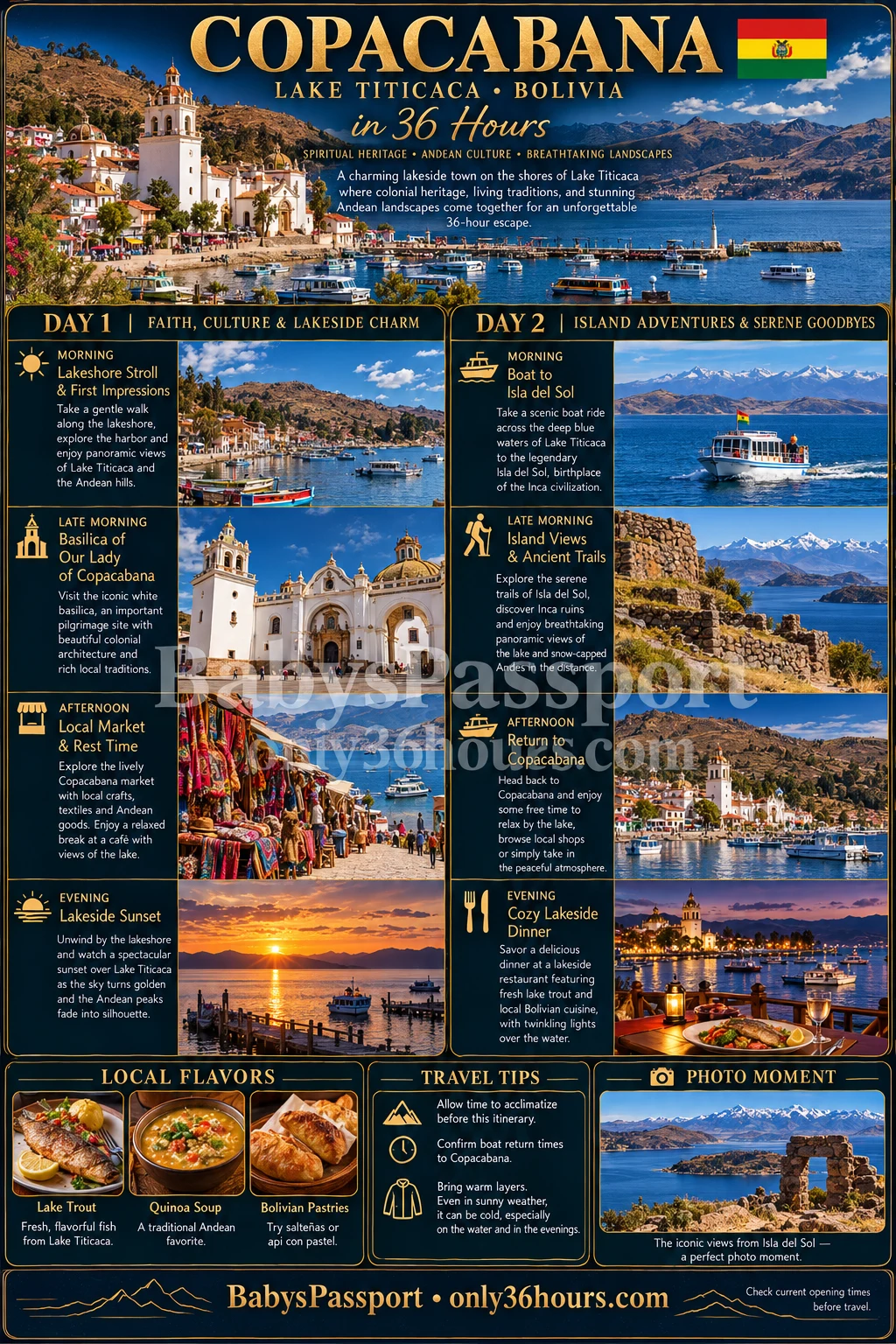
36 Hours in Copacabana: Sacred Shores and a Measured Visit to Isla del Sol
Verified: 16 October 2026. Boat departures and local access must be reconfirmed; transfer times are estimates.
Copacabana sits beside a lake whose scale can make the surrounding mountains seem unexpectedly small. It is a pilgrimage town as well as a departure point for Isla del Sol, and both identities deserve time. This itinerary starts gently in town and gives the second day to one part of the island. It does not add Isla de la Luna, a full-island hike or a compulsory summit sunset. Bolivia's official tourism programme identifies Copacabana's basilica, lake and island heritage as its central attractions. National tourism overview.
Before treating this as a 36-hour stop
Lake Titicaca lies at roughly 3,800 metres. This plan assumes you have already spent time acclimatizing at elevation and feel well; it is not a recommended first 36 hours after flying from sea level. The lake's binational scientific observatory gives its elevation as approximately 3,810 metres. Lake observatory.
Altitude illness can affect fit adults and children. Avoid further ascent with symptoms, and seek urgent medical help and descent for severe or worsening symptoms, especially breathlessness at rest, confusion or difficulty walking. Discuss high-altitude travel with a clinician beforehand if travelling with young children or relevant medical conditions. No itinerary should take priority over how someone is feeling. CDC altitude guidance, CDC advice for children.
Arrival and current transport caution
Allow roughly four to five hours from La Paz, plus disruption margin. The route involves the Strait of Tiquina: passengers normally cross separately from the bus. Confirm the transport company's procedure and keep your valuables and essential medicines with you. Bolivia Hop describes its policy of putting passengers on a separate motorboat. Operator's route explanation.
At verification, official UK advice reports a state of emergency and warns that protests and roadblocks can disrupt travel without notice. Do not cross blockades; check current road conditions through your operator and accommodation. Its specific advice against all but essential travel concerns Chapare, not a blanket prohibition on Copacabana, but disruption elsewhere remains material. Keep a spare day before an international flight. Current official advisory.
Day 1: A town morning and a quiet lakeside afternoon
09:00–12:00 | Breakfast and the basilica
Have a light breakfast, then walk slowly toward the Basílica de Nuestra Señora de Copacabana and the central square. From the main waterfront, allow approximately 10–20 minutes uphill, longer if you need pauses. This is an active place of worship: enter only during an appropriate visitor window, dress respectfully and ask before photographing ceremonies or individuals.
Do not schedule a guaranteed car-blessing ceremony or museum entry around an unverified timetable. The exterior, public square and a quiet look inside when permitted provide a meaningful morning on their own. Bolivia's official destination material places the basilica at the heart of the town's religious heritage. Official destination brochure.
12:00–15:00 | Lunch and a genuine rest
Return toward the centre for lunch. Trout is widely associated with the local lake economy, including fish farming in the Copacabana area; choose a busy kitchen and ask for it freshly cooked. Potatoes or a simple soup make straightforward accompaniments, and children may prefer a smaller portion with bones carefully removed. Do not describe the trout as a native species or assume every fish was caught that morning. Departmental account of Copacabana trout production.
Spend an hour or two resting afterward. A schedule that leaves room for tiredness is more useful here than a list of viewpoints. Drink safe water, carry a warm layer and avoid making alcohol the centre of the afternoon.
15:00–17:30 | A short waterfront walk, or Kusijata by car
If everyone feels comfortable, wander along the public waterfront away from the busiest departure area. Stop when the path becomes less suitable rather than committing to a long shoreline circuit. Strong sun, cool wind and altitude can combine even when the temperature feels mild.
For a more distinct quiet outing, arrange a taxi with a waiting return to the Kusijata shore/viewpoint area. Allow approximately 15–25 minutes each way and keep the visit short, confirming the exact road-accessible stop with the driver. A Bolivian water-agency account documents this lakeside sector. Do not assume an archaeological museum will be open or add a hill walk without checking conditions. Official Kusijata reference.
17:30–20:00 | Confirm tomorrow's boat, then dinner
Before dinner, establish the next day's departure, landing point and return boat directly with a reputable operator. Ask how weather cancellations work, whether community entrance charges are separate, and whether there are correctly fitting lifejackets for everyone, including children. Eat early and keep the evening restful. Skip the Calvario climb if you are tired or newly acclimatizing; a waterfront view does not require a summit.
Day 2: Southern Isla del Sol, conditionally
08:00–10:30 | Breakfast and the crossing
Use a confirmed morning departure rather than assuming a universal 08:30 service. Allow roughly 90 minutes for the boat to the southern Yumani area, plus boarding time; actual duration depends on the vessel, route and conditions. The transport operator's island guide distinguishes this from the longer journey to the north. This itinerary stays south and returns from an agreed landing point. Island transport overview.
Do not board if the boat is overloaded, essential safety equipment is missing or conditions appear unsafe. The FCDO specifically warns that Titicaca boats can be basic and advises checking lifejackets. Lake-travel safety.
10:30–14:30 | Yumani at your own pace
The southern landing and village involve steep paths and steps. Take the climb slowly, turning back if anyone feels unwell. Choose a short local walk, a viewpoint and lunch rather than trying to traverse the island. Ask permission before entering fields or photographing residents, and follow community access instructions. The national ethnography museum's publication describes Isla del Sol as a lived agricultural landscape, not simply an archaeological attraction. MUSEF island study.
Lunch can be simple: a cooked soup, potatoes or another freshly prepared dish offered by a village kitchen. Confirm the bill and allow enough time to descend before the return departure. Carry cash in small boliviano denominations and pack out your rubbish.
14:30–18:00 | Return with a buffer
Follow the operator's confirmed return schedule, leaving a generous margin at the landing. Do not rely on finding an extra late boat or negotiate a risky crossing because dinner or a bus is waiting. If wind cancels the outing before departure, remain in Copacabana and use the town route, a café and a locally confirmed cultural visit instead. If anyone has altitude symptoms, replace sightseeing with medical assessment as appropriate.
18:00–20:30 | A final lakeside meal
Have dinner back in town and stay another night if onward transport would otherwise mean a rushed or late road journey. A 36-hour sightseeing plan does not require leaving at the exact thirty-sixth hour. Arrange the next connection in daylight where practical.
Three quieter worthwhile places
- The basilica's public forecourt outside pilgrimage peaks: observe respectfully without treating ceremonies as a performance.
- Kusijata's lakeside sector: a short, prearranged taxi outing with a confirmed return.
- Yumani's village paths away from the landing queue: only the short, locally permitted section that suits your ability.
Family and seasonal essentials
This is a demanding destination for small children, wheelchair users and anyone with limited mobility: boat boarding, island stairs and high altitude need individualized planning. Do not assume adult lifejackets fit children or that a hotel calling itself accessible has a step-free entrance. November–March rains can worsen roads, while cold evenings are possible year-round. Reconfirm transport, carry sun protection and layers, and leave enough flexibility to abandon the island day without losing the value of the stay.
Sources & travel planning
Research checked 2026-10-16. This date describes the guide’s research, not a guarantee of current conditions. Opening hours, prices, access, transport and travel advice can change. Recheck the official sources before booking and departure. Walking and journey times are planning estimates.
- conocebolivia.turismoyculturas.gob.bo ↗
- borea.mnhn.fr ↗
- cdc.gov ↗
- cdc.gov ↗
- bushop.com ↗
- gov.uk ↗
- conocebolivia.turismoyculturas.gob.bo ↗
- lapaz.gob.bo ↗
- senasba.gob.bo ↗
- bushop.com ↗
- gov.uk ↗
- musef.gob.bo ↗
Found a change? Contact Only36Hours about a correction.