36 Hours in Dakar: Contemporary Culture and a Thoughtful Day on Gorée
Verified: 16 October 2026. Travel times are approximate allowances; confirm transport and museum arrangements for your dates.
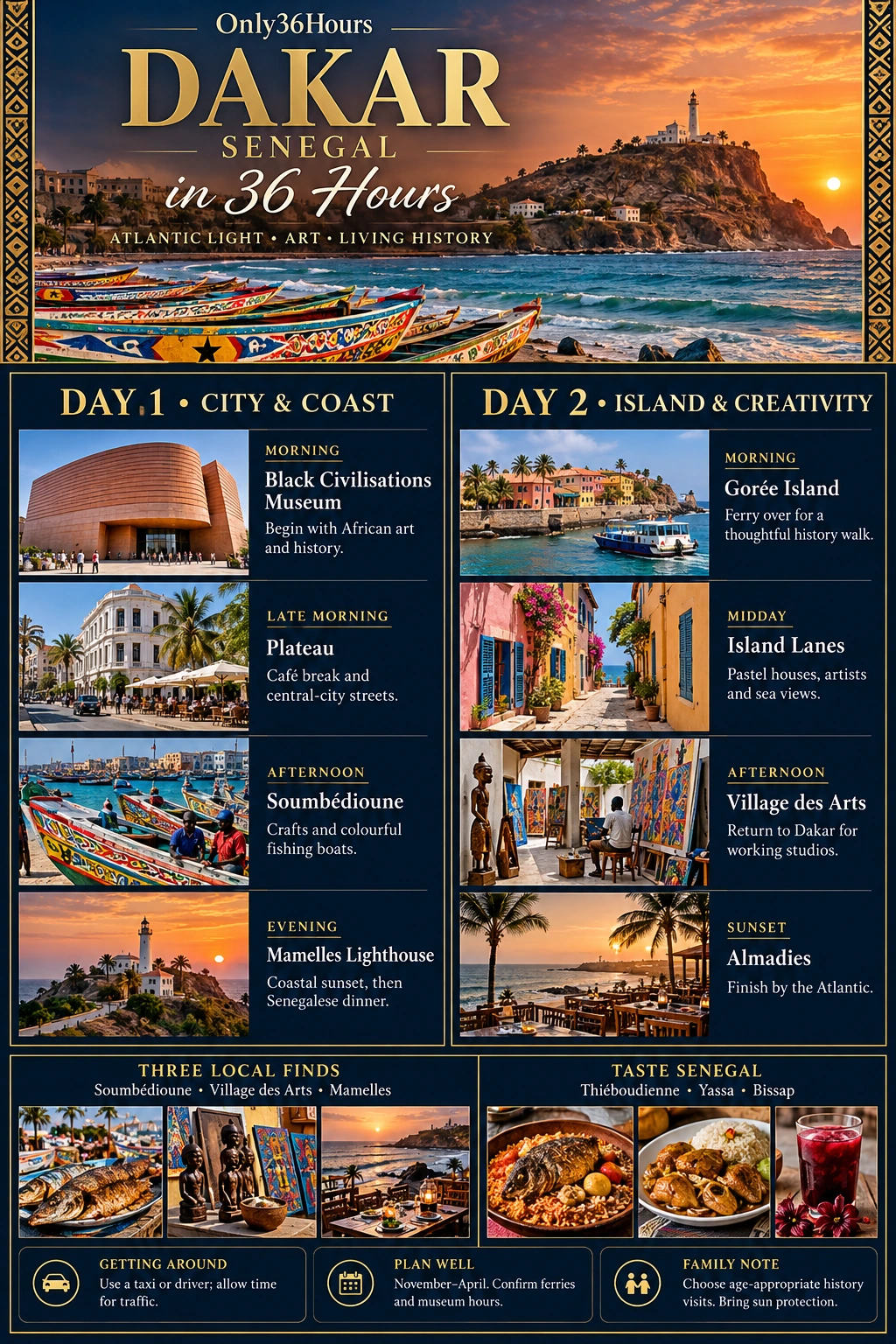
Dakar has the energy of a working Atlantic capital: traffic, conversation, contemporary art and meals that reward a long lunch. Gorée offers a different pace, but its beauty should not overshadow its role as a place of remembrance. This itinerary gives the city one day and the island most of another, avoiding a cross-peninsula race to every monument. Choose Tuesday–Sunday if possible, when the principal museums are open, and arrive the evening before.
Getting settled
Blaise Diagne International Airport is well outside central Dakar. Allow roughly 60–90 minutes by arranged car to the Plateau, and longer during congestion. Confirm the total fare, tolls and pickup point before travelling. The airport provides transport information, while Dakar Dem Dikk operates airport express shuttles; check the current endpoint and onward transfer rather than assuming the bus drops you at your hotel. Airport transport information, Dakar Dem Dikk services.
A Plateau base suits this route's museums and ferry. Coastal hotels farther north may be appealing, but repeated journeys can consume the short stay. Use trusted transport arranged by your accommodation for longer trips and after dark. Keep valuables discreet, avoid demonstrations and do not use isolated beach walks as an evening shortcut. Conditions can change, so review the current official advice before departure. Senegal safety guidance.
Day 1: Museum perspectives and Dakar's contemporary art
09:00–12:30 | Breakfast, then the Museum of Black Civilisations
Have an easy breakfast and arrive at the Musée des Civilisations Noires around 10:00. Allow two hours for a focused visit, choosing a few sections rather than attempting to read everything. The museum offers a wide frame for African and diaspora histories and cultural expression, making it a useful introduction before Gorée.
The museum's published visitor page lists Tuesday–Sunday opening from 10:00 to 19:00, with Monday closed. Confirm exhibitions and guided-tour availability directly: search results can surface an unfinished alternative website with placeholder contact details and a different timetable. The established visitor page also states that the museum is accessible; ask specifically about the lifts, toilets and route you need rather than relying on that broad statement alone. Children may enjoy selecting a few objects to discuss, with a break before museum fatigue takes over. Museum visitor information.
12:30–15:30 | A Senegalese lunch and a pause
Choose a nearby restaurant for ceebu jën, often written thieboudienne: fish, rice and vegetables, with regional and household variations. Its culinary traditions are recognised by UNESCO, and it is a meal worth enjoying slowly. Ask about shellfish and other ingredients if allergies matter. A restaurant can provide individual plates or explain how a shared dish is served; there is no need to imitate unfamiliar etiquette without guidance. UNESCO's culinary heritage account.
Return to your hotel for a break during the afternoon heat. This is also time to confirm tomorrow's ferry, identity-document requirements and the island museum's opening arrangements. Keep cash in small denominations for ordinary purchases, but avoid displaying large amounts. Use safe drinking water and favour freshly cooked food.
15:30–18:00 | Le Manège and a short Plateau wander
Visit Galerie Le Manège at 3–5 rue Parchappe, allowing 45–60 minutes for whichever exhibition is showing. The Institut Français lists daily opening from 10:00 to 18:00, but installations and special events can affect access. As checked, Jean-Michel André's Chambre 207 runs from 25 September to 31 October 2026; later visitors should consult the new programme. This is a good reminder that Dakar's cultural life is actively being made, not confined to heritage collections. Gallery programme and visitor details.
Follow with a brief walk on familiar, busy Plateau streets or a seated drink, then dinner. If you want music, select a specific event from a venue's current programme and arrange transport; do not assume a performance happens nightly. Families can simply have an early evening and preserve energy for the island.
Day 2: Gorée with time to listen
09:00–12:30 | Ferry and the Maison des Esclaves
Reach the ferry terminal about 45–60 minutes before your chosen sailing, carrying the required passport or identity document. The published Port Autonome timetable includes a 10:00 departure on both its weekday and Sunday/holiday schedules, but check for changes and ticket queues. The crossing itself takes about 20 minutes; weather and operations can affect it. Use the public ferry and follow crew directions. Port ferry timetable, museum arrival guidance.
Begin with the Maison des Esclaves if it is open for ordinary visits that morning. Contact it beforehand to confirm daily access, any midday break and language arrangements: its current page explains private and educational bookings but does not provide a dependable full opening timetable. Ordinary admission is separate from the ferry. A private guided visit requires an advance arrangement, rather than simply turning up expecting a dedicated English-speaking guide.
Approach the museum as a memorial and place of learning. Its importance as a symbol of the transatlantic slave trade does not require repeating disputed numerical claims about how many people passed through this particular house. For children, explain the subject beforehand in age-appropriate language, allow questions and leave room for quiet afterwards. Maison des Esclaves, UNESCO Gorée overview.
12:30–16:30 | Lunch, island lanes and an optional historical museum
Have lunch, then explore residential lanes away from the busiest waterfront approaches. Gorée is a living community: ask before photographing residents, avoid private courtyards and agree any guide's fee and scope beforehand. Take pauses in the shade instead of climbing every high point in the midday sun. Municipal island information.
If everyone wants more context, spend 45–60 minutes at the Historical Museum in Fort d'Estrées. Its operator lists Tuesday–Sunday opening from 10:30 to 17:00; an older educational document gives an earlier finish, so this early-afternoon visit leaves a sensible margin. Otherwise use the time for a quieter island stroll. Aim for a confirmed mid-afternoon return ferry, keeping a later sailing available as a backup rather than planning around the last boat. Historical Museum operator.
17:00–20:00 | A gentle return
Back in Dakar, return to your hotel before dinner. Do not attach an international flight tightly to the ferry: the boat, traffic and airport transfer each introduce uncertainty. A second night makes the final meal much more relaxed.
Three quieter choices and practical notes
The Le Manège gallery, Gorée's residential lanes away from the landing, and the Historical Museum offer lower-key alternatives to the busiest visitor stops. Choose according to energy rather than insisting on all three.
For a Monday–Tuesday stay, use Monday for the gallery, meals and city walks, then choose either the main museum or Gorée on Tuesday; fitting both properly requires more time. For Sunday–Monday, prioritise the museum Sunday and treat Monday island interiors as unavailable unless explicitly confirmed. Ferry boarding, uneven island lanes and historic buildings require individual accessibility checks. Arrange assistance ahead, keep children close at quays, and do not assume island beaches are safe swimming spots. Hot, humid or rainy conditions call for shorter walks, shade and flexible outdoor plans.
Sources & travel planning
Research checked 2026-10-16. This date describes the guide’s research, not a guarantee of current conditions. Opening hours, prices, access, transport and travel advice can change. Recheck the official sources before booking and departure. Walking and journey times are planning estimates.
- dakaraeroport.com ↗
- demdikk.sn ↗
- gov.uk ↗
- mcn-sn.com ↗
- ich.unesco.org ↗
- ifs.sn ↗
- portdakar.sn ↗
- maisondesesclaves.org ↗
- maisondesesclaves.org ↗
- whc.unesco.org ↗
- iledegoree.sn ↗
- musee-historiquedusenegal.sn ↗
Found a change? Contact Only36Hours about a correction.