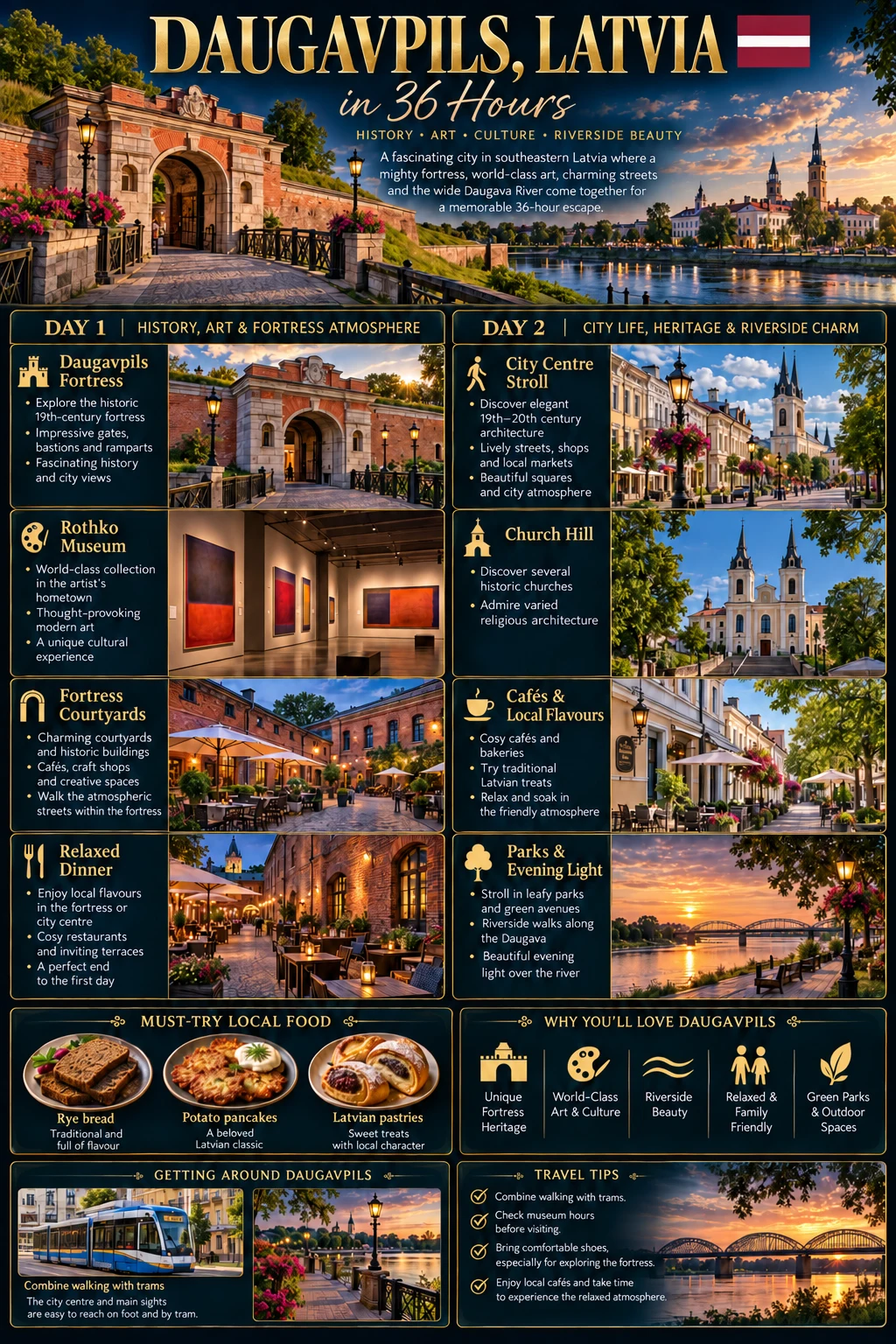
36 Hours in Daugavpils: Rothko, Fortress Streets and Latgalian Craft
Verified: 16 October 2026. Walking and transport times are approximate planning allowances.
Daugavpils rewards a slower visit than a quick stop for one famous artist. Its fortress is an inhabited district as well as a heritage site, its church skyline reflects several religious communities, and its ceramics connect contemporary creativity with Latgalian traditions. Give the Rothko Museum a proper afternoon and spend the following day in the central city. Arriving the evening before makes this a comfortable 36-hour stay rather than a long train journey with sightseeing squeezed around it.
Arrival and orientation
Use Vivi's live planner for trains from Rīga to Daugavpils, allowing roughly three to four hours depending on the service. Check engineering notices as well as the basic timetable: the operator currently flags changes in the Daugavpils direction on 28–30 October 2026. Do not book a tight onward connection from a generic journey-time estimate. Vivi timetables and notices.
Stay centrally for straightforward access to restaurants and the station. The fortress is a separate outing, approximately 10–15 minutes by taxi from the centre or longer by public transport including the walk from your stop. The tourist office links the city's bus and tram timetables; confirm the current route and accessible vehicle availability rather than relying on an old route number. Local transport information.
Day 1: Fortress scale and close looking
09:30–11:00 | Begin with the fortress streets
After breakfast, travel to Daugavpils Fortress and orient yourself before the museum opens. Take a gentle loop of public streets, looking at the substantial gateways, long façades and open spaces. This is not a single building with one admission gate, and restored cultural venues sit alongside homes and buildings with other uses.
A prebooked guide can explain the military layout without sending you wandering into closed structures. Official tourism offers a roughly 90-minute fortress tour; agree the language, meeting point and mobility requirements in advance. If you take the full tour, move museum entry to 11:30. Never enter abandoned interiors, climb barriers or assume every passage is a visitor route. Official fortress tours.
11:00–13:00 | Rothko in his birthplace
Spend 90 minutes to two hours in the Rothko Museum. Start with the original works and biographical context, then select a changing exhibition rather than rushing all the galleries. The current programme includes the renewed Silent Room and biographical display, opened in October 2026, with material following Rothko from Dvinsk, now Daugavpils, to his life in the United States. Museum programme, Silent Room exhibition.
The published schedule is Tuesday and Sunday 11:00–17:00, Wednesday–Saturday 11:00–19:00, and Monday closed. Holiday hours can differ. For a Monday–Tuesday stay, do the city route first and the fortress museum Tuesday; for Sunday–Monday, keep the museum on Sunday. Official tourism visitor details.
Tickets distinguish the main museum, original-paintings gallery and Martinsons House, with a combined option. Choose the appropriate coverage before paying. The museum publishes family and preschool concessions, but check the exact party composition and age evidence needed rather than assuming one family ticket suits every group. Museum ticket categories.
13:00–16:00 | Lunch, ceramics and the Commandant's Garden
Have lunch at the fortress if the café is serving, or bring a backup plan for returning to town. After a real break, consider 45–60 minutes at nearby Martinsons House for ceramic art. Its imaginative forms provide a different visual rhythm from the paintings. Skip it if the morning has already supplied enough art, especially with younger children. Museum's ceramics introduction.
Make the Commandant's Garden your outdoor pause before leaving the fortress. This restored historic space lets you sit with the scale of the surrounding district rather than adding another paid attraction. Keep to maintained paths, and shorten the stop in wet or icy weather. Garden information.
17:00–20:00 | Central streets and a Latgalian supper
Return to the centre, rest, then walk a modest stretch of Rīgas Street before dinner. Look for a menu featuring regional ingredients such as rye bread, cottage cheese, potatoes, smoked meats or seasonal mushrooms. Ask what is locally prepared and available that day rather than expecting every restaurant to serve a fixed catalogue of traditional dishes. A substantial soup and bread can be as satisfying as a large meat course. Latgale food introduction.
Day 2: Religious landscapes and making things
09:30–12:00 | Church Hill at a respectful pace
After breakfast, take a short taxi or public-transport ride to Church Hill, allowing around 15–25 minutes including the approach. The area brings together churches of four denominations and several architectural traditions. An exterior walk is worthwhile even when interiors are closed. Do not assume that a cluster on a map means every door is open for tourists at the same hour. National tourism Church Hill guide.
If a church welcomes visitors, enter quietly, follow dress and photography guidance, and avoid interrupting services. On Sunday, make the walk exterior-focused or arrange a later visit after worship. There is no need to visit all four interiors. Families can compare roofs, towers and colours while adults appreciate the different traditions represented.
12:00–16:00 | Lunch and an optional ceramics appointment
Return toward the centre for lunch. If craft interests you, arrange a visit to the Creative Crafts House at 8, 18 Novembra Street. Visits require advance booking, and workshops are not guaranteed walk-in activities. Ask about language, duration, child ages and whether anything you make requires later firing or collection. The published regular children's session is Thursday at 16:00 and adults' modelling Friday at 16:00; an appointment must fit the actual programme, not this suggested lunchtime slot. Creative Crafts House.
Without a confirmed session, keep the afternoon simple: browse central shops, pause for coffee and spend time in Dubrovin Park between Rīgas and Parādes streets. Its trees and paths offer a pleasant break from museums; do not rely on the fountain operating outside its normal season. Dubrovin Park.
16:00–19:00 | Leave room for the journey
Have an early dinner if staying another night, or collect luggage in good time for your train. A booked craft session at 16:00 requires a later departure and replaces the park rather than being added to it.
Three quieter places and access essentials
The Commandant's Garden, Martinsons House, and Dubrovin Park are the three quieter choices in this route. Their appeal is the chance to linger, not a promise of having them to yourself.
The Rothko Museum confirms a lift between exhibition floors, an adapted toilet, a wheelchair available for visits and a baby-care room. Fortress streets and separate venues still need their own access checks. Winter brings short daylight and potentially slippery surfaces; put outdoor walking before the late afternoon and carry warm, waterproof layers. In summer, keep water handy and retain the museum breaks. Avoid unplanned border excursions: this guide stays within the city and does not depend on crossing into neighbouring countries. Museum accessibility.
Sources & travel planning
Research checked 2026-10-16. This date describes the guide’s research, not a guarantee of current conditions. Opening hours, prices, access, transport and travel advice can change. Recheck the official sources before booking and departure. Walking and journey times are planning estimates.
- vivi.lv ↗
- visitdaugavpils.lv ↗
- visitdaugavpils.lv ↗
- rothkomuseum.com ↗
- rothkomuseum.com ↗
- visitdaugavpils.lv ↗
- rothkomuseum.com ↗
- visitdaugavpils.lv ↗
- latvia.travel ↗
- latvia.travel ↗
- visitdaugavpils.lv ↗
- visitdaugavpils.lv ↗
- rothkomuseum.com ↗
Found a change? Contact Only36Hours about a correction.