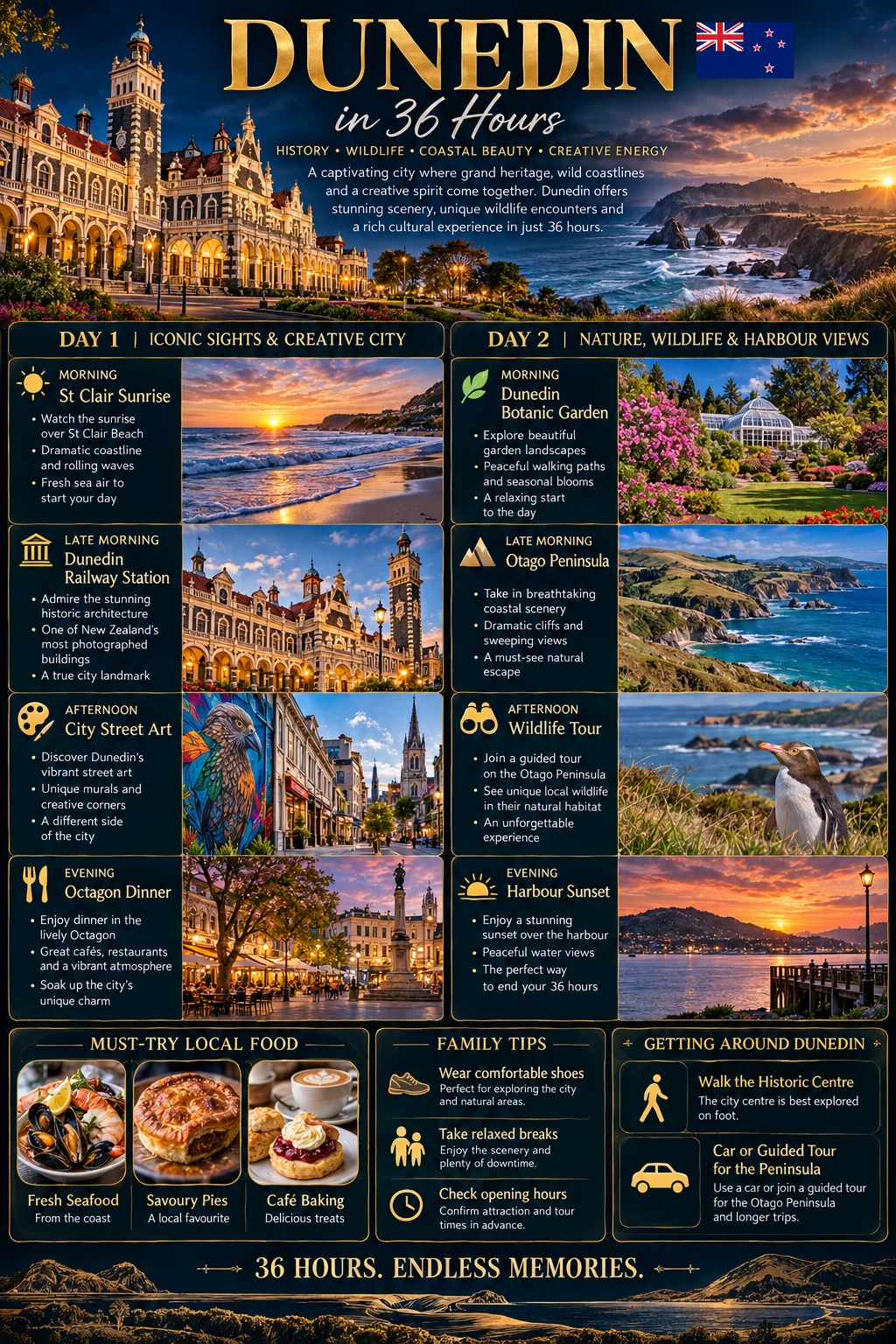
36 Hours in Dunedin: City Stories and Otago Peninsula Wildlife
Research checked: 16 October 2026. Transfer estimates are planning allowances; wildlife and weather are never guaranteed.
Dunedin, also known as Ōtepoti, combines a compact central city with a landscape that quickly becomes expansive. The challenge on a short visit is avoiding the assumption that a peninsula attraction is just another city stop. Give the centre one day and the Otago Peninsula most of the second. Stay near the Octagon or the central shopping streets, and book the wildlife experience before arranging the rest. This plan runs from around 9am to 9pm the following day, with one night in town.
Day 1: Get to know the city
9am–11am: Breakfast and the railway station
Start with a café breakfast near the Octagon, then walk toward the railway station, allowing 15–25 minutes with architectural stops. Take time over the exterior rather than trying to fit a scenic train journey into the same morning. Dunedin Railways outings are substantial experiences with their own timetables and should replace a major block of this itinerary if they are your priority. They are not a regular hop-on city transport service. Official railway excursion listing
Continue to the nearby museum precinct. The short distances make this morning workable in showery weather, provided you carry a waterproof layer rather than relying on an umbrella in the wind.
11am–1pm: Toitū Otago Settlers Museum
Allow around two hours at Toitū. The institution's collecting history began with the settlement story, but its present remit includes the many peoples who have shaped Dunedin and Otago. Use the displays to add context to the streets outside rather than reading every label. With children, choose a few themes and allow time for their questions; museum fatigue is avoidable when lunch is clearly in sight.
At verification, the museum lists free admission and daily opening, with Christmas Day closure. Check separately for special exhibitions or events. Toitū official visitor information
1pm–4pm: Lunch, then the Botanic Garden
Eat centrally before heading north to Dunedin Botanic Garden. Allow roughly 10–20 minutes by taxi or local bus plus waiting and walking time; walking from the centre can take around 35–50 minutes. Spend 60–90 minutes in the lower garden if you want a gentle afternoon. It is the better choice for strollers and people avoiding hills, while the upper garden requires more climbing or a different arrival point.
The garden's own routes distinguish short, accessible lower-garden walks from hillier hour-long circuits. Choose one rather than trying to cover the entire collection. Children can have lawn and playground time before adults add another plant collection. The small volunteer-operated garden train is an occasional bonus, dependent on weather and staffing, not something to promise in advance. Garden routes, Current garden information
4pm–9pm: Rest and a South Island dinner
Return to your accommodation for a break, then choose dinner near the centre. A seafood dish, locally sourced vegetables or a meat pie earlier in the day offers a straightforward taste of New Zealand cooking without demanding a formal tasting menu. Ask what fish is being served and where it comes from; menus vary with supply. Coffee and bakery culture can be as rewarding here as a conspicuous destination restaurant.
Keep the evening modest if tomorrow involves driving unfamiliar roads. A short walk around the Octagon is enough. This is not the night to add a second distant coastal excursion.
Day 2: Give the peninsula enough time
9am–11am: Follow the harbour out
Have breakfast before leaving. For the Royal Albatross Centre at the peninsula's tip, allow roughly 60–75 minutes from central Dunedin by car, plus extra time for safe stops and check-in. The route is winding, and your confirmed tour arrival time matters more than the nominal drive estimate. Travellers without a car should book a tour with a verified pickup or arrange transport in both directions; do not assume a city bus will deliver you to the reserve entrance.
The peninsula reaches from city suburbs toward Pukekura/Taiaroa Head, with sheltered harbour scenery on one side and exposed coastal landscapes nearby. Choose the harbour-side route for this short visit and stop only where legal parking permits. Official Otago Peninsula guide
11am–2pm: A booked albatross experience
Build the middle of the day around a confirmed Royal Albatross Centre tour and lunch. The operator welcomes all ages, but children 15 and under must be accompanied, and quiet behaviour is important inside the nature reserve. All children and infants count toward group capacity. Ask about mobility arrangements and the actual walking demands before booking.
October deserves special attention: chicks generally depart in September and new nests are established around late October or November. The centre explicitly warns that October tours may see no albatross. Flying birds are never guaranteed. If wildlife is the purpose of your trip, contact the operator about current viewing conditions before selecting a date. Royal Albatross Centre FAQ, Seasonal viewing information
2pm–5pm: A slow return through the harbour villages
Return toward town with a break around Portobello if conditions suit. A warm drink and a short harbour-side pause can be more satisfying than squeezing in another ticketed attraction. Do not add Larnach Castle and a long beach hike by default; either would need its own meaningful block.
If penguins are your priority instead of a daytime albatross visit, book an appropriate guided late-afternoon or evening experience and reshape the day around it. Dusk varies considerably with season, and a late finish affects children, dinner and the return drive. The local tourism authority recommends managed viewing experiences for these vulnerable birds. Peninsula wildlife options
5pm–9pm: Dinner back in Dunedin
Return for dinner and an easy final evening. If you are flying out, allow for the separate airport transfer and airline check-in requirements; the airport is not beside the central city. Departing families should drop the late wildlife alternative entirely.
Three quieter worthwhile places
- The Botanic Garden's outer lower-garden paths, beyond the most obvious central stops.
- The New Zealand Native Lawn in the upper garden, reached with an appropriate hill route or upper arrival point.
- A legal harbour-side stopping place around Portobello, where the view itself is the activity. Avoid blocking driveways or private shoreline access. Garden picnic locations
Weather, wildlife and access
Carry windproof layers even when the city feels mild. Wet weather can change the appeal of exposed stops without cancelling an indoor observatory tour; ask the operator. On any beach, keep at least 20 metres from seals and sea lions and never block their path to the sea. Use a zoom lens rather than approaching, keep children close, and respect closure signs. Do not seek out or disturb nesting penguins independently. Department of Conservation wildlife guidance
Sources & travel planning
Research checked 2026-10-16. This date describes the guide’s research, not a guarantee of current conditions. Opening hours, prices, access, transport and travel advice can change. Recheck the official sources before booking and departure. Walking and journey times are planning estimates.
- dunedinnz.com ↗
- toituosm.com ↗
- dunedinbotanicgarden.co.nz ↗
- dunedinbotanicgarden.co.nz ↗
- dunedinnz.com ↗
- albatross.org.nz ↗
- albatross.org.nz ↗
- dunedinbotanicgarden.co.nz ↗
- doc.govt.nz ↗
Found a change? Contact Only36Hours about a correction.