36 Hours in Durham: Norman Stone, River Paths and Curious Minds
Verified: 18 October 2026.
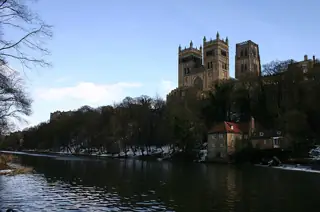
Durham makes its first impression above your head: towers, trees and stone buildings rise above a tight bend of the River Wear. Its history becomes more interesting when you come down to human scale. The cathedral was a home for saints’ relics and a statement of Norman power; the castle housed prince-bishops with unusual religious and political authority. Today both remain working institutions. UNESCO’s account of the cathedral and castle explains that continuity, alongside the importance of their wooded peninsula setting.
This is a morning-to-following-evening visit with one overnight stay. Aim for roughly 09:00 on day one to 21:00 on day two, adjusting the final meal to your departure. There is time for substantial visits without turning every hour into an admission slot. Walking allowances are planning estimates, not measured accessible-route guarantees.
Before you arrive
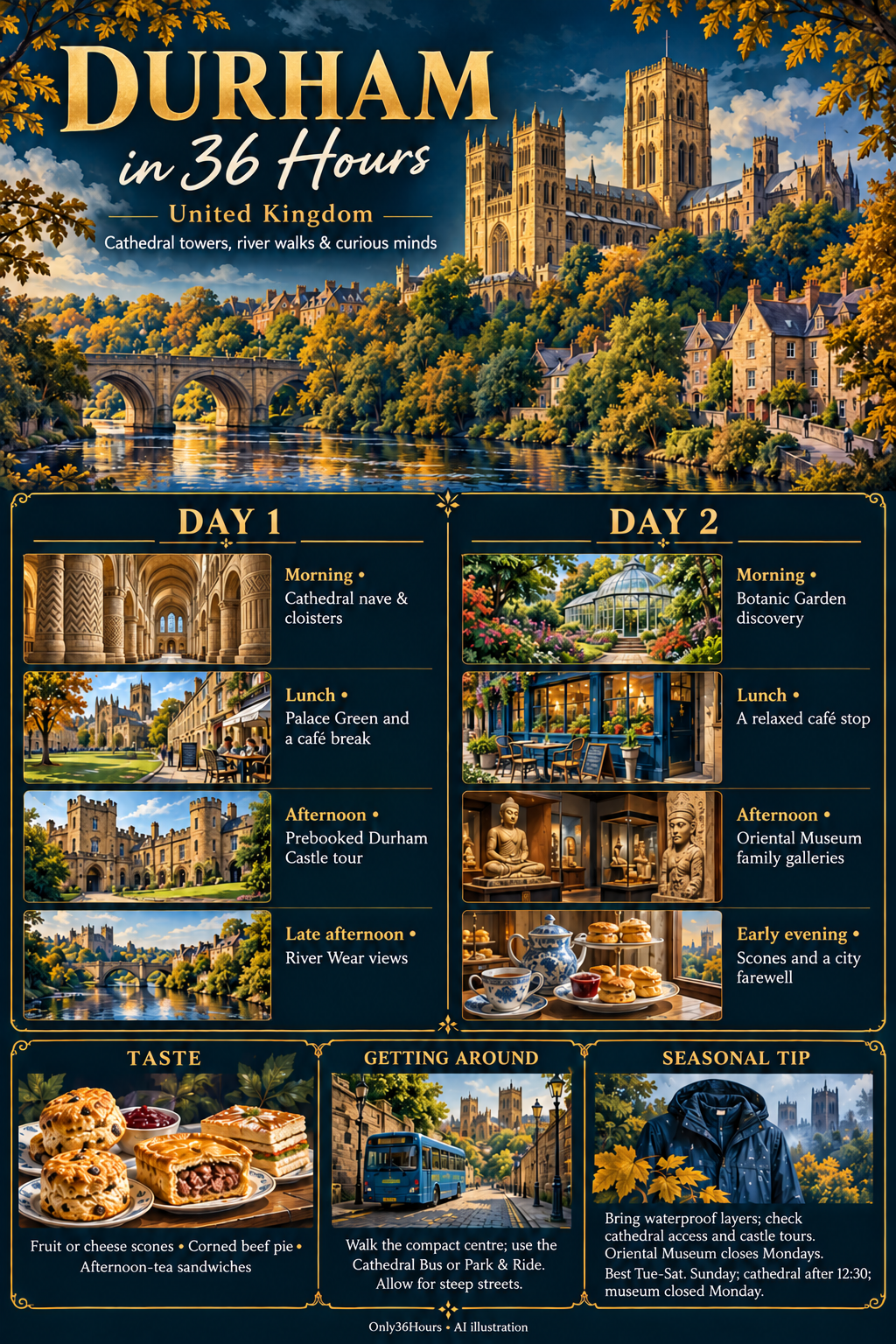
Choose a central base and leave heavy bags there before sightseeing. Durham’s compact map disguises steep streets and changes in level. Arriving by train avoids central parking, while drivers should investigate the Cathedral Bus and Park and Ride arrangements. Check the date-specific service, especially on Sundays and bank holidays; the Cathedral Bus does not run in the evening. Do not drive onto the peninsula assuming unrestricted access or cathedral parking.
Book a castle tour before fixing the rest of the day. Tuesday to Saturday is the easiest general pattern for this itinerary. Sunday cathedral sightseeing begins later, and the Oriental Museum normally closes on Mondays. University and church events can change access, so check the linked operators again shortly before travel.
Day one: the peninsula and its river
09:00–12:00 | Breakfast, cathedral and cloisters
Start with breakfast below the peninsula, then make the climb gradually. From the central shopping streets, allow 20–30 minutes to reach Palace Green with children and pauses. Look back occasionally: the city’s scale is easier to understand from the slope than from a checklist of monuments.
Enter the cathedral during its published visitor hours, normally from 09:30 Monday to Saturday and 12:30 on Sunday. General entry has no compulsory admission charge, though donations are encouraged. Services and events can restrict individual areas. Give the nave and cloisters about 90 minutes, rather than automatically adding the museum and tower.
Ask children to compare the patterns on the great stone pillars, then find a place to sit and look upward. Keep this a quiet observation game in a working church. Adults interested in Cuthbert and the monastic story can add a focused museum visit, replacing part of the afternoon rather than extending an already full day.
12:00–15:00 | Palace Green and the castle
Take lunch before the booked tour, leaving time to get back to its meeting point. Palace Green provides a useful pause between the cathedral and castle, but university events may make it lively rather than quiet.
The castle’s visitor information explains why access needs planning: it is a working university college. Guided tours generally last 50–60 minutes, are unavailable on some days and may change at short notice. Selected summer dates instead offer self-guided admission. Follow the actual booking listing for your date.
The building’s transition from fortress to episcopal palace and then college gives the visit its shape. There are numerous, sometimes uneven stairs, and much of the route is unsuitable for wheelchairs or pushchairs. The current tour also includes an optional light-and-sound installation; visitors can opt out. If the tour does not suit your group, keep the exterior and give the saved time to the river.
15:00–18:00 | Wear-side paths and a proper break
Descend towards the river for a short section of the cathedral’s riverbank paths. Prebends Bridge offers a rewarding view of the wooded setting. Choose a manageable out-and-back walk rather than committing to every riverside path: some are narrow, sloping or stepped. Wet leaves and high water are reasons to shorten the outing. Keep children close beside the river.
Return for a fruit or cheese scone, or make tea the main late-afternoon meal. Treats on Silver Street currently lists scones, sandwiches and miniature corned-beef pies. These are locally available choices, not claims that Durham invented them. Book if a full afternoon tea matters, and discuss allergies directly. Finish with an unhurried dinner and overnight rest; there is no need to fill the evening with another attraction.
Day two: gardens and wider horizons
10:00–12:30 | Botanic Garden
After breakfast, head south to the university’s Botanic Garden. Allow a generous transfer from the centre, using a suitable local bus or taxi if the uphill walk would consume the group’s energy. The garden visitor pages describe woodland, glasshouses and plant collections that encourage a different kind of looking from yesterday’s stonework.
Arrive through the visitor centre rather than assuming the Howlands entrance admits casual visitors. Current opening information gives shorter winter hours and a Christmas/New Year closure. Pick a few contrasting plants or textures to investigate, leaving room for a snack and rest. Do not assume every outdoor path is step-free.
13:00–16:00 | Lunch and the Oriental Museum
Keep lunch simple, then visit the nearby Oriental Museum. Its collections cover Northern Africa and Asia, offering a change from Durham’s medieval narrative. The operator suggests at least two hours for a broad visit; families can instead choose two galleries and look carefully. Weekend opening normally begins at noon, and Monday is usually closed. Ignore expired special-event hours when planning a future trip.
16:00–21:00 | Choose your final pause
Return to the centre for an early dinner and luggage collection. If daylight, weather and energy permit, substitute a short visit to Wharton Park for extra shopping. Its city views and play facilities make it a useful family counterpoint to the museums. Check closing arrangements, and leave a realistic station buffer.
Three quieter places to keep in mind
- The riverbank near Prebends Bridge: trees, benches and a slower perspective, subject to safe path conditions.
- The Botanic Garden’s woodland areas: a gentler interlude between indoor visits.
- Wharton Park: space for a view and a pause away from the peninsula’s main sightseeing route; playgrounds and events can be busy.
Access and seasonal notes
Bring waterproof layers and footwear with grip. In winter, move outdoor walks earlier instead of racing fading daylight. The cathedral access page confirms ramps and lifts serve much of the site, while warning of uneven floors, low light and stair-only areas. Confirm individual requirements with each venue. Keep one optional block each day: dropping an attraction is better than sacrificing lunch, rest or a comfortable journey home.
Sources & travel planning
Research checked 2026-10-18. This date describes the guide’s research, not a guarantee of current conditions. Opening hours, prices, access, transport and travel advice can change. Recheck the official sources before booking and departure. Walking and journey times are planning estimates.
- whc.unesco.org ↗
- durhamcathedral.co.uk ↗
- durhamcathedral.co.uk ↗
- dur.ac.uk ↗
- durhamcathedral.co.uk ↗
- treatstearoom.co.uk ↗
- dur.ac.uk ↗
- dur.ac.uk ↗
- dur.ac.uk ↗
- thisisdurham.com ↗
- durhamcathedral.co.uk ↗
Found a change? Contact Only36Hours about a correction.