36 Hours in Elvas: Forts, Whitewashed Lanes and Alentejo Food
Research checked: 16 October 2026. Visit and travel times are estimates; confirm opening directly for your date.
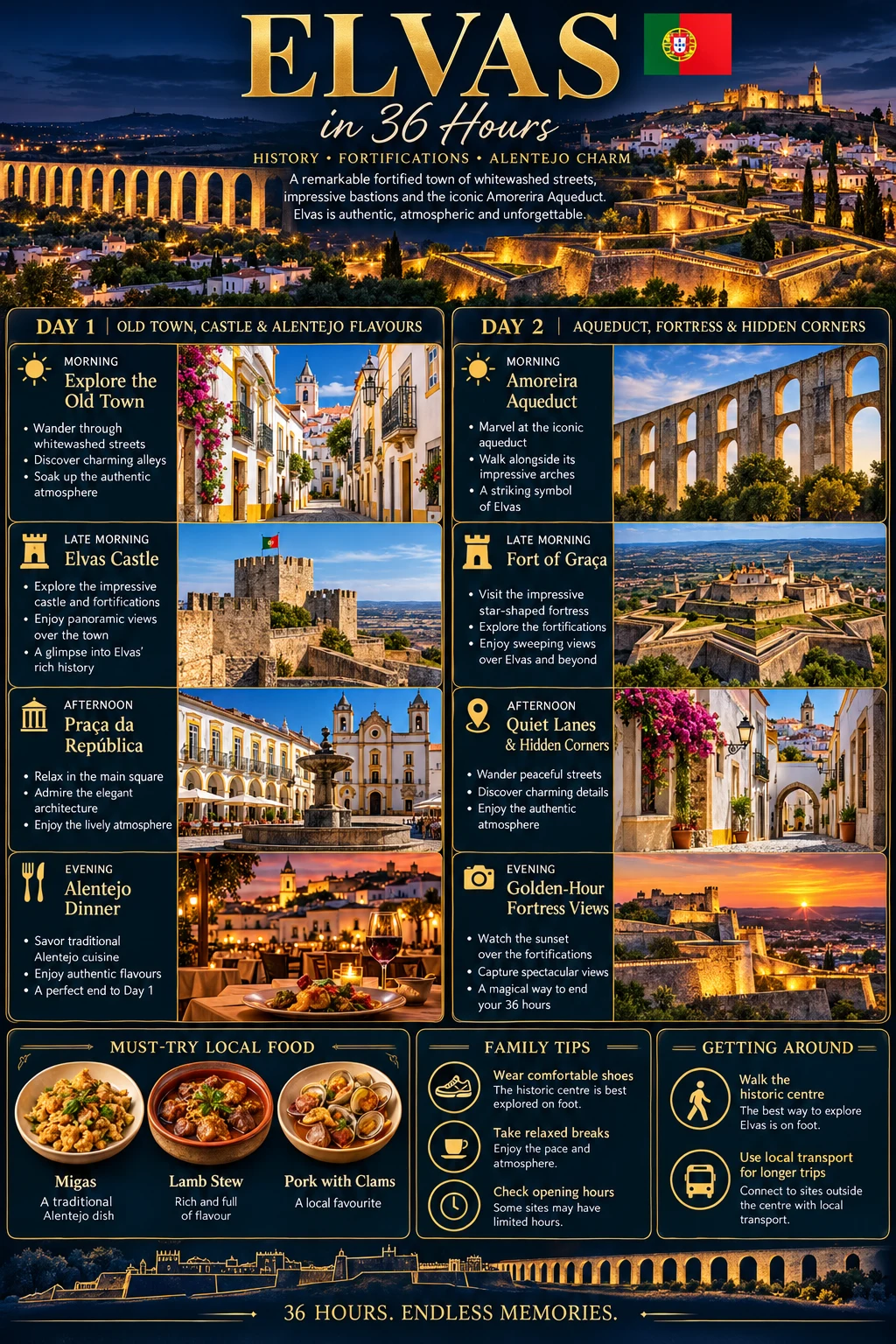
Elvas makes most sense when you alternate its streets with a view from outside them. From within, it is a hill town of whitewashed façades, churches and small squares. From the detached forts, its strategic position near the Spanish border becomes easier to understand. Base yourself inside the historic centre or immediately beside it. This 36-hour plan starts about 9am and ends after dinner the following day, using one overnight stay and leaving the hottest hours for lunch and rest.
Day 1: Understand the town before its outer defences
9am–11am: Praça da República to the castle quarter
Have breakfast near Praça da República, then begin with the former cathedral, now the Church of Nossa Senhora da Assunção, if open to visitors. Work gradually uphill toward the older castle quarter. Along the way, look for the pillory and historic arches rather than treating the walk as a race between interiors. The main pleasure is seeing how a living town occupies successive layers of defence.
Allow two hours for this loop with stops. Narrow streets, slopes and paving can slow strollers or anyone with limited mobility; choose a shorter route and ask locally about accessible entrances. Church services take priority over sightseeing. National tourism overview
11am–1pm: A closer look at the old centre
Return toward the main square by a different lane, stopping at the Domínicas church if visitor access is available. Its unusual plan makes it worth seeking out, but there is no need to wait for an uncertain opening. Take a café break and consult the tourist office about the next day's fort visits, particularly if your stay includes Monday.
This is also the time to arrange a taxi return from Forte da Graça if you will not have a car. A hilltop fort is a poor place to discover that on-demand transport is scarce. Confirm the meeting point and whether the driver will wait or return at an agreed time.
1pm–4pm: Lunch and a warm-weather pause
Choose an Alentejo lunch rather than a hurried snack. Migas with pork, lamb stew, or pork with clams are regional possibilities, depending on the menu. Ask about portions before ordering several substantial dishes. Finish with sericaia and preserved Elvas plums if available; sharing one portion is a sensible introduction to this sweet pairing. Regional dishes in the official Elvas guide
In summer, make the following break a real one. Exposed fortifications and uphill paving are less enjoyable in intense heat, especially with children. Use your accommodation or a shaded indoor stop rather than adding a long walk simply because the calendar has an empty hour.
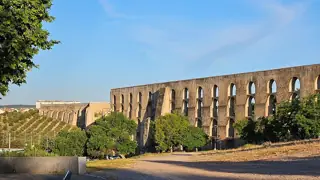
4pm–7pm: The aqueduct at ground level
Walk or take a short taxi ride toward the Amoreira aqueduct, outside the historic core. Allow roughly 20–35 minutes downhill on foot from central accommodation, with a longer uphill return. Choose a safe pedestrian route and view the structure from public ground. Do not expect to walk along its top or climb its masonry.
Spend time finding an angle that shows the arches against the landscape. This is an infrastructure story as well as a photograph: a fortified hill town needed reliable water. In cooler months, move this walk earlier so the return is in daylight. Official Elvas destination information
7pm–9pm: Dinner in the old town
Return for dinner and a short square-side stroll. Reserve a table at weekends or during the São Mateus festivities rather than assuming this small city's restaurants have unlimited capacity. Keep the evening within easy reach of your accommodation.
Day 2: Choose one major fort, with a second only if wanted
9am–noon: Forte da Graça
After breakfast, travel to Forte da Graça, allowing approximately 10–20 minutes by car or taxi from the centre plus arrival time. Plan the visit around the actual opening. The municipal educational page lists Tuesday–Sunday operation and Monday closure, but its surrounding programme is dated 2023–24; reconfirm the fort's current schedule with local tourism before relying on it. If your available day is Monday, put the fort on day one and move the old-town walk here. Municipal fort information, Published municipal schedule
Give the site 90–120 minutes. Its commanding position and complex defences reward a guide if one is available in a language you understand. Ask at booking about steps, dark sections and the route suitable for children. Keep children away from edges and use only marked visitor areas. Do not assume that exterior access means every underground passage can be explored freely.
Noon–3pm: Lunch, then decide how much military history is enough
Return to town for lunch. Families may now prefer a museum of photography or an easy café-and-lane afternoon. The João Carpinteiro photography museum offers a different subject; check opening before walking there. Its managing foundation identifies the museum as its principal activity. Museum foundation
Military-history enthusiasts can instead visit Forte de Santa Luzia. Allow around 60–90 minutes inside, with separate travel time from the centre. The municipality lists Tuesday–Sunday opening, shorter winter hours and closure on Monday, with entry ending before the final closing time. This is an optional second fort, not an obligation after a substantial morning. Santa Luzia official visitor information
3pm–9pm: Leave room for the town
Return for a rest, then revisit the castle-side lanes or main square before dinner. If you are departing, collect luggage and allow a comfortable margin for your confirmed bus, train connection or drive. Do not book a late fort visit immediately before a long onward journey.
Three quieter worthwhile places
- The upper lanes around the castle quarter, away from the direct route to Praça da República.
- The João Carpinteiro photography museum, an indoor alternative when open.
- A safe public viewpoint near the Amoreira aqueduct, where you can stop without joining an organised attraction. None is guaranteed quiet during festivals.
Practical planning
A car is useful for the detached forts, but unnecessary for most central exploring. Without one, prearrange taxis and check onward public transport before arrival. Spring and autumn generally make outdoor walking easier; in summer, start exposed visits early and reserve the midday hours for rest. Wear shoes that grip uneven stone. Crossing into Spain changes the local clock by one hour, so compare ticket times carefully if your onward journey crosses the border. Prices are omitted because packages and guided visits vary.
Sources & travel planning
Research checked 2026-10-16. This date describes the guide’s research, not a guarantee of current conditions. Opening hours, prices, access, transport and travel advice can change. Recheck the official sources before booking and departure. Walking and journey times are planning estimates.
- visitportugal.com ↗
- visitportugal.com ↗
- cm-elvas.pt ↗
- educacao.cm-elvas.pt ↗
- fundacaojcarpinteiro.wixsite.com ↗
- cm-elvas.pt ↗
Found a change? Contact Only36Hours about a correction.