36 Hours in Essaouira: Atlantic Ramparts, Craft Lanes and a Working Port
Research checked: 16 October 2026. Walking times are estimates; museum access and sea conditions require current checks.
Essaouira is a place to settle into for a night rather than rush through on a long return trip from Marrakech. The medina is manageable, the Atlantic is always close, and the fishing port gives the city a purpose beyond tourism. Choose a riad in the medina if atmosphere matters most, or accommodation near the promenade for easier vehicle access. Confirm stairs, room heating and the final luggage walk before booking. This route runs from around 9am to 9pm the following day.
Day 1: The sea-facing city
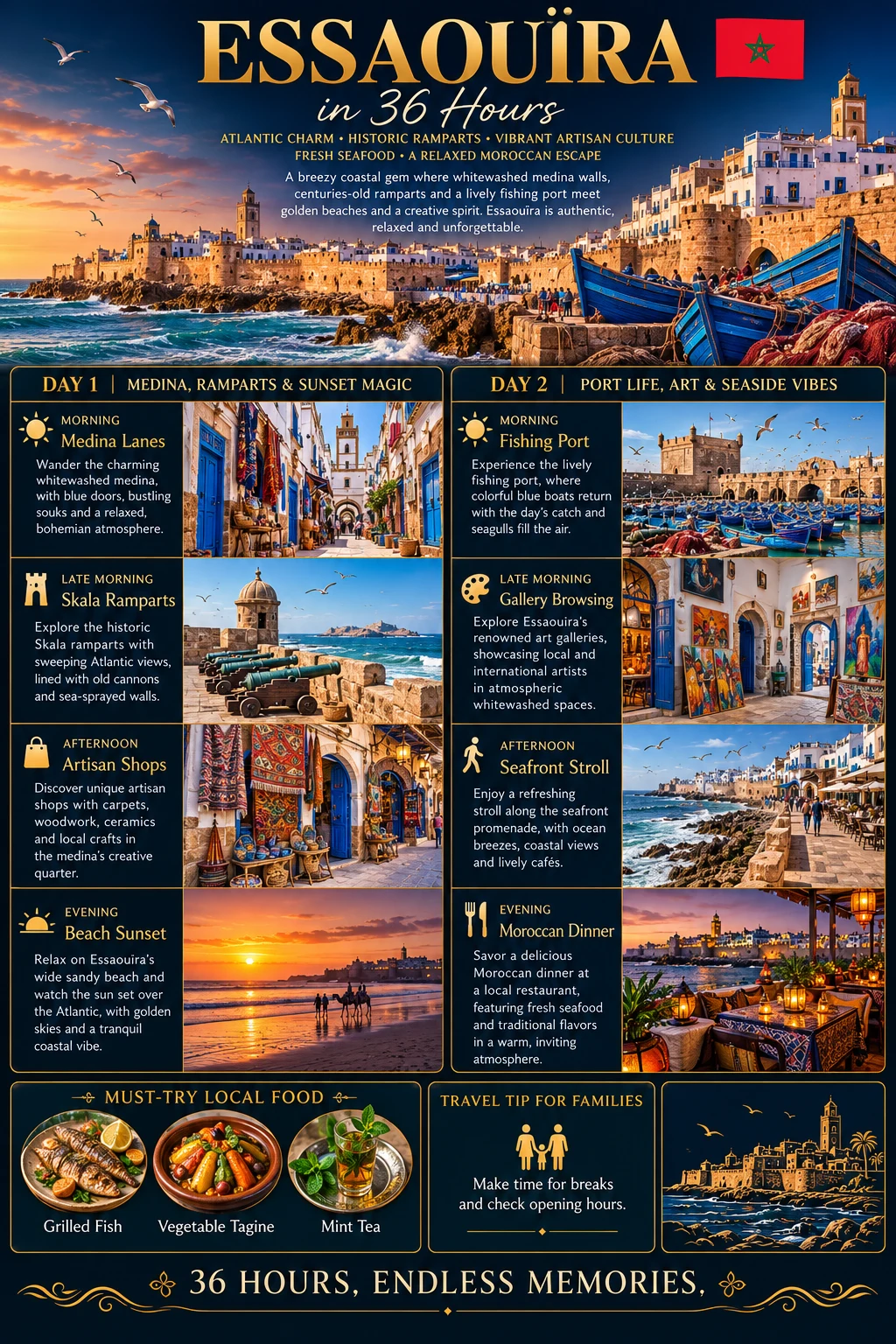
9am–11am: Breakfast and a first medina loop
Begin with breakfast at your accommodation or a café, then orient yourself between the main square near the port and the medina's central streets. Keep the first walk simple: note your accommodation's nearest gate and save its location offline. Delivery carts and local traffic still require attention even where cars are restricted.
Follow the lanes toward the Sqala de la Kasbah. The ramparts and monumental gates help explain the planned character of the old city, while shops and galleries show how it functions today. Allow 90 minutes with stops. Where a paid or controlled rampart section is involved, check its current entrance and opening locally; do not climb closed masonry or barriers for a photograph. National tourism medina guide
11am–1pm: A working fishing port
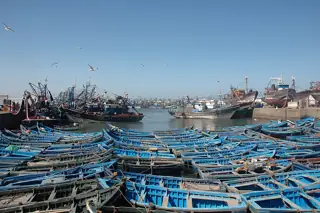
Walk toward the port, allowing roughly 15–25 minutes from the northern rampart area with stops. Watch from public visitor areas without obstructing crews, vehicles or fish handling. Blue boats make an attractive scene, but the harbour is a workplace, with slippery ground, hooks and unprotected edges. Keep children beside an adult and use shoes that can tolerate wet surfaces.
Ask before photographing people. You do not need to approach every boat or enter operational areas to understand the harbour's activity. The national tourism board identifies the port and fish market as central experiences, but fishing schedules and catches vary. Essaouira official overview
1pm–4pm: Seafood and a sheltered break
Choose a reputable restaurant for grilled fish or a fish tagine, asking what is available and how the price is calculated. If choosing a whole fish, agree the weight, total cost and included sides before it is cooked. A vegetable tagine is an easy alternative, but confirm ingredients and any allergy concerns directly.
Return to your riad or find a sheltered café for mint tea. The wind can make a sunny day tiring, particularly for young children. An indoor pause is useful even when the temperature is comfortable. Do not interpret a coastal breeze as protection from sun exposure. Official gastronomy information
4pm–7pm: Craftwork with time to look
Browse the medina's woodworking and art shops. Thuya marquetry is associated with Essaouira; the official local portal lists the Tamounte woodworking cooperative on Rue Souss. Ask about materials and production, compare workmanship and avoid buying under pressure. A workshop visit depends on permission and current activity, so treat it as an opportunity rather than a guaranteed demonstration. Tamounte cooperative listing
For families, set a small, clear shopping budget and allow children to choose a postcard or simple souvenir. A few considered stops beat an afternoon of repeated sales conversations.
7pm–9pm: Dinner and music if it is actually scheduled
Eat in the medina, booking ahead for a specific restaurant. If you want live music, ask your accommodation for a confirmed programme and choose a venue appropriate for your group. Essaouira's musical identity does not mean a particular performance happens every evening. Return by familiar, well-used streets rather than seeking deserted lanes after dark.
Day 2: Memory, art and the long beach
9am–noon: Bayt Dakira
After breakfast, visit Bayt Dakira around the restored Simon Attias synagogue, subject to current access. The House of Memory provides an important introduction to Essaouira's Jewish-Moroccan heritage. Allow 45–75 minutes and dress respectfully. Verify the day's opening with the venue or tourist office; the local portal confirms visitor access but does not supply a dependable full timetable in its listing. Official local Bayt Dakira listing
Continue with a small gallery or café. The Sidi Mohammed Ben Abdellah museum is another possible cultural stop, but confirm its current operation first: the National Museums Foundation announced a development partnership in April 2026, which does not itself establish today's visitor access. Do not make an unverified museum opening the hinge of your day. Foundation announcement
Noon–4pm: Lunch and a promenade walk
Have lunch before heading south along the seafront promenade. Allow an hour or two for a modest out-and-back walk, beach play and a café stop. Stay near developed areas with facilities rather than turning this into a trek toward distant dunes. Bring an extra layer, sun protection and drinking water.
The beach is not automatically a safe swimming beach. Official UK advice warns that Moroccan beaches may have limited lifeguard cover, strong currents and unexpected waves. Check local flags and advice, supervise children closely and keep them back from breaking surf when conditions are rough. A promenade walk is a complete activity without entering the water. Official beach-safety advice
4pm–9pm: A final medina afternoon
Return for any shopping you deliberately postponed, then rest before dinner. For a sunset view, use an established terrace or safe public area and leave if wind or waves make the exposed edge uncomfortable. If departing that evening, protect the transfer time instead: Marrakech is a separate intercity journey, not an easy final-hour add-on.
Three quieter worthwhile places
- Bayt Dakira, when open, for thoughtful time away from the harbour's bustle.
- A smaller medina art gallery, entered with permission and without pressure to buy.
- A sheltered café along the developed promenade beyond the busiest medina entrance. These offer gentler settings, not guaranteed solitude.
Practical planning
Most of this route is walkable, with 10–25-minute links, but medina paving and riad stairs can challenge strollers and wheelchairs. Arrange transfers to a named gate and ask who will help with luggage. Carry some cash and agree taxi fares or meter use before starting. Use licensed guides if booking a tour; official advice warns about people falsely presenting themselves as guides. Read current travel advice, respect religious customs and verify Ramadan opening changes when relevant. Festival dates can transform accommodation availability and noise levels, so check before choosing a room.
Sources & travel planning
Research checked 2026-10-16. This date describes the guide’s research, not a guarantee of current conditions. Opening hours, prices, access, transport and travel advice can change. Recheck the official sources before booking and departure. Walking and journey times are planning estimates.
- visitmorocco.com ↗
- visitmorocco.com ↗
- visitessaouira.com ↗
- visitessaouira.com ↗
- visitessaouira.com ↗
- fnm.ma ↗
- gov.uk ↗
Found a change? Contact Only36Hours about a correction.