36 Hours in Ferrara: A Moated Castle, Renaissance Streets and Pumpkin Pasta
Research checked: 16 October 2026. Opening information below was checked against official sources; holiday exceptions and temporary access changes need reconfirmation. Walking times are planning estimates.
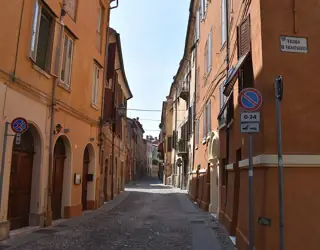
Ferrara rewards looking along a street as much as looking inside a palace. South of its moated castle, lanes bend between brick houses and covered passages. Northward, Corso Ercole I d’Este opens into the measured geometry of a Renaissance expansion. Give both halves time. This one-night route combines two substantial museum visits with an unhurried wall walk, rather than treating every palace as another compulsory ticket.
Stay around the castle or the cathedral squares for an easy walking base. From Ferrara railway station, allow roughly 25–30 minutes on foot to the castle, or use a local bus or taxi with luggage. The centre is flat, but cobbles and cyclists require attention. A bicycle is enjoyable on suitable wall-side paths; it is less useful while repeatedly entering museums and negotiating busy pedestrian streets.
Day 1
9am–12.30pm: Meet the Este family
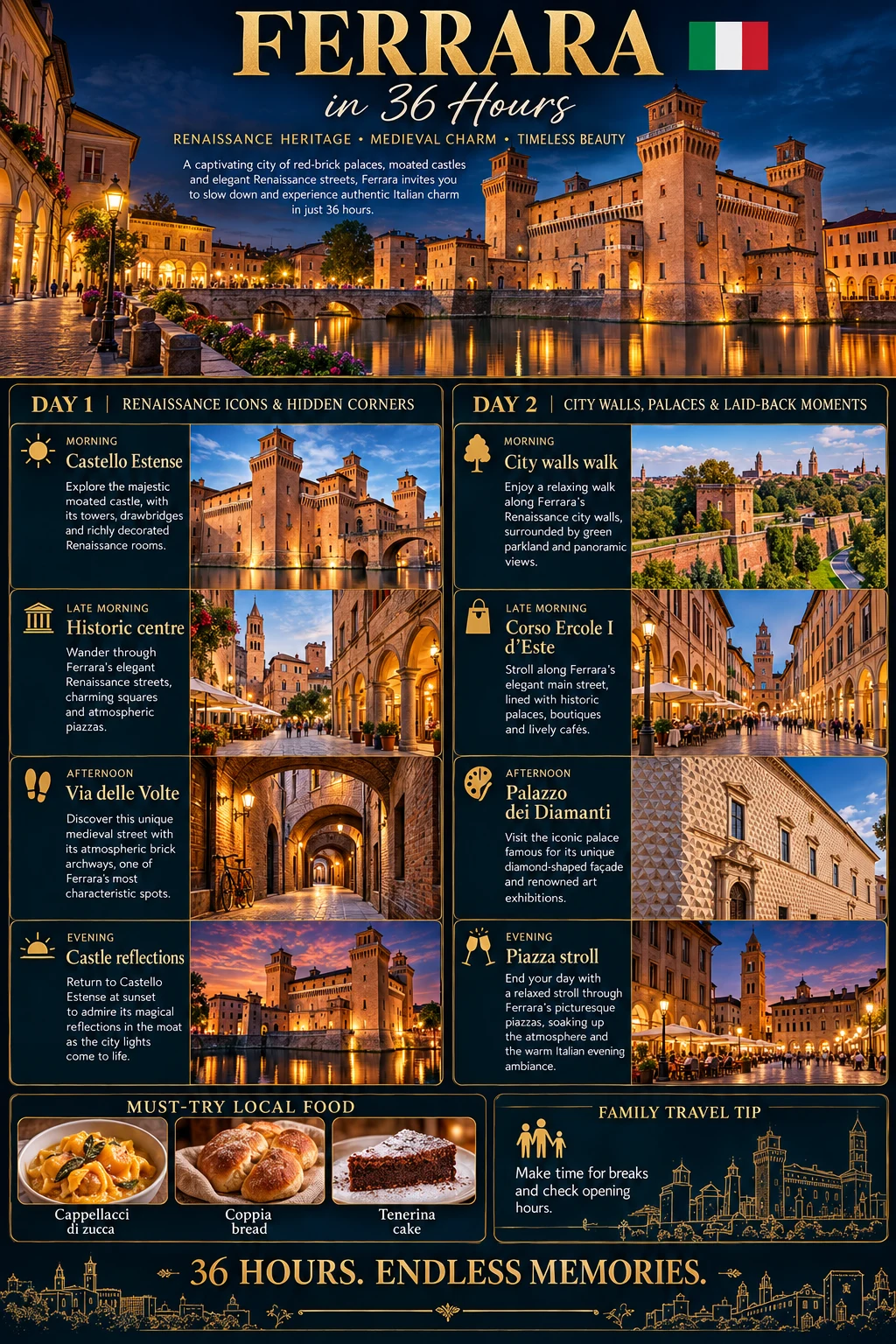
Start with breakfast and a circuit of the Castello Estense moat. Its bulk makes sense before you enter: this was a stronghold as well as a ducal residence. Book the museum for around 10am and allow two hours, longer if you like reading every panel. The route connects the ruling family's history with decorated rooms and the building's defensive functions. The prison spaces can feel oppressive; families can bypass them and focus on painted ceilings and the contrast between fortress and palace.
The operator currently lists 10am–6pm opening with Tuesday closure. If your first day is Tuesday, put Schifanoia here and visit the castle on the second morning, moving the northern walk to late afternoon. Do not simply arrive at the moat expecting the museum to open. The optional Torre dei Leoni has separate last-entry rules and is unnecessary for a satisfying visit. Lift access serves the principal museum route, but the operator excludes the prisons and tower from its reduced-mobility access. Castle hours; access and visiting information.
12.30–3pm: Lunch and the older city
Walk five to ten minutes to the cathedral squares and sit down for cappellacci di zucca, pasta parcels with pumpkin filling. Ask about the sauce: a pumpkin filling does not mean the whole plate is vegetarian. Order some coppia ferrarese, the distinctive twisted bread, and save room for a small slice of chocolate tenerina later. Ferrara's tourism office identifies all three as local culinary staples. Local cooking traditions.
After lunch, look around Piazza Trento e Trieste and the cathedral exterior. Restoration has affected cathedral access, so regard an interior visit as conditional on that day's arrangements and worship, not a guaranteed fully open monument. Continue into Via delle Volte, then the streets around Via Mazzini and Via Vignatagliata. The former Jewish ghetto belongs to the city's lived history; private entrances and religious premises are not casual sightseeing access points. Cathedral information; official Jewish Ferrara background.
3–5.30pm: The months on a palace wall
Allow about 20–25 minutes from the central squares to Museo Schifanoia, then 90 minutes inside. The Sala dei Mesi makes a compelling focal point: the surviving painted months bring court life, seasonal activity and an elaborate symbolic universe together. Rather than trying to decode every figure, choose one panel and follow its different layers. Children can look for animals, clothing and everyday tasks before moving on.
The municipal museum currently opens Tuesday–Sunday, 10am–7pm, with last admission at 6pm; reservations are recommended. Monday is normally closed. For a Sunday–Monday stay, keep Schifanoia on Sunday and put the castle on Monday. If both fall on a special holiday, check the published exceptions rather than applying the usual weekly pattern. Schifanoia visitor information.
6–9pm: An evening without another queue
Return slowly through the southern streets, stop for a drink or gelato, and eat dinner near your accommodation. Leave a proper break between the museum and dinner. An evening circuit of the illuminated castle is enough after a day of interiors; there is no need to add an exhibition simply because it is nearby.
Day 2
9am–noon: The Renaissance city opens out
Walk north along Corso Ercole I d’Este, allowing 20–30 minutes with stops to reach the Palazzo dei Diamanti area. Notice how the street's width and sightlines differ from yesterday's lanes. At the Quadrivio degli Angeli, inspect the palace's faceted stone exterior before deciding whether a current exhibition merits replacing the rest of the morning. Exhibition tickets and the building's different cultural uses should not be assumed interchangeable.
Continue toward Porta degli Angeli and take a modest out-and-back on the green wall-side route. Allow about an hour rather than committing to an entire circuit. Turn back sooner in heat or rain; a flat city still generates substantial walking mileage. Official Renaissance street guide.
Noon–5pm: Lunch, then choose one deeper visit
Return for lunch and a rest. History-minded visitors can spend roughly two hours at MEIS, the National Museum of Italian Judaism and the Shoah, southwest of the central squares. Its story gives context to yesterday's neighbourhood walk. Check the exhibition content for younger children and allow time to talk about difficult subjects. The museum normally opens Tuesday–Sunday and also closes for Jewish holidays. On Monday, use this block for the castle if needed, or a longer café-and-street afternoon. MEIS hours and reservations.
5–9pm: Finish at your own pace
Use the remaining hours for a favourite street, food shopping and an early dinner before departure. Allow 30 minutes walking to the station plus your normal train buffer; a taxi needs booking time too.
Three quieter places worth choosing
- Sant’Antonio in Polesine: a working Benedictine monastery with frescoed chapels. Arrange access rather than turning up during worship; small visits are limited and telephone booking is recommended. Official visitor page.
- The northern walls near Porta degli Angeli: a green pause already included in the route, best in cooler daylight.
- Via Vignatagliata: a slower continuation of Jewish Ferrara beyond the main shopping flow, approached with respect for residents.
Spring and autumn make the walking easier; summer afternoons call for shade, water and an indoor break, while winter fog can soften views and make surfaces damp. Reserve the important museum first, then place the outdoor sections around its actual opening day. That small adjustment matters more here than squeezing in another palace.
Sources & travel planning
Research checked 2026-10-16. This date describes the guide’s research, not a guarantee of current conditions. Opening hours, prices, access, transport and travel advice can change. Recheck the official sources before booking and departure. Walking and journey times are planning estimates.
- castelloestense.it ↗
- castelloestense.it ↗
- booking.inferrara.it ↗
- inferrara.it ↗
- ferraraterraeacqua.it ↗
- museiferrara.it ↗
- inferrara.it ↗
- meis.museum ↗
- inferrara.it ↗
Found a change? Contact Only36Hours about a correction.