36 Hours in Fukuoka: Hakata Temples, Lakeside Art and an Evening at the Yatai
Research checked: 16 October 2026. Check venue calendars and weather for your dates; all journey and walking allowances are estimates.
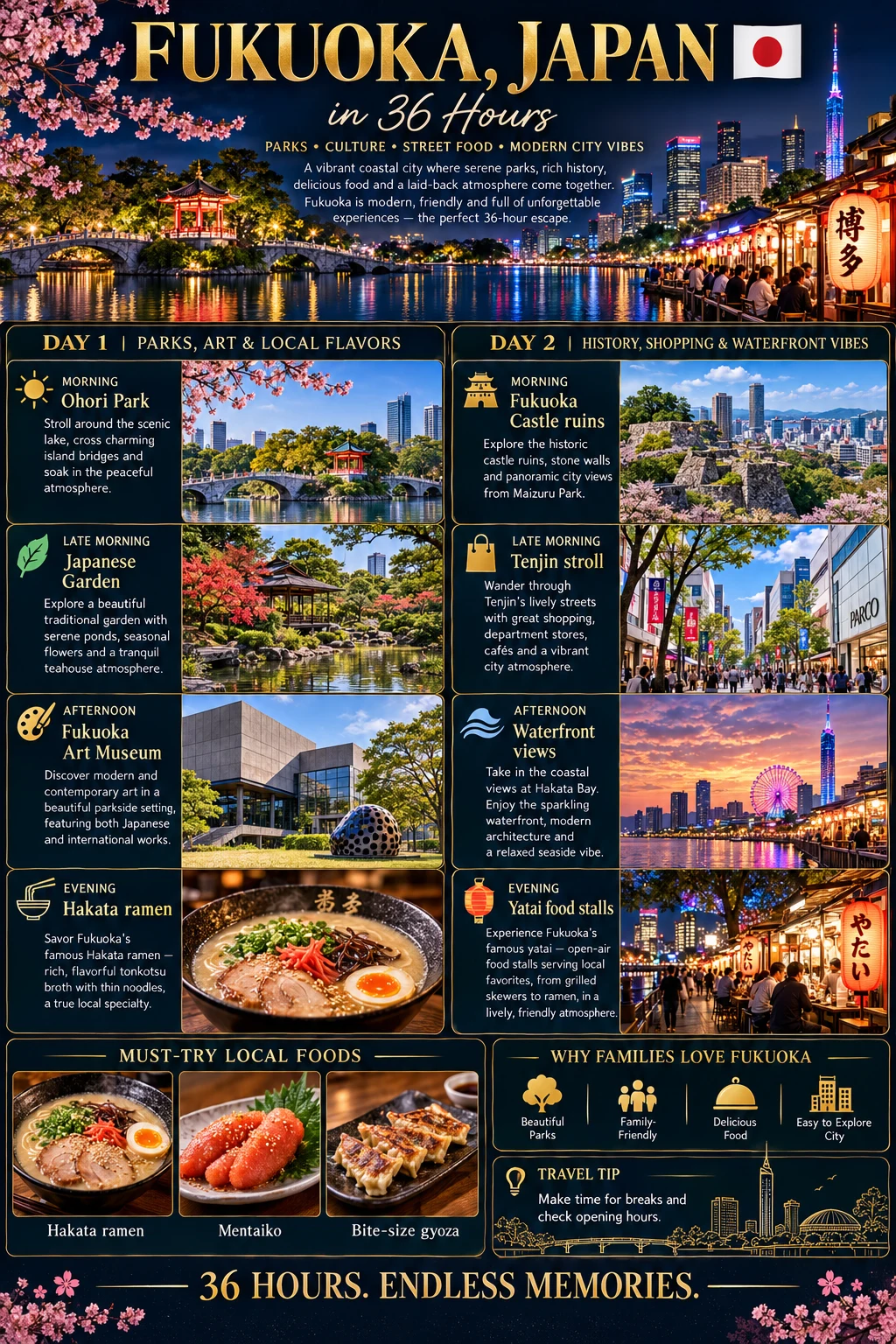
Fukuoka combines big-city convenience with small, manageable neighbourhood outings. A temple lane can be minutes from a major station; an afternoon beside Ohori's lake can end with noodles in a busy commercial district. For 36 hours, split the visit between Hakata's older streets and the greener western centre. Leave Dazaifu, islands and longer coastal excursions for another day rather than turning this short stay into a series of transfers.
Stay near Hakata for rail connections or Tenjin for restaurants and shopping. The subway links both with the airport, but the airport station serves the domestic terminal. International passengers need the terminal shuttle or another onward service; the short subway ride is not the whole airport journey. Allow ample time for that transfer, airport formalities and luggage. Airport subway access; subway route map.
Day 1
9am–noon: Hakata beyond the station
Have breakfast near Hakata Station, then walk about 15–20 minutes toward the temple district around Gokushomachi. Start with the streets and accessible grounds around Shofukuji, then continue to Tochoji. Give the area two hours with pauses, rather than following a race through every temple on the map. These are religious sites, so keep voices low, obey photography signs and do not enter buildings or gardens simply because a gate is open.
At Tochoji, the large wooden Buddha is the principal draw when its hall is open. The associated passage includes darkness and depictions of hell; it is optional and may be unsuitable for small children or anyone uncomfortable with confined dark spaces. There is no need to turn a calm morning into a test of bravery. The pagoda and exterior details also reward attention. City tourism's Hakata temple route.
Walk another ten minutes or so toward Kushida Shrine. Its association with Hakata's festivals adds a different dimension to the morning. Decorative Yamakasa floats are ordinarily displayed outside the festival period, but the city notes a June exception; avoid promising the display on every visit. Services and special events may alter access. Official Hakata old-town guide.
Noon–2pm: Noodles and the covered arcade
Choose lunch around the shrine or Kawabata shopping arcade. Hakata's tonkotsu ramen is the obvious choice, with pork-bone broth and thin noodles; it is not suitable for someone avoiding pork. Hakata-style udon offers another local noodle tradition, although its broth may contain fish. Ask explicitly about ingredients and allergies rather than assuming a plain-looking bowl is vegetarian. Mentaiko, seasoned pollock roe, is another local speciality, often salty and spicy enough to try in a small portion. Fukuoka's local food traditions.
Browse Kawabata at an easy pace, then take a proper seated break. This is useful shelter in rain, but it does not mean every shop keeps the same hours.
2–5pm: Asia in the present tense
Walk toward Hakata Riverain and spend 90 minutes at the Fukuoka Asian Art Museum. Its modern and contemporary Asian focus gives the city visit a wider regional perspective, beyond the shrines and food. Choose a few works to discuss with children rather than aiming for the entire collection, and check which galleries are open between exhibitions.
The museum normally closes Wednesday, or the following day when Wednesday is a national holiday. On a Wednesday first day, replace this block with Tenjin and the ACROS garden, then visit the museum on the second afternoon if desired. It also has a year-end closure. Museum's current hours and programme.
6–9pm: A yatai evening, with a fallback
After resting at your hotel, try a yatai food stall around Tenjin or Nakasu if weather and the individual stall's opening allow. Select somewhere with a clear menu and prices; order something for each customer, avoid occupying scarce seats after finishing, and follow the stall's stated rules. These are small eating places, not a guaranteed nightly open-air food festival. Rain, wind and operators' days off matter. Official yatai guide; city etiquette advice.
With children, ask whether seating works for your party and go early if welcomed. Tight stools, hot cooking equipment and queues can make a conventional restaurant a better dinner. Have that fallback chosen before everyone gets hungry; there is no benefit in waiting an hour solely for the photograph.
Day 2
9am–noon: Ohori Park and a smaller garden
Take the Airport Line to Ohori Koen and allow 15–30 minutes door to park from a central hotel, depending on walking and waiting. Enjoy the lake paths before the day grows hot. Share the route considerately with runners and cyclists, and keep children away from unprotected water edges.
Add the separately managed Ohori Park Japanese Garden for about 45 minutes if open. It normally closes Monday, with a substitute closure after a holiday Monday. The garden's current operator gives seasonal hours that differ from an older tourism listing, so use the operator's page. Tea buildings and services have separate arrangements; garden admission does not guarantee a tea ceremony. On Monday, the main park still provides the morning's focus. Japanese Garden visitor guide.
Noon–3pm: Lunch and your choice of art
Have lunch near the park, then choose Fukuoka Art Museum for a second art experience if the collection interests you. Allow 90 minutes and resist adding every temporary exhibition. It is a different institution from yesterday's Asian Art Museum and normally closes Monday, or the following weekday after a holiday Monday. For a Sunday–Monday visit, move this park-and-museum half-day to Sunday, then visit the Asian Art Museum Monday instead. Art Museum hours and calendar.
3–9pm: Tenjin, a planted hillside and dinner
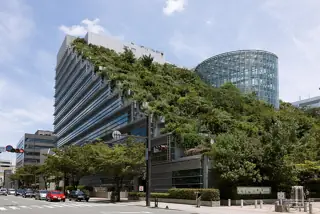
Return to Tenjin for shops, coffee and an optional look at the ACROS Step Garden. Its planted terraces rise above Tenjin Central Park, reached from outside rather than through the building. The climb involves steps; the park below is the easier alternative. The rooftop observation deck has a more limited weekend/holiday schedule, and bad weather can close access, so do not promise a summit view on a weekday. Finish with dinner and enough time to retrieve luggage. ACROS access and seasonal hours.
Three quieter worthwhile places
- Shofukuji's permitted grounds and surrounding lanes: a slower morning alternative to treating every temple as an interior visit.
- Ohori Park Japanese Garden: a contained, contemplative stop beside the busier lake, on its actual opening day.
- ACROS Step Garden's lower terraces: an unusual green pause in Tenjin when weather permits; choose the ground-level park if stairs are unsuitable.
Summer heat and humidity favour morning walking and afternoon interiors. During heavy rain or typhoon disruption, follow official transport and weather notices and drop exposed outdoor sections. Comfortable shoes, small bags and one flexible meal plan will improve this visit more than adding another distant attraction.
Sources & travel planning
Research checked 2026-10-16. This date describes the guide’s research, not a guarantee of current conditions. Opening hours, prices, access, transport and travel advice can change. Recheck the official sources before booking and departure. Walking and journey times are planning estimates.
- fukuoka-airport.jp ↗
- subway.city.fukuoka.lg.jp ↗
- gofukuoka.jp ↗
- yokanavi.com ↗
- gofukuoka.jp ↗
- faam.city.fukuoka.lg.jp ↗
- gofukuoka.jp ↗
- gofukuoka.jp ↗
- ohoriteien.jp ↗
- fukuoka-art-museum.jp ↗
- acros.or.jp ↗
Found a change? Contact Only36Hours about a correction.