36 Hours in Gdańsk: Merchant Streets, Baltic Flavours and Solidarity
Research checked: 16 October 2026. Opening arrangements below reflect official pages consulted on that date; recheck your dates before booking. Walking and transport times are planning estimates.
Gdańsk rewards looking twice. The decorative merchant façades around Długi Targ tell one story, while the shipyard district tells another about work, protest and political change. Much of the historic centre was reconstructed after wartime destruction; its beauty and its complicated past belong in the same visit. This itinerary gives each story room, with a substantial museum visit rather than a race through several emotionally demanding exhibitions.
Stay in or near the Main Town for a one-night trip. Gdańsk Główny station is roughly 15–25 minutes on foot from the central visitor streets, depending on your hotel. Despite the frequent tourist shorthand “Old Town,” the Długa–Długi Targ ensemble is in the Main Town. Gdańsk, Sopot and Gdynia form a connected metropolitan area, but seeing all three would dilute these 36 hours. Official destination overview
Day 1: The merchant city and the water
9am–noon: Follow the Royal Route, then turn sideways
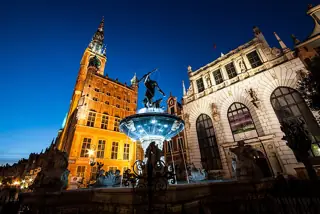
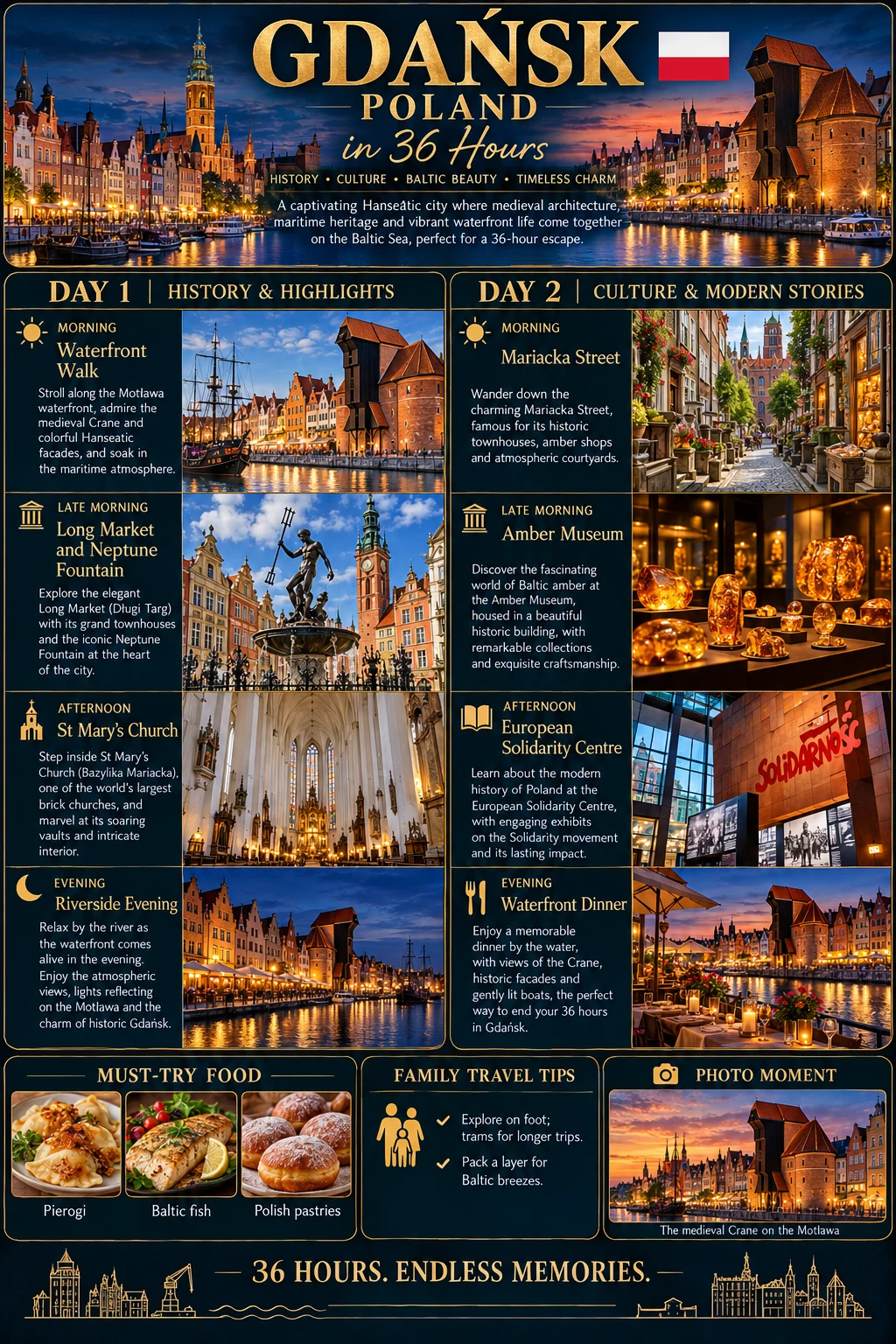
After breakfast, start around the Golden Gate and walk along Długa into Długi Targ. The uninterrupted walk takes only about 10 minutes; give it an hour for façades, the Neptune fountain and the changing perspective toward the Green Gate. You do not need a ticketed interior at every landmark. Choose a few architectural details and let the street explain the city's trading ambitions.
Turn toward St Mary's Basilica and Mariacka, where raised terraces and carved stone details make a slower walk worthwhile. Allow 30–45 minutes inside the church when sightseeing is permitted. Services take priority, and the tower is an optional, physically demanding staircase visit, subject to its own opening arrangements and weather. Families with small children or anyone who finds stairs difficult can simply enjoy the church and street-level architecture. Basilica visitor information
Noon–2pm: A lunch with a Baltic accent
Look for herring, a fish soup or a seasonal fish main course; ask what the fish actually is rather than assuming everything was caught locally that morning. Pierogi are an easy shared alternative, with fillings worth checking for meat, dairy and allergens. Gdańsk's tourism office also highlights cream-filled wafer rolls and regional interpretations of fish and game. Choose lunch by the menu and your appetite, not the length of the waterfront frontage. Official food guide
2–5pm: Motława views, with one optional museum
Walk the waterfront around the historic Crane and look across to the islands and rebuilt granary district. Allow 60–90 minutes, including a drink and time to watch the river traffic. These are working urban waters, not a place for children to scramble down to the edge. Keep a hand on younger children near unprotected sections.
If amber interests you, replace some café time with about 60–90 minutes at the Amber Museum in the Great Mill. Its appeal extends beyond jewellery to the natural material and the ways people have worked it. Check the museum's own date-specific opening schedule before setting off; different municipal branches do not necessarily share the same hours. Otherwise, continue toward the Radunia Canal and St Catherine's surroundings for a less concentrated dose of sightseeing. Amber Museum
6–9pm: Dinner without a second itinerary
Return to your room before dinner if you need a break. Have a relaxed meal in the centre, then take a short evening waterfront stroll if conditions are pleasant. In summer this can be a lively late-light walk; in winter, wind and early darkness make a warm restaurant the better finale. Book a particular restaurant for a busy weekend, but leave the rest of the evening unscheduled.
Day 2: The city that changed modern Europe
9–10am: Breakfast and the shipyard approach
Allow about 25–35 minutes to walk from the Main Town to the European Solidarity Centre, or use local transport if that distance would consume your energy. Arrive with time to see the Monument to the Fallen Shipyard Workers and the historic gate before your booked exhibition slot. Treat the memorial as a place of remembrance, not simply an impressive photo background.
10am–1pm: European Solidarity Centre
Give the main exhibition around three hours, including pauses. It provides the context for Solidarity and the people behind the movement; trying to squeeze it into an hour leaves little room to absorb the story. Book ahead because exhibition entry is limited by time slot.
The important seasonal trap: from October through April the exhibitions close on Tuesdays, although the building can still be open. If your second day is a Tuesday, visit the exhibitions on Day 1 and move the Main Town walk here. May–September exhibition opening is daily, subject to special dates. The roof terrace is weather-dependent. Official opening schedule and booking guidance
1–4pm: Lunch, then a lighter afternoon
After lunch, choose a gentle return through the centre or the Góra Gradowa area around Hevelianum, roughly 20–30 minutes' walk from ECS. The hill gives a different city perspective, but slopes and wind matter; it is optional rather than an accessibility assumption. Families wanting a hands-on indoor afternoon can book a Hevelianum exhibition instead of adding more historical displays. Rainy-day slots can sell out. Hevelianum tickets
Finish with an early dinner or station-area meal, leaving enough time to collect luggage before your onward journey.
Three quieter worthwhile choices
- Radunia Canal: a short central detour around the Great Mill, best for a gentle architectural wander rather than another admission.
- Góra Gradowa: open-air views and historic surroundings above the railway area; choose dry weather and suitable shoes.
- Oliwa Park: an attractive alternative half-day outside the centre. Allow roughly 40–60 minutes each way door to door by public transport, depending on your starting point. Replace an afternoon with it rather than tacking it onto the shipyard visit. Official Oliwa guide
Practical choices for a better visit
For a Second World War focus, substitute the Museum of the Second World War for ECS. The operator advises at least three hours and recommends the main exhibition for children over 12 because of disturbing content; this is guidance, not a blanket age ban. Families should consider its separate children's exhibition and check current opening and ticket availability. Doing both major museums in one short trip can be emotionally and physically heavy. Museum family guidance
ECS publishes accessibility information and facilities for parents; confirm any children's activity separately rather than assuming it is included with exhibition entry. Historic paving, church steps and hill routes require different planning from an accessible modern museum. Bring a waterproof layer in any season. Use Gdańsk's own transport information, since other Polish cities also use the initials ZTM. ECS accessibility · Gdańsk transport tickets
Sources & travel planning
Research checked 2026-10-16. This date describes the guide’s research, not a guarantee of current conditions. Opening hours, prices, access, transport and travel advice can change. Recheck the official sources before booking and departure. Walking and journey times are planning estimates.
- visitgdansk.com ↗
- bazylikamariacka.gdansk.pl ↗
- visitgdansk.com ↗
- muzeumgdansk.pl ↗
- ecs.gda.pl ↗
- hevelianum.pl ↗
- visitgdansk.com ↗
- muzeum1939.pl ↗
- ecs.gda.pl ↗
- ztm.gda.pl ↗
Found a change? Contact Only36Hours about a correction.