36 Hours in Girona: Stone Lanes, Jewish History and Views Above the Onyar
Research checked: 16 October 2026. Recheck official calendars for holidays and exceptional closures. Walking times below are estimates and allow for Girona's hills.
Girona is small enough for a satisfying one-night stay, but its old quarter rises steeply above the river. The best plan groups nearby sights and leaves the ramparts for a cooler part of the day. This itinerary pairs the Call, the historic Jewish quarter, with the cathedral and gardens, then crosses the Onyar for a less monumental afternoon. It does not turn a city break into a hurried Costa Brava excursion.
Choose a hotel near the old town's lower edge or in Mercadal if level approaches matter. From the railway and bus stations, allow about 15–25 minutes on foot to the river and longer to an uphill old-town address. Ask your accommodation about the final approach before dragging luggage over steps. Taxis and local buses can shorten the journey, but vehicles cannot deliver you to every narrow lane. City transport information
Day 1: The river and the Call
9–10am: A pastry and the Onyar
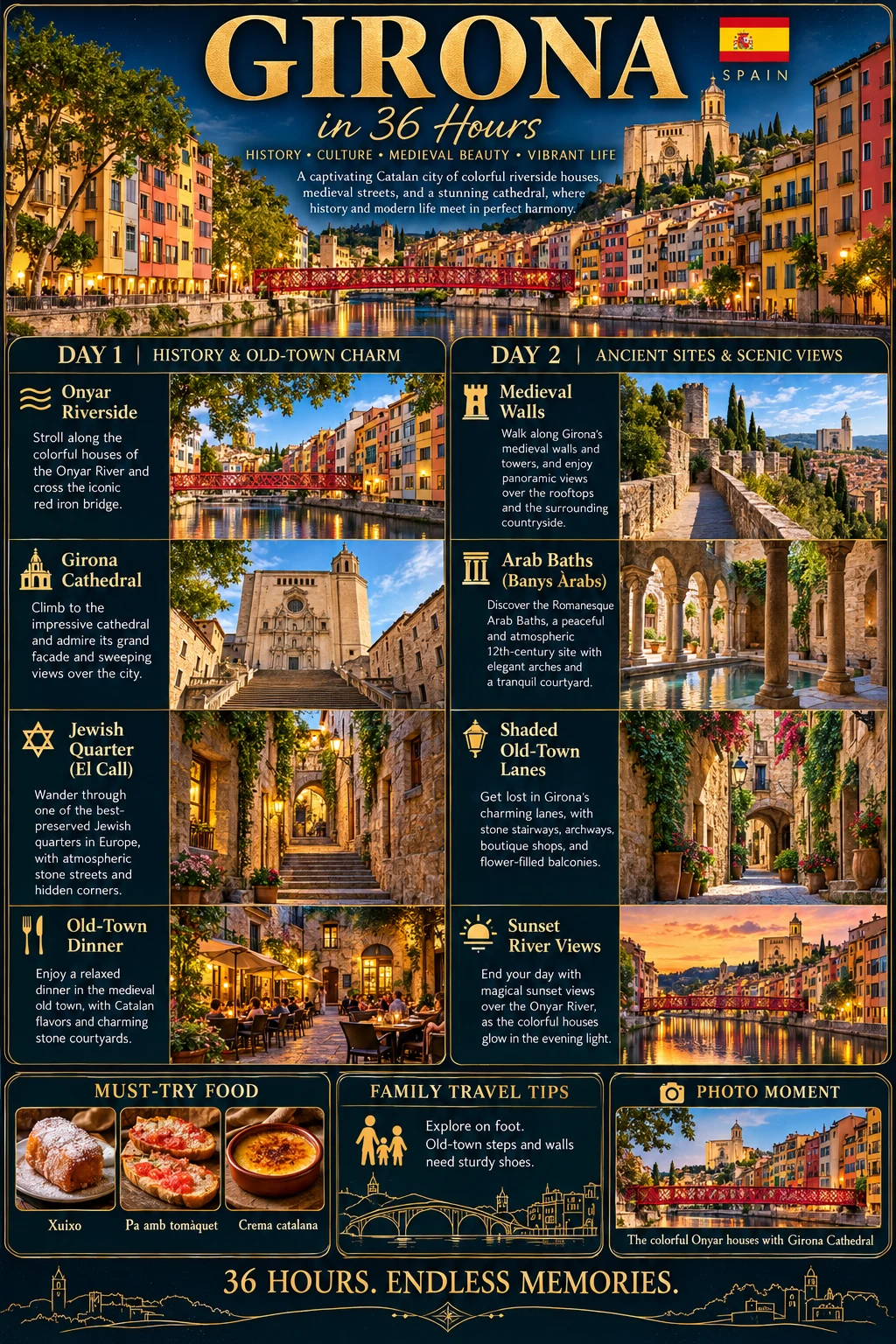
Begin with coffee and a xuixo, Girona's characteristic pastry, then walk toward Pont de Pedra and the bridges overlooking the colourful riverfront houses. Enjoy the different perspectives rather than stopping in the middle of a narrow bridge for a prolonged photo session. Cross into the old town and follow the Rambla at an easy pace. The distance is short, so use the hour to orient yourself rather than racing to the highest point. Official Girona food guide
10am–noon: Jewish history beyond the picturesque lanes
Walk up Carrer de la Força to the Museum of Jewish History. Allow 75–90 minutes for the museum and another half-hour for the surrounding streets. Its interpretation gives the Call a human history that photographs alone cannot: community life, scholarship, persecution and the end of medieval Jewish residence here. The site includes archaeological remains associated with the community's last medieval synagogue and a ritual bath.
The museum opens on Mondays as well as other days, but Monday, Sunday and holiday visits end at 2pm. That makes a morning slot particularly useful. Last admission is half an hour before closing, which is not enough time for a complete visit. Visitors requiring lift access should contact the museum in advance; the accessible approach uses a nearby building. Museum hours · Access and visit guidance
Noon–3pm: Lunch and a slower middle of the day
Descend toward the river for lunch, allowing 10–20 minutes depending on your chosen lanes. Look for seasonal Catalan cooking rather than assuming the city's gastronomic reputation requires a tasting menu. Local products highlighted by the tourism office include Girona apples, cured meats, mushrooms and sweet botifarra. Ask about preparation and ingredients: the sweet sausage is still a meat product, and ratafia is an alcoholic herbal liqueur.
Choose a restaurant with a clear menu and take a proper break. If visiting in summer, this is a good time to return to your hotel. Restaurant opening patterns vary, so check meal service rather than assuming food is available continuously throughout the afternoon.
3–5pm: Riverfront wandering or the Cinema Museum
Cross to Mercadal for a change of pace. Browse the streets and sit in a café, or spend 60–90 minutes at the Cinema Museum, whose collection explores the history of moving images and their predecessors. It can be a welcome alternative for families who have had enough stone buildings.
The city's published schedule normally excludes non-holiday Mondays from September to June and closes Sunday afternoons; July and August have Monday opening. If your visit falls on a closed afternoon, keep this as a street-and-café period or move the museum to an available morning. Municipal Cinema Museum information
6–9pm: Dinner and a short evening stroll
Return to the old town or choose a restaurant on the western side of the river. Book if you are aiming for a particular dining room. Finish with the bridges and the lower streets rather than an unfamiliar rampart route after dark. The city is attractive when day-trippers have departed, but this is also when residential quiet deserves particular care.
Day 2: Cathedral, baths and gardens
9–10am: The city walls before the busiest hours
After breakfast, make a modest wall walk if the weather and your mobility permit. Choose an open access point from the city's map and plan roughly 45–60 minutes, including the climb and an exit back toward the cathedral area. You do not need to walk every section or climb every tower.
There are stairs, uneven surfaces and exposed stretches. Keep children close, avoid slippery conditions and carry water. For a step-free or low-exertion version, stay with the riverfront and arrange an accessible cultural visit instead. The city currently lists wall opening from 8am, closing at 9pm September–May and 11pm June–August, but temporary barriers take precedence. Official wall access map and hours
10am–noon: The cathedral and a compact bathhouse visit
Give the cathedral about an hour, focusing on the immense interior and the spaces included in your chosen cultural ticket. The operator offers a combined cathedral and Sant Feliu ticket; you do not have to use every included admission immediately. Confirm the correct entrance if the monumental staircase is unsuitable.
On Sunday, cultural visits begin at noon. Visit the Arab Baths and gardens first, then the cathedral at noon before lunch. Services and exceptional worship can change admission. Cathedral's current cultural-visit calendar
The nearby Arab Baths take around 30–45 minutes. Despite the name, this is a medieval Romanesque bathhouse, not a functioning spa or evidence that the building originated under Islamic rule. The operator lists Monday–Saturday 10am–6pm and Sunday/holiday 10am–2pm, with specific Christmas and January closures. Bathhouse hours
Noon–4pm: Lunch and a green finish
After lunch, choose one gentle outdoor option. The Jardins dels Alemanys and nearby old-town gardens make a compact conclusion if you are already uphill. Alternatively, walk from the Sant Pere de Galligants area toward the Sant Daniel neighbourhood, allowing 20–30 minutes each way to the monastery area plus time to sit. This is a short out-and-back, not the full countryside circuit. Monastery interior access requires separate confirmation.
In rain or extreme heat, substitute a café and any museum you deliberately left open in the schedule. Collect luggage and allow ample time for the station before an early dinner or departure. Official Sant Daniel description
Three quieter worthwhile spaces
- Jardins dels Alemanys: historic garden spaces beside the walls; expect steps and respect any closed sections.
- Jardins de la Francesa: a different view of the cathedral's rear, useful as a brief pause rather than another long excursion.
- Sant Daniel's near-city lanes: a rural-feeling change from the old quarter. Stay on established routes and turn back before a pleasant stroll becomes a hike. City garden-route guide
Practical considerations
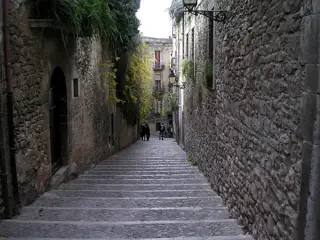
The Call and upper old town require more effort than their map distances imply. Families with pushchairs should plan the lower streets and verify museum access; a carrier may suit some stair-heavy sections better. Comfortable grippy shoes matter after rain. Flower-festival and major-event periods can bring queues and altered access, so check the city calendar and reserve accommodation early. If driving, consult current low-emission-zone and old-town access rules before following navigation into restricted streets. Official tourism updates
Sources & travel planning
Research checked 2026-10-16. This date describes the guide’s research, not a guarantee of current conditions. Opening hours, prices, access, transport and travel advice can change. Recheck the official sources before booking and departure. Walking and journey times are planning estimates.
- girona.cat ↗
- girona.cat ↗
- girona.cat ↗
- girona.cat ↗
- girona.cat ↗
- girona.cat ↗
- catedraldegirona.cat ↗
- banysarabs.cat ↗
- girona.cat ↗
- girona.cat ↗
- girona.cat ↗
Found a change? Contact Only36Hours about a correction.