36 Hours in Gyeongju: Silla Treasures, Royal Tombs and Lantern-Lit Water
Research checked: 16 October 2026. Korean-language operator information was prioritised where English listings were older. Transport and walking times are estimates; check date-specific services and site notices.
Gyeongju is most rewarding when its grassy burial mounds and reconstructed buildings are connected with the objects excavated from them. The former Silla capital is spread across a broad landscape, however, so this route keeps the first day in the central historic area and gives the second morning to Bulguksa. It deliberately leaves Seokguram and the outlying villages for a longer stay.
Stay around the central historic district or bus terminals if you want to walk to dinner and the tomb parks. Bomun-area resorts suit a different, more transport-dependent visit. The current railway station, formerly called Singyeongju, is outside the historic centre; the old central station is not the arrival point for your KTX. Allow roughly 25–35 minutes by taxi or 40–60 minutes by bus into town, plus waiting. City station-renaming explanation · Official bus information
Day 1: Tombs, treasures and the pond at dusk
9:00–10:30 | Daereungwon before the busiest hours
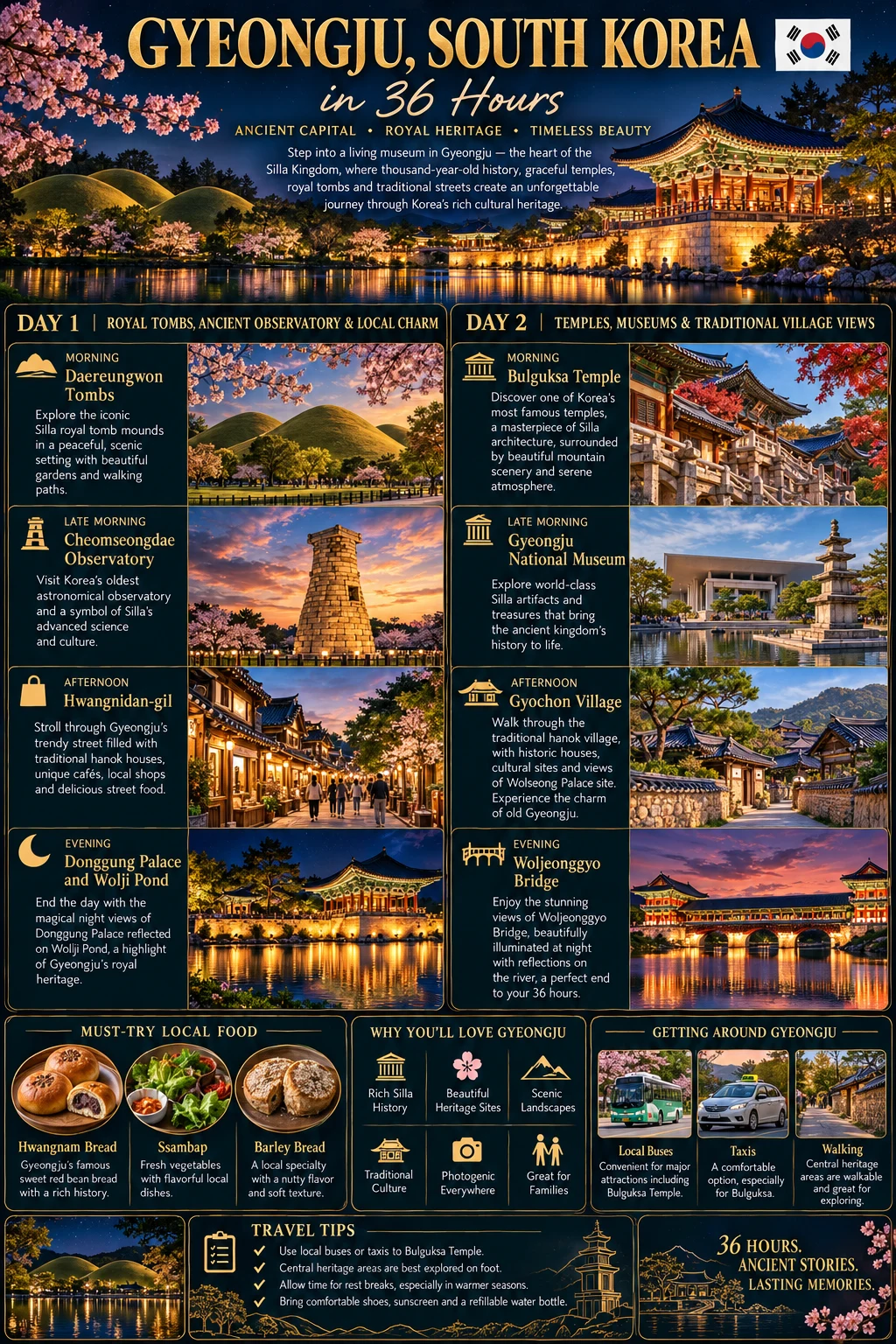
After breakfast, enter Daereungwon for a slow walk among the royal burial mounds. Treat them as graves and protected archaeology: stay on the paths and do not climb the grass slopes. Cheonmachong offers a more specific encounter with a tomb interior if open and if you choose its separately ticketed visit. The park and that interior have distinct admission arrangements; older guides may still quote a single park entrance charge.
Rather than queuing indefinitely at one fashionable photo point, notice how the mounds change shape as you move around them. Children can enjoy the open setting without being asked to absorb every royal name. Keep snacks for outside protected areas and follow the posted site rules. Municipal Daereungwon information
10:30–13:00 | Gyeongju National Museum
Take a short taxi ride, or allow about 30–40 minutes to walk to the museum, depending on your exit and pace. Focus on Silla history and a selection of the goldwork, pottery and Buddhist art rather than attempting every gallery. The museum turns the morning's apparently simple mounds into evidence of a sophisticated society. Include time outside for the large stone objects and bell display where accessible.
The Korean visitor page's schedule effective March 2026 is 10:00–18:00, last admission 30 minutes before closing, with Saturday extensions to 20:00 during March–October. It also specifies gallery closures on the second Monday of March, June, September and December; gardens and outdoor displays remain open on those maintenance days. The whole museum closes on 1 January, Seollal and Chuseok. Older English pages give different evening hours, so use the current Korean calendar. Museum operator information
Families wanting the Children's Museum should reserve a timed session online. The operator lists 50-minute visits, eight sessions daily and a capacity of 60 per session. This is not an unlimited walk-in playroom. Replace part of the main museum visit with the booked session rather than stretching everyone's attention through both. Children's Museum booking information
13:00–16:30 | Lunch, Hwangnidan-gil and a rest
Return toward the centre for lunch. Ssambap, a meal built around rice wrapped in leafy greens with accompanying dishes, is a good regional choice. Check the complete set before ordering: meat, fish and seafood-based seasonings may be included even when the vegetables dominate the table. Solo diners should ask about minimum orders. Local food overview
Browse Hwangnidan-gil's cafés and small shops, then return to your accommodation. Try a small Hwangnam red-bean pastry or the pancake-like barley bread with tea. Neither should be assumed gluten-free or egg-free. The city lists these as distinct local products; there is no need to buy a large souvenir box before tasting one. City guide to local breads
Late afternoon and evening | Cheomseongdae, then Donggung and Wolji
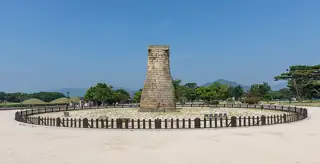
Walk to Cheomseongdae for an exterior look at the ancient observatory. A short detour into Gyerim gives a quieter, tree-filled contrast before the evening's main stop. Keep this section to around 45–60 minutes, then have dinner or a substantial early meal. In summer, wait until later for darkness; in winter, bring the outdoor section forward rather than insisting on a fixed sunset hour.
From Cheomseongdae, allow roughly 20–30 minutes to walk to Donggung Palace and Wolji Pond. Give the pond circuit about an hour after lights come on. The reconstructed pavilions and reflections explain its popularity, but it is one combined site, not two separate attractions. The city currently lists 09:00–22:00, ticketing until 21:30, with lighting after sunset. Arrive comfortably before the cutoff. Keep children close beside the water and use a taxi back if the day's walking has been enough. City night-view visitor information
Day 2: Bulguksa without the rushed mountain add-on
9:00–12:30 | The temple morning
After breakfast, travel to Bulguksa. Allow approximately 30–45 minutes by taxi from central Gyeongju, or around 45–70 minutes by bus including the approach but excluding a long wait. Use the current city route planner for your actual stop and departure. Blossom and autumn-foliage weekends can produce much longer journeys.
Spend 90 minutes to two hours in the temple grounds, looking at the contrasting stone pagodas and the relationship between terraces and wooden halls. This is an active Buddhist site, so dress considerately, keep voices low and obey photography restrictions. Use visitor routes rather than historic stairways that are closed to climbing. Families should take breaks; wheelchair users should ask for the appropriate approach and which areas remain inaccessible.
A morning visit avoids depending on conflicting seasonal closing information in older listings. The national heritage campaign publishes seasonal last-entry changes, so confirm your date there or with the temple. Do not use an old UNESCO brochure's fee and opening table as current advice. National heritage visitor information
Seokguram is farther up the mountain and needs another transfer plus walking. For a 36-hour stay, adding it risks turning the morning into a transport exercise. If it is your particular priority, replace the afternoon city walk and arrange the return carefully; do not assume an old hiking-route description guarantees the path is open.
12:30–16:00 | Lunch and a final small walk
Have lunch near Bulguksa or back in the centre, then choose one final neighbourhood stop. Gyochon village and the reconstructed Woljeonggyo bridge make a pleasant daytime alternative to another museum, with traditional-style buildings and a riverside setting. Allow 60–90 minutes, keeping out of private properties and checking any workshop reservation requirements. Do not make children cross river stepping stones for a photograph, especially in wet conditions. Official Gyochon walking map
Three quieter places worth considering
- Noseo-dong tomb park: a short central detour with paths and benches, useful instead of more café queues. The city confirms free access without fixed opening hours; respect the tombs just as at Daereungwon. City park information
- Gyerim: the small historic woodland near Cheomseongdae, best enjoyed briefly and quietly on the main route.
- Gyochon's side lanes: visit in daylight before committing to workshops or paid experiences. Quiet is relative on holidays, and this remains a lived-in heritage setting.
Practical adjustments
If the museum is closed, swap the two days' main visits, retaining Wolji on whichever evening suits. Spring flowers and autumn foliage are attractive but variable; neither can be guaranteed for a particular week. Summer needs water, shade and a genuine afternoon rest, while winter evenings can be cold. Use short taxi links when walking fatigue builds, and leave a substantial margin for the out-of-centre railway station before your reserved train.
Sources & travel planning
Research checked 2026-10-16. This date describes the guide’s research, not a guarantee of current conditions. Opening hours, prices, access, transport and travel advice can change. Recheck the official sources before booking and departure. Walking and journey times are planning estimates.
- gyeongju.go.kr ↗
- its.gyeongju.go.kr ↗
- gyeongju.go.kr ↗
- gyeongju.museum.go.kr ↗
- gyeongju.museum.go.kr ↗
- visitgyeongju.or.kr ↗
- gyeongju.go.kr ↗
- search.gyeongju.go.kr ↗
- kh.or.kr ↗
- gyeongju.go.kr ↗
- search.gyeongju.go.kr ↗
Found a change? Contact Only36Hours about a correction.