36 Hours in Hiroshima: Remembrance, Gardens and the Inland Sea
Research checked: 16 October 2026. Official tourism, attraction and transport sources were checked; journey times are estimates. The Peace Memorial Museum’s own website could not be retrieved, so its current official tourism listing and municipal notices were used for planning.
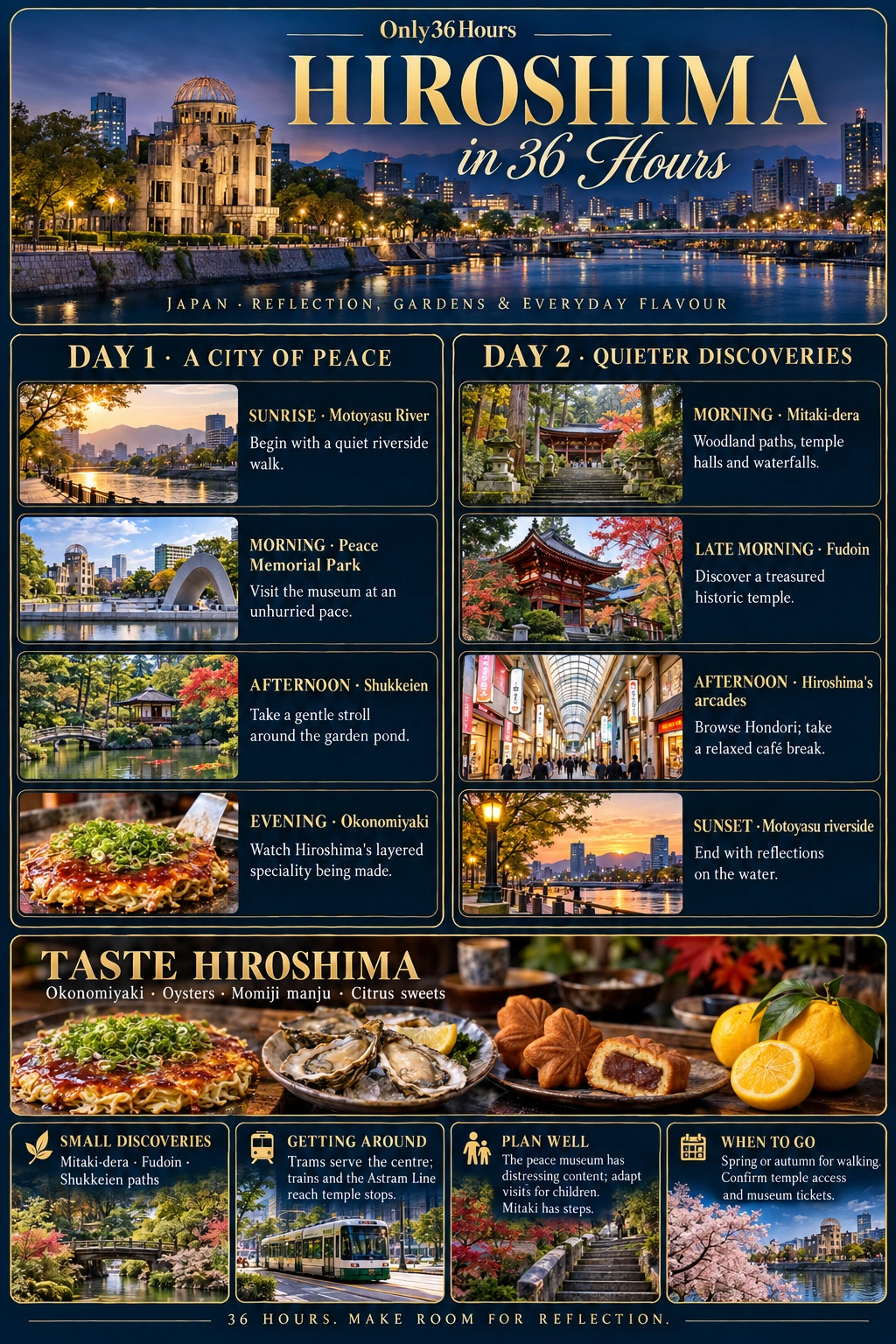
Hiroshima deserves time for both remembrance and everyday life. The Peace Memorial Museum and surrounding monuments are essential, but so are the city’s rivers, gardens and food counters, where dinner arrives sizzling from a griddle. With 36 hours, keep the first day in the city and give most of the second to Miyajima. Trying to combine the museum, island and a mountain ascent in a single day leaves little space for any of them.
Stay around central Hiroshima or the main station. The former suits evenings and the peace sites; the latter simplifies arrival and the rail journey towards Miyajima. Begin after breakfast and leave your onward departure until the second evening, with room for ferry or train delays.
Day 1: Remembrance and a living city
9:00–11:30 | Peace Memorial Museum
Reserve your museum admission through the official links before travelling, then build the morning around that ticket. Allow at least two hours, plus entry queues and time afterwards. Personal belongings, photographs and testimony explain the human consequences of the atomic bombing of 6 August 1945. The material can be distressing; this is a visit to approach attentively rather than as a photo stop.
The official tourism listing confirms extended seasonal opening and some reservation-only periods. Holiday arrangements can differ: the reservation-only rules announced for Obon in August 2026 should not be assumed to apply identically on every future date. Check the exact day, especially around year-end and exhibition-change closures in February. Official museum listing and ticket link
With children, explain the subject beforehand, follow their questions and be prepared to shorten the galleries. Adults can take turns outside if a child needs a break. There is no benefit in forcing the complete exhibition on someone who is overwhelmed.
11:30–13:00 | The park and Atomic Bomb Dome
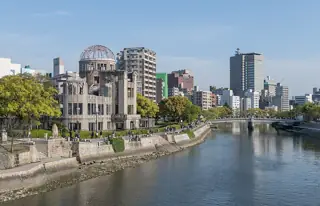
Walk slowly through Peace Memorial Park towards the Cenotaph, Children’s Peace Monument and Atomic Bomb Dome. These are memorial spaces, not props for playful photographs. Leave an unstructured interval beside the river before lunch.
If you want a quieter place to reflect, the separate Hiroshima National Peace Memorial Hall for the Atomic Bomb Victims is nearby. Its remembrance space and recorded accounts complement the museum, but you do not need to do both interiors. Admission is free; it has its own seasonal hours and year-end closure. Memorial Hall visitor information
13:00–15:00 | Lunch and a proper pause
Cross back into the centre for lunch around Hondori or your hotel. Hiroshima-style okonomiyaki layers ingredients over a thin base, usually with noodles. A counter seat lets you watch the preparation, but families with small children may prefer a table away from the hot griddle. Ask about pork, seafood, egg and sauces rather than assuming a vegetable-looking version is vegetarian.
Keep this interval generous. The afternoon garden is optional if the morning has been emotionally tiring. You can still have a worthwhile first day without another admission.
15:00–16:30 | Shukkeien’s small landscapes
Allow approximately 20–30 minutes by taxi or public transport and walking from the peace-park area, or around 35–45 minutes to walk. Shukkeien provides ponds, planted islands and changing viewpoints within a compact garden. Take the main paths slowly instead of trying every stepped detour.
The current operator schedule opens at 9:00, closing at 18:00 from 16 March to 15 September and 17:00 from 16 September to 15 March. Last admission is half an hour earlier, and 29–31 December are closed. Ask staff for the most suitable route if using a wheelchair or pushchair; small bridges and uneven paths are not all equally straightforward. Shukkeien opening information
18:00 onwards | Dinner in the centre
If lunch was light, make dinner your okonomiyaki meal. Alternatively, look for cooked oysters or other Seto Inland Sea dishes. Winter is the classic oyster season, though menus vary throughout the year. Hiroshima’s official food guide also introduces anago rice, topped with conger eel, a useful choice for tomorrow around Miyajima.
Do not add a castle-tower visit: Hiroshima Castle’s keep closed in March 2026. Its exterior, Ninomaru buildings and Sannomaru area remain separate possibilities, subject to their own access. The new history museum is scheduled for June 2027, so it is not a current attraction. Castle operator’s current notices
Day 2: Miyajima without the mountain rush
8:30–10:00 | Train, then ferry
Travel by JR towards Miyajimaguchi, walk to the ferry terminal and cross to Miyajima. Budget roughly 60–90 minutes from your central hotel including transfers, waiting and the short walk between station and boat. The ferry crossing itself takes about ten minutes. Taking the city tram all the way is possible but slower; choose it for the journey rather than speed.
Check the operator’s current timetable, weather notices and fare conditions. A rail pass does not automatically remove the separate Miyajima visitor tax. The ferry’s Japanese and English fare pages displayed different basic fares during research, so confirm the current amount rather than budgeting from an old English screenshot. JR Miyajima Ferry fares and sailing information
10:00–12:00 | Itsukushima Shrine and the waterfront
Walk along the shore to Itsukushima Shrine, allowing around 15–25 minutes with stops. The famous gate looks different with the tide: water creates the floating effect, while lower water exposes the surrounding shore. Plan around the tide if a particular view matters, without expecting both conditions within a short visit.
Give the shrine itself time, including its covered corridors and views back towards the sea. It is a working place of worship. Comfortable shoes help on floorboards with gaps; keep children beside you and follow any weather-related restrictions. The shrine’s closing time changes by season, though this late-morning visit avoids the normal closing-time pressure. Shrine visitor information
12:00–15:00 | Lunch and quieter island streets
Have lunch before the afternoon ferry queues build. Anago rice is a regional option; a small sweet or café stop can follow rather than replacing the meal. Move away from the busiest shopping frontage into Machiya Street and the adjoining lanes, using the tourism association’s island map.
The deer are wild. Keep food, paper tickets and bags out of reach, do not feed them and supervise children. Skip Mount Misen on this itinerary: ropeway operations, queues and the walking beyond its upper station need their own time and checks. A relaxed shoreline visit is already a substantial half-day.
15:00–18:30 | Return with a buffer
Aim to leave the island in mid-afternoon, leaving room for a missed sailing or a crowded train. Back in Hiroshima, collect luggage and have an early dinner before onward travel. If ferries are disrupted, keep the day in the city rather than attempting a tight alternative boat connection.
Three quieter places worth considering
- National Peace Memorial Hall: a contemplative companion to the better-known museum, not a compulsory extra.
- Shukkeien’s less-busy paths: an accessible-in-distance afternoon pause, with physical route suitability checked on arrival.
- Mitaki-ji: a wooded temple alternative for a city-only second day. The tourism office describes a roughly 20-minute walk from JR Mitaki Station; allow extra for the uphill approach and stepped grounds. It replaces Miyajima, not an additional morning stop. Official Mitaki-ji guide
Practical notes
Use Hiroden’s current route information for city transport; the network has changed, so old station-access diagrams can mislead. Expect heat and humidity in summer, and check weather warnings before island travel. Cherry blossom and autumn-foliage periods bring crowds rather than guaranteed quiet gardens. Reserve the museum first, keep one main experience per half-day, and let the rest of Hiroshima fit around it.
Sources & travel planning
Research checked 2026-10-16. This date describes the guide’s research, not a guarantee of current conditions. Opening hours, prices, access, transport and travel advice can change. Recheck the official sources before booking and departure. Walking and journey times are planning estimates.
- dive-hiroshima.com ↗
- hiro-tsuitokinenkan.go.jp ↗
- shukkeien.jp ↗
- dive-hiroshima.com ↗
- hiroshimacastle.jp ↗
- jr-miyajimaferry.co.jp ↗
- jr-miyajimaferry.co.jp ↗
- itsukushimajinja.jp ↗
- miyajima.or.jp ↗
- dive-hiroshima.com ↗
- hiroden.co.jp ↗
Found a change? Contact Only36Hours about a correction.