36 Hours in Jeonju: Hanok Lanes, Royal Portraits and a Taste of Tradition
Verified: 18 October 2026.
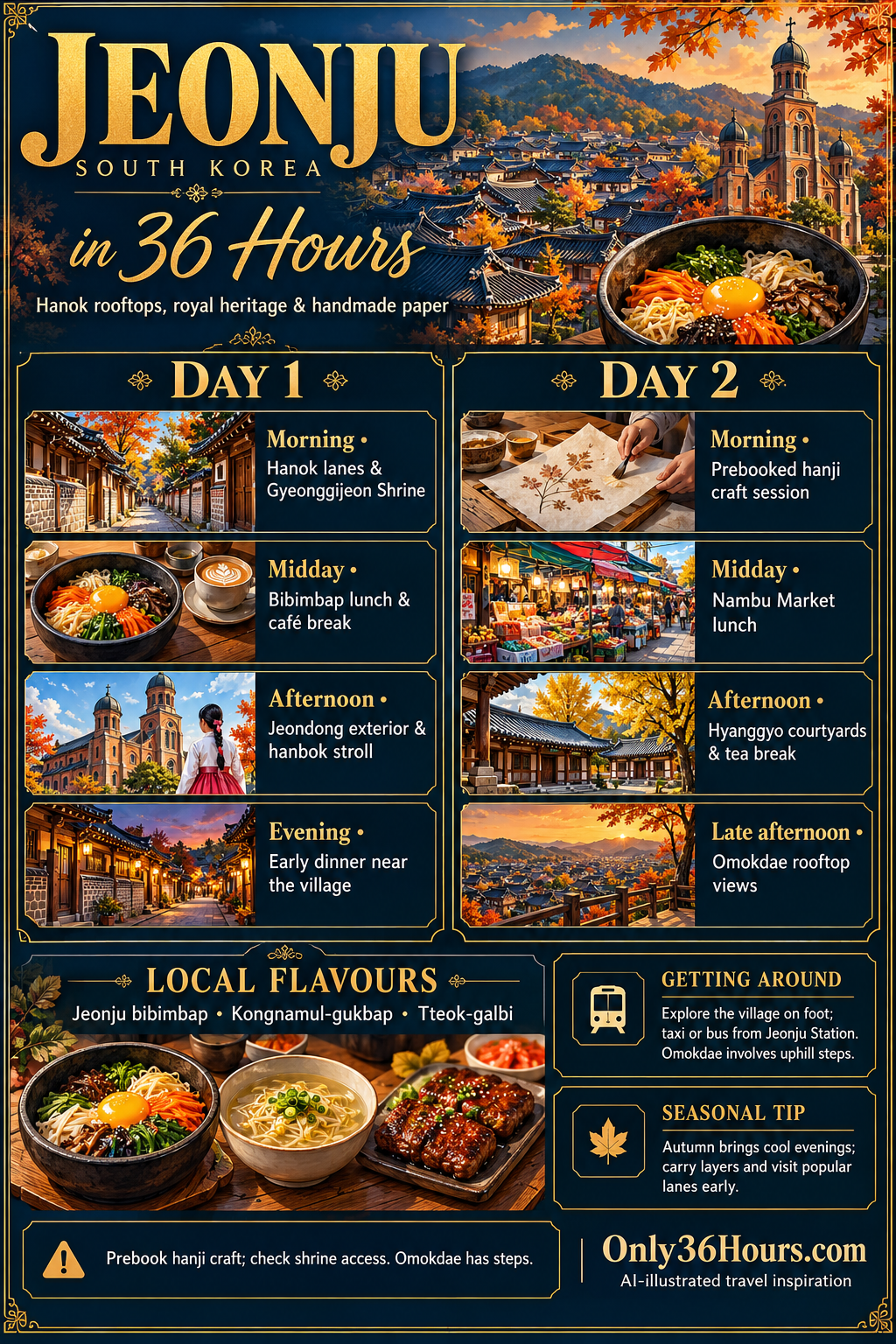
Jeonju is best approached at walking pace, with room between the headline sights for a bowl of soup, a paper-making project or a quiet courtyard. The city's Hanok Village introduction describes a central district with more than 700 traditional houses, cultural institutions and an active resident community. It is a living neighbourhood, not a sealed historical set: the streets include homes, businesses and newer adaptations. This two-day route concentrates on the village and nearby Nambu Market rather than spending the visit in taxis.
Before you arrive
Book accommodation near the village if short walks and easy rest breaks matter. A hanok stay can be appealing, but ask whether your room has a bed or floor bedding, a private bathroom, steps and the heating or cooling you need. “Traditional” does not tell you whether a property suits a wheelchair or a child who wakes easily.
Jeonju Station is a separate transfer from the village. Korea Tourism Organization's transport guidance identifies city buses and taxis; its published fare and route examples are older, so check current services instead of budgeting from those figures. Allow time for a taxi queue and agree an accessible drop-off with your accommodation. Pedestrian restrictions can mean walking the last section with luggage.
For a Sunday–Monday stay, visit Hyanggyo on Sunday and move craft or tea time to Monday, subject to availability. Check each venue’s calendar. The village's open streets do not imply that every courtyard, house or attraction stays open all day.
Day 1
09:00–10:00 | Find your bearings among the roofs
Start with an easy loop through the public lanes around Taejo-ro. Notice the rooflines, timber frames and changes between busy shopping streets and residential edges. Keep voices low near homes, avoid entering a courtyard unless visitors are invited, and ask before photographing people. Children can look for three different door designs without turning someone's doorstep into a photo session.
Save longer shopping for later; use this first circuit to understand the district.
10:00–11:30 | Gyeonggijeon and the story of a dynasty
At Gyeonggijeon Shrine, the portrait of Taejo introduces the founder of the Joseon dynasty. The official village history dates the shrine's establishment to 1410 and records destruction and rebuilding, including reconstruction in 1614. That distinction matters: heritage here has been preserved, repaired and reinterpreted rather than remaining untouched.
Allow time for the sequence of gates and halls, and follow the ticket office's current instructions about photography and access. For younger visitors, use one question: why would a ruler's portrait need its own protected place? Do not promise that every original object or exhibition room will be on view.
11:45–13:30 | Bibimbap, then a genuine rest
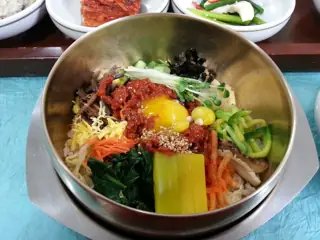
Make lunch a sit-down meal rather than a succession of snacks. Jeonju's official food guide describes its bibimbap traditions, including bean sprouts, seasoned ingredients and versions made with beef broth or raw beef. Ask what is in the particular bowl before ordering. Request cooked meat and egg if preferred, and check broth, sesame, soy and other ingredients if allergies or dietary restrictions matter. Vegetables on top do not guarantee a vegetarian meal.
Let each person mix sauce to taste where the restaurant allows it. Then return to your room or take an unhurried café break; there is no prize for immediately climbing a hill after lunch.
14:00–16:30 | Cathedral exterior and a quieter tea stop
Look at Jeondong Cathedral from the permitted visitor area. Its brick exterior provides a striking contrast with the village roofs. It remains a place of worship: KTO's visitor information excludes tourist access during Mass, so an interior visit is optional and subject to the day's arrangements.
For the first of three slower places, consider Gyodong Dawon, the nearby tea house identified in that same KTO guide. It describes both floor seating and an annex with chairs. Confirm current opening and seating before going; the published listing notes a Tuesday closure. Choose another nearby tea stop if closed rather than rearranging the whole day. This is time to sit and talk, not a guaranteed silent room or an included tea ceremony.
17:00–19:00 | Early dinner and an easy evening
Choose a meal near your accommodation, leaving time to return without rushing. If renting hanbok appeals, make it an optional short activity rather than an obligation: check return time, fit, shoes and weather before paying. Keep costumes out of cooking areas and respect residents' boundaries. A brief evening walk is enough before a full night's rest.
Day 2
09:30–11:00 | A prebooked hanji workshop
Reserve a suitable paper-craft session through the official village craft directory. It lists several hanji activities, but some require groups, and individual sessions differ in duration and complexity. Confirm language, minimum age, price, accessibility and whether the finished piece will be ready to carry away. A family booking is not automatically accepted because an activity appears online.
Keep this workshop in the village for a manageable morning. If no session is available, browse open craft displays and ask about materials instead. Do not promise a walk-in lesson or substitute an outlying museum without allowing for transport.
11:30–13:00 | Nambu Market lunch
Head towards Nambu Market, historically associated with the area outside the old fortress gate. Browse briefly before choosing somewhere to sit. Kongnamul-gukbap, the bean-sprout-and-rice soup associated with Jeonju, offers a different meal from yesterday's bibimbap; ask about broth and egg preparation. The market is also a working shopping place, so leave passages clear and avoid handling produce without permission.
The ordinary daytime market and special night-market events are different experiences. This route does not depend on a late event or an old advertised timetable.
13:30–15:00 | Hyanggyo courtyards
Walk towards Jeonju Hyanggyo, the Confucian school near the riverside, for the second slower stop. The municipal visitor guide highlights its courtyards and mature trees, and lists Monday closure. Confirm the current calendar, particularly around holidays. Keep to open areas and respect ceremonial use. Autumn foliage can draw crowds, so a quieter intention does not guarantee an empty courtyard.
15:15–17:00 | Optional Omokdae views
Finish with Omokdae, the third slower place, if everyone is comfortable with an uphill approach and steps. The municipal guide identifies the pavilion as a place to pause above the village. Follow posted instructions about shoes and permitted seating. Skip the climb in slippery conditions or when mobility makes it impractical; a final tea break on the lower streets is a complete alternative.
Leave a generous margin for luggage and the station transfer. Carry layers for changing temperatures, check rain and heat forecasts, and shorten outdoor stretches when needed. Workshops and meals provide useful weather alternatives, while thresholds, slopes and heritage-building access should be checked individually rather than assumed step-free.
Sources & travel planning
Research checked 2026-10-18. This date describes the guide’s research, not a guarantee of current conditions. Opening hours, prices, access, transport and travel advice can change. Recheck the official sources before booking and departure. Walking and journey times are planning estimates.
- hanok.jeonju.go.kr ↗
- english1.visitkorea.or.kr ↗
- hanok.jeonju.go.kr ↗
- tour.jeonju.go.kr ↗
- english.visitkorea.or.kr ↗
- hanok.jeonju.go.kr ↗
- tour.jeonju.go.kr ↗
- english1.visitkorea.or.kr ↗
- tour.jeonju.go.kr ↗
Found a change? Contact Only36Hours about a correction.