36 Hours in Kairouan: Courtyards, Water and the Art of Slowing Down
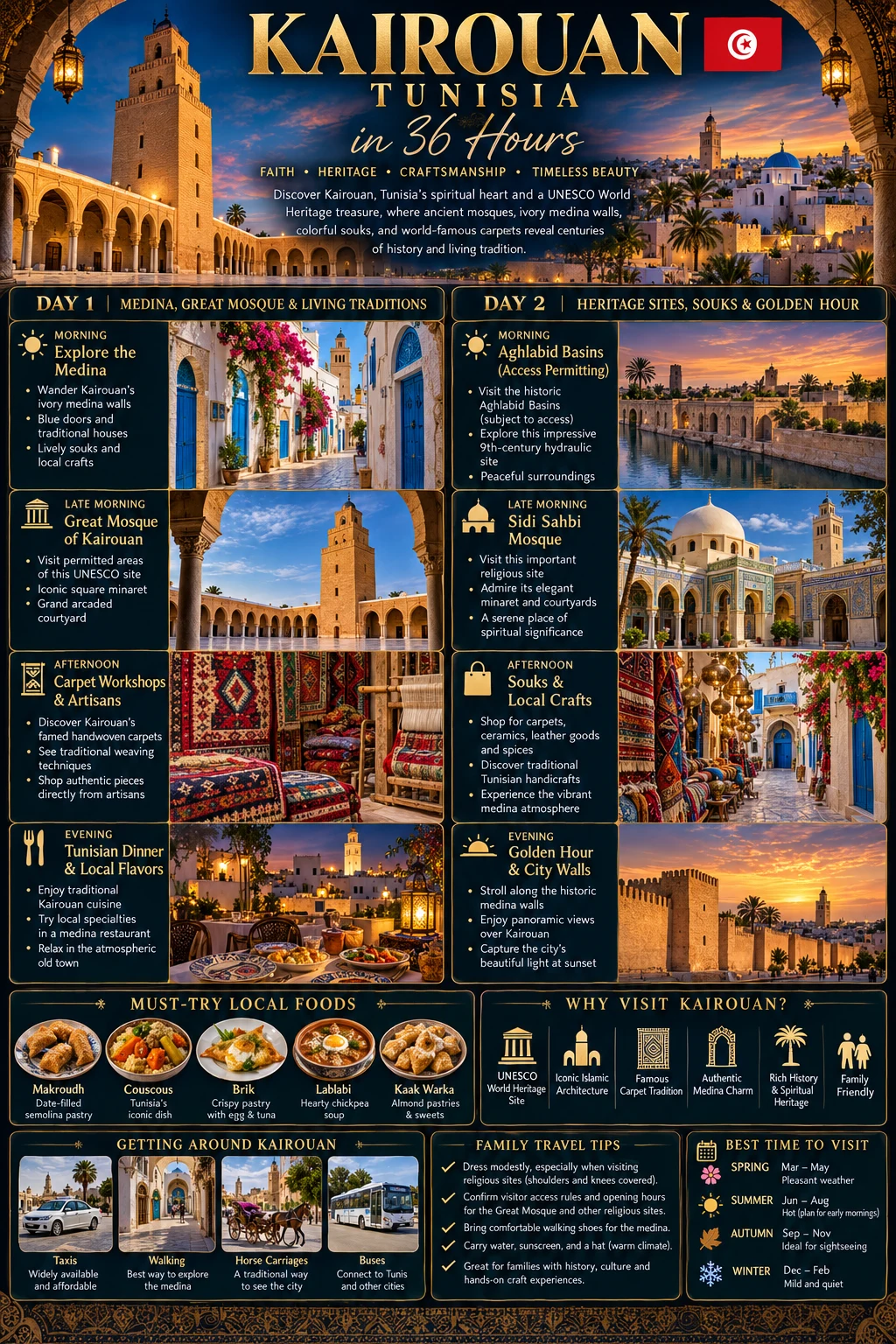
Kairouan rewards an overnight stay. Day-trippers tend to arrive with a list of monuments; staying gives you time to notice how the city fits together, from the mosque’s monumental courtyard to the compact streets where people buy bread, repair things and sell carpets. This route puts religious monuments in the morning, leaves the hottest hours flexible and keeps the second day close to town. Arrive the previous evening if possible and stay near a medina gate so that luggage transfers do not become a long walk through narrow lanes.
Day 1: The Great Mosque and the medina
8:30–10:00 a.m. | Begin with the Great Mosque
Eat breakfast before visiting and allow about an hour inside, plus time for tickets and the approach. The Great Mosque’s scale is best appreciated by stopping in its courtyard rather than immediately photographing every arch. Its present form owes much to the ninth century, although its foundation is earlier. The heritage agency currently lists winter visiting hours of 8 a.m.–2 p.m. and summer hours of 7:30 a.m.–2 p.m.; on Fridays, visits end at noon. These are visitor windows, not permission to interrupt worship. Great Mosque visitor information
Non-Muslim visitors can enter the courtyard and look toward the prayer hall; do not assume access to the hall or minaret. Dress modestly, bring a scarf if needed and follow staff instructions about footwear and photography. With children, make this a short observation game: find the different columns, look at the courtyard paving and listen before moving on. National tourism guidance
10:00 a.m.–12:30 p.m. | Walk through the working medina
Head gradually south through the old town, taking roughly 20–30 minutes of actual walking but leaving much longer for stops. Keep a downloaded map and your accommodation’s address. A licensed guide booked through your accommodation can explain the buildings without turning the whole morning into shopping; agree the route, duration and price first.
On a weekday, consider a 20–30-minute visit to Sidi Abid al-Ghariani. Its marble courtyard, horseshoe arches and decorative plaster make an intimate counterpoint to the Great Mosque. The agency lists it as closed Saturday and Sunday, with a Friday cutoff of 1 p.m. Skip the interior on those closed days rather than building your route around an uncertain exception. Sidi Abid al-Ghariani
Browse a carpet workshop only if you genuinely want to. Ask whether a demonstration carries any charge and feel free to leave without buying. Photograph artisans and residents with permission, and avoid blocking doorways.
12:30–4:00 p.m. | Lunch and a proper pause
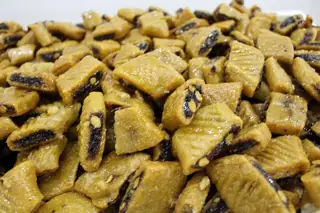
Choose a busy restaurant and order couscous or mosli allouche, roast lamb. For something sweet, try maqroudh, the city’s date-filled semolina speciality. Ask about ingredients if you have allergies; fillings, oils and preparation vary. Vegetarian visitors should check whether couscous or vegetables use meat stock. Kairouan food traditions
Return to your room after lunch, especially in summer. This is useful recovery time, not a gap to fill with another distant attraction. Families can plan their longest meal or nap here. Do not postpone the morning monuments to this period: several close early even when the streets remain lively.
4:00–8:00 p.m. | Return to a familiar lane
Take a shorter second walk near the medina’s shops and gates, allowing 45–60 minutes and a café stop. Pick up sweets for later rather than carrying delicate purchases all day. Have dinner near your accommodation and arrange tomorrow’s taxi with a clear meeting point. An early evening is sensible if heat and walking have caught up with you; there is no need to manufacture a nightlife itinerary here.
Day 2: Reservoirs and tiled courtyards
9:00 a.m.–noon | Sidi Sahbi and the Aghlabid Basins
Take a taxi to Sidi Sahbi, allowing approximately 10–15 minutes from the medina depending on your starting point and traffic. Also called the Mosque of the Barber, this is an active devotional place, not simply an architectural exhibit. Spend 30–45 minutes looking at the tiled courtyards and carved decoration in the areas open to visitors. Give ceremonies space and do not photograph participants without consent. Current published hours end at 3 p.m. in winter, 2 p.m. in summer and 1 p.m. on Fridays. Sidi Sahbi
Continue by a short taxi ride, or a roughly 20–30-minute walk in comfortable weather, to the Aghlabid Basins. Allow 30–45 minutes to understand the settling and storage system that helped supply the city. These are ninth-century works, not nineteenth-century reservoirs, despite an error on one tourism page. Use designated visitor areas; this is not a swimming stop. Morning also avoids the operator’s seasonal and Friday early closing. Aghlabid Basins
Noon–4:00 p.m. | Lunch, then choose one quieter place
Return for lunch and an unhurried departure. If you have another evening, choose one of these alternatives, checking opening before setting out. They are options, not three extra compulsory stops:
- Sidi Amor Abada Museum: oversized metalwork and wooden objects associated with a nineteenth-century master blacksmith give this collection a distinctive character. Allow 30–45 minutes. It closes Mondays; summer hours end at 2 p.m., so visit before lunch in that season. Friday arrangements also need confirmation. Museum information
- Sidi Abid al-Ghariani: use the quiet courtyard stop from Day 1 if your weekday calendar permits. It is a worthwhile replacement for another shopping hour, not a weekend guarantee.
- Raqqada Museum: for a deeper interest in Islamic art, replace the second morning’s city sights with this outing. Budget around 20–30 minutes each way by prearranged car and 60–90 minutes inside. Manuscripts, ceramics and architectural woodwork provide context for the mosque. Closed Mondays; published summer hours are 8 a.m.–2 p.m., winter 9 a.m.–4 p.m. Arrange the return ride. Raqqada visitor information
Practical planning
Coaches and shared taxis connect Kairouan with other cities, but confirm departures locally rather than relying on a generic timetable. With children or luggage, a booked driver simplifies arrival; allow roughly 1–1½ hours by road from Sousse, subject to traffic. Walking times above are estimates. Uneven lanes, thresholds and monument steps mean wheelchair users should confirm specific entrances and toilets before booking accommodation or a guide.
Carry water, sun protection and small cash. Ask at the first monument which sites a combined ticket covers and how long it remains valid; do not assume every museum is included. Ramadan and religious events can affect access and meals. Spring and autumn usually make long walks more comfortable than midsummer.
Check your government’s advice before travel. The UK’s current regional restrictions include Kasserine Governorate and Sbeitla, so a western archaeological detour should not be casually added to this route. Kairouan is not named in those restricted areas, but that is not a guarantee of safety. Tunisia travel advice
Research checked: 16 October 2026. Hours above were observed on live official listings; those pages do not give a clear revision date. Reconfirm access for your travel dates, particularly Fridays, Ramadan and holidays.
Sources & travel planning
Research checked 2026-10-16. This date describes the guide’s research, not a guarantee of current conditions. Opening hours, prices, access, transport and travel advice can change. Recheck the official sources before booking and departure. Walking and journey times are planning estimates.
- patrimoinedetunisie.com.tn ↗
- discovertunisia.com ↗
- patrimoinedetunisie.com.tn ↗
- patrimoinedetunisie.com.tn ↗
- patrimoinedetunisie.com.tn ↗
- patrimoinedetunisie.com.tn ↗
- patrimoinedetunisie.com.tn ↗
- gov.uk ↗
Found a change? Contact Only36Hours about a correction.