36 Hours in Kumasi: Asante History, Living Crafts and Market Life
Kumasi is a place to listen as well as look. Royal objects, a weaver's account of a pattern and the movement of goods through Kejetia tell different parts of the Asante story. This itinerary combines a museum-led city day with one craft community outside town. It deliberately leaves space for traffic, conversation and afternoon rest rather than treating nearby villages as a checklist.
Before travelling: check current Ghana advice and arrange reputable local transport. The UK advisory reports serious crime and criminal kidnappings, including in Kumasi, and recommends particular caution after dark. Its specific all-but-essential-travel warning concerns Bawku Municipality, not Kumasi, but that does not remove ordinary safety risks. Ghana travel advice, safety guidance.
Day 1: Royal history and the trading city
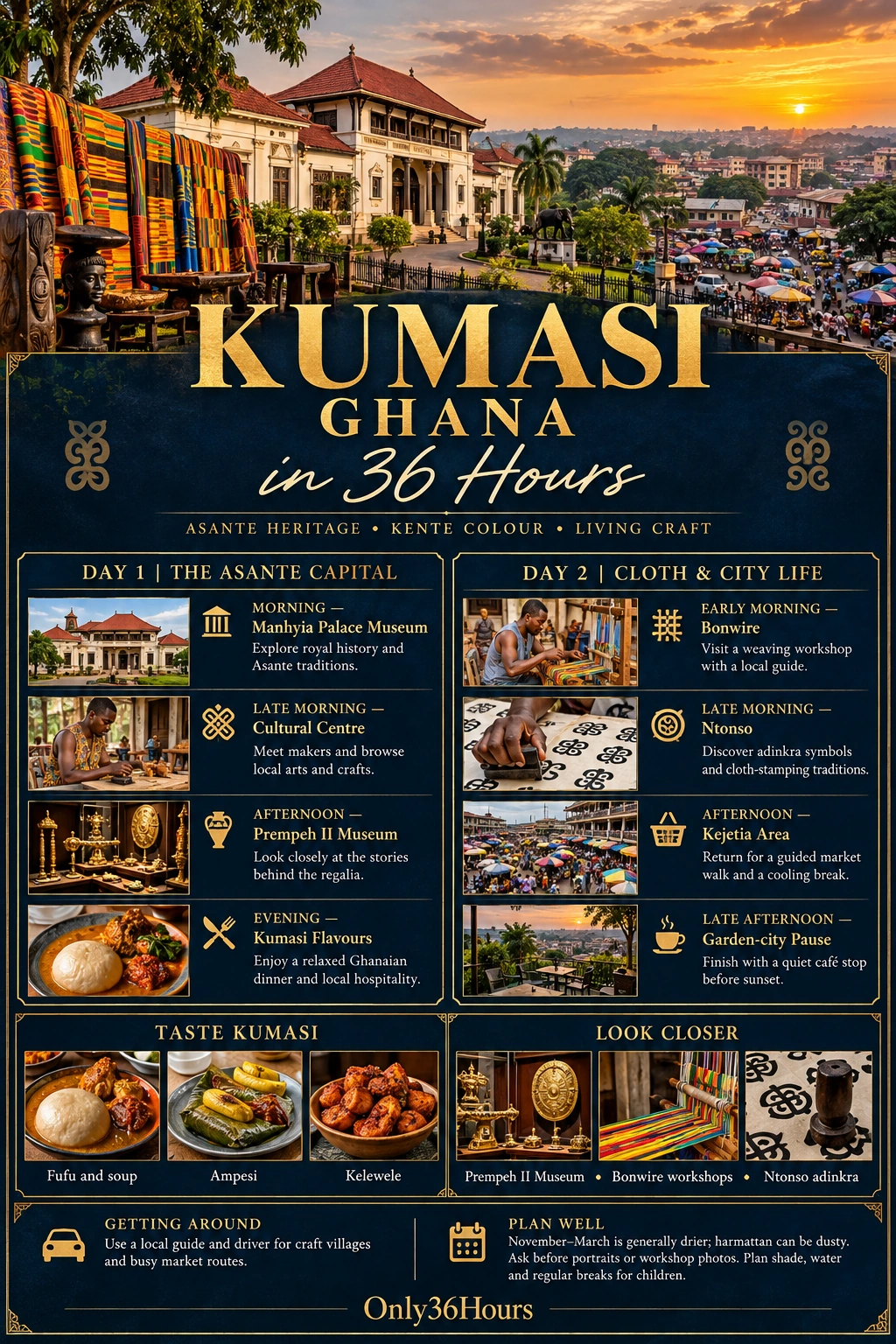
9:00–11:00: Manhyia Palace Museum
Have breakfast at your accommodation, then travel to Manhyia Palace Museum for a morning visit. Allow around 90 minutes including orientation and questions. The collection introduces Asante royal history through objects, regalia, photographs and accounts of relations with British colonial forces. Ask the guide about the meaning of objects, not just their material value. Ghana Tourism Authority.
The museum's own FAQ lists daily opening, including statutory holidays, from 9:00 to 17:00 and says ordinary visits do not need an appointment. Dress modestly. Photography inside galleries is prohibited; selected designated photography arrangements use the museum's photographers, so permission to photograph the grounds is not permission to use your phone everywhere. Check arrangements on arrival. Museum FAQ.
This is a museum visit, not a booking to meet the Asantehene or enter private palace spaces. If a ceremony affects the day, follow palace instructions and let your local guide adapt the itinerary. Do not assume a festival calendar found elsewhere guarantees public access.
11:00–13:30: Kejetia with a local guide, then lunch
Use a pre-arranged vehicle to the central market district, allowing roughly 15–35 minutes rather than trusting the short distance on a map. Walk with a guide who knows the current entrances and trading areas. Spend 45–60 minutes looking at foodstuffs, fabrics and household goods, leaving room for traders to work. Ask before photographs, keep valuables discreet and agree a clear meeting point with your driver.
The wider market redevelopment remains relevant: an October 2026 government update discusses phased market projects and negotiations intended to allow work at Kumasi Central Market Phase II to resume. This does not mean the whole market is closed, or that every access route is unchanged. Have your guide check the day's usable route and avoid construction areas. Regional tourism overview, Government market-project update.
For families with small children, heat or crowd sensitivity, skip the market interior and use a shorter craft visit instead. Lunch should be a seated break at an established restaurant, not an obligation to sample everything along the busiest passage.
14:00–16:00: Centre for National Culture
Continue to the Centre for National Culture in the Bantama area. Allow approximately 10–25 minutes for the transfer, depending on the market pickup point. Browse the craft areas and, if open, visit the Prempeh II Jubilee Museum. Ask a maker about a particular material or technique before choosing a souvenir. Pay the agreed fee for a demonstration or lesson; buying an object and booking a workshop are different transactions.
The regional authority lists the centre, museum and craft facilities, but a dependable current daily timetable was not established for every component. Have your guide confirm the museum and working workshops before setting out; no performance is promised here. Ashanti regional profile.
16:00–20:00: Rest and a Ghanaian dinner
Return to your hotel before the evening becomes a second sightseeing shift. Choose dinner at your accommodation or use a pre-arranged return vehicle to a restaurant. Try fufu with a soup you enjoy, or jollof rice with a freshly cooked accompaniment. Groundnut soup contains peanuts; fish or meat may be present even when not obvious from a dish's name. Ask about ingredients and request milder seasoning for children.
Mesoma Cuisine publishes a Kumasi menu including fufu with groundnut soup and kelewele with roasted peanuts; it is one option to check against your hotel's location and current opening, not a required cross-city detour. Restaurant menu, tourism food overview.
Day 2: Give one craft community your time
9:00–13:30: Adanwomase weaving visit
Arrange a driver and a visit through Adanwomase's visitor centre in advance. Budget roughly 45–75 minutes each way from central Kumasi, with more time possible in traffic. A late-morning arrival is quite sufficient; there is no reason to begin before dawn.
Start with the weaving tour, for which the tourism authority suggests about an hour. Ask how narrow woven strips become a larger cloth, how patterns are named and which parts of the work can be tried under supervision. Longer master-weaver workshops need advance arrangement. Choose this deeper visit instead of rushing through Bonwire, Ntonso and Adanwomase in one morning.
If interested, add the centre's separately arranged village walk, approximately 45 minutes, or a pre-ordered lunch. Access to shrines or a chief's premises must follow the local guide's permission and customs; a tourism description does not create unrestricted entry. Tell the centre about children's ages, mobility requirements and dietary needs when arranging the visit. Adanwomase visitor information.
Buy directly from the maker if you find something meaningful, asking about fibre, workmanship and the piece's origin. A printed textile and woven kente can both be attractive, but they are not the same product. Allow time for a conversation without creating an expectation that every demonstration ends in a purchase.
14:00–16:00: One final city stop, or finish early
Return to Kumasi for lunch or a rest. If everyone still has energy and access is confirmed, visit the Okomfo Anokye Sword Site. It sits within the grounds of an active teaching hospital: use the designated visitor approach, keep voices down and never photograph patients or clinical areas. The sword's place in Asante founding traditions is the subject of the visit; present the sacred accounts respectfully as tradition rather than a scientific claim. Allow about 30–45 minutes, plus transfers. Sword Site.
If you have a flight or long road journey, omit this stop. Returning in daylight with a comfortable margin is more useful than squeezing in another ticket.
Three quieter worthwhile alternatives
- Adanwomase's weaving workshop: a focused, arranged visit offers more space for questions than hurried souvenir shopping.
- Prempeh II Jubilee Museum: choose its smaller-scale introduction to Asante heritage when the relevant opening has been confirmed.
- Kumasi Fort and Military Museum: substitute it for the market or the final stop, rather than adding it. The Museums and Monuments Board lists 8:00–17:00, excluding Sundays and public holidays. Its military collections and colonial-conflict history may suit older children better than toddlers; confirm the guided route and photography rules. Official museum page.
Practical details
Prempeh I International Airport serves Kumasi; check the actual flight timetable rather than assuming “international” means a direct flight from your home country. Budget approximately 25–60 minutes between the airport and a city hotel, depending on location and congestion. Airport operator.
For this short stay, a vetted driver simplifies the rural excursion and avoids making transport changes with luggage. Confirm seat belts and appropriate child restraints beforehand. Pavements, steps and workshop surfaces vary; verify accessible entrances and toilets directly. Rain can slow roads and make surfaces slippery, so keep the afternoon optional.
Seek pre-travel medical advice about Ghana's malaria, yellow-fever and other health requirements, ideally well before departure, and carry suitable insurance. Use repellent and safe drinking water; do not rely on a short city stay to remove health risks. Official health guidance.
Research checked: 16 October 2026. Some listings are undated or republished older material. Current access and fees should be reconfirmed; transfer ranges are editorial estimates, not timetables.
Sources & travel planning
Research checked 2026-10-16. This date describes the guide’s research, not a guarantee of current conditions. Opening hours, prices, access, transport and travel advice can change. Recheck the official sources before booking and departure. Walking and journey times are planning estimates.
- gov.uk ↗
- gov.uk ↗
- visitghana.com ↗
- manhyiapalacemuseum.org ↗
- visitghana.com ↗
- isd.gov.gh ↗
- arcc.gov.gh ↗
- mesomacuisine.com ↗
- visitghana.com ↗
- visitghana.com ↗
- visitghana.com ↗
- gmmb.gov.gh ↗
- gacl.com.gh ↗
- gov.uk ↗
Found a change? Contact Only36Hours about a correction.