36 Hours in Lecce: Baroque Stone, Hidden History and Salentine Flavours
Lecce’s pale stone turns warm in the evening, but the city deserves more than a sunset photograph. Its carved church fronts reward close attention, small archaeological sites reveal layers beneath everyday houses, and pastry counters provide an excellent excuse to pause. A compact historic centre makes a car unnecessary. This itinerary keeps the major churches on the first day and southern museums on the second, with a proper afternoon rest when the Salentine heat is strongest.
Stay inside or beside the old town, preferably somewhere with clear arrival instructions if carrying luggage. Plan on one overnight stay, beginning after breakfast and leaving the following evening. A Sunday–Monday visit needs the museum swap below.
Day 1: Churches, courtyards and the evening passeggiata
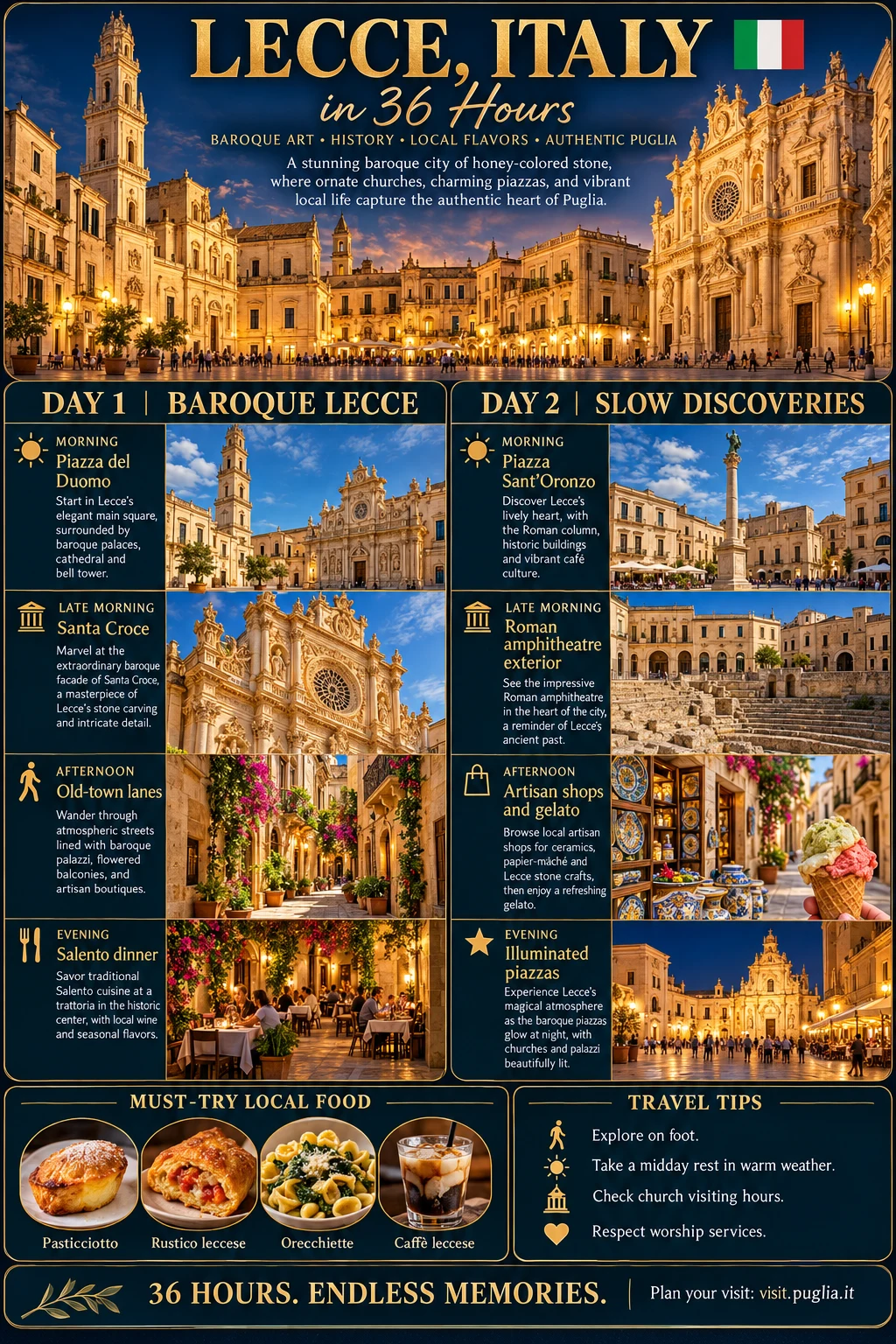
9:00–11:00 | Piazza del Duomo, slowly
Start with a pasticciotto, the local custard-filled pastry, and coffee near the old town. Then step into Piazza del Duomo. Its enclosed shape makes it feel almost like an enormous stage set, with the cathedral and bell tower rising around you. Begin with the cathedral interior, then visit the Antico Seminario’s cloister. About 90 minutes between them is enough for a meaningful introduction without exhausting your appetite for ornament.
The LeccEcclesiae operator sells combined church tickets, with a separate option including the bell tower. Check exactly which product you are buying; a church-circuit ticket does not automatically include the panoramic visit. The current Italian information lists daily 09:00 opening, with earlier winter closing than summer. Religious services interrupt sightseeing, so ask at the ticket desk about that day’s sequence. If the cathedral is in use, begin in the cloister and return later.
The tower is optional. Reserve a suitable slot if it matters, rather than putting an unbooked ascent between two tightly timed visits. Families need not buy a larger package simply to feel they have completed the city.
11:00–12:30 | Santa Croce and Sant’Oronzo
Walk approximately 10–15 minutes through the centre to Santa Croce. Spend time outside first: choose a few carved figures and follow their details instead of trying to absorb the entire façade at once. Allow 30–45 minutes inside when worship permits, then continue a few minutes to Piazza Sant’Oronzo.
Here the Roman amphitheatre sits below the level of the modern square. Make this an exterior viewing stop; access into archaeological areas can depend on current arrangements. The national tourism board’s square guide explains the relationship between the excavated amphitheatre, the Sedile and the surrounding buildings. This is a useful contrast with the morning’s baroque interiors.
12:30–16:00 | Lunch, shade and a real break
For lunch, try ciceri e tria, pasta with chickpeas and a combination of fried and boiled pasta, or sagne ’ncannulate with a seasonal sauce. A rustico leccese is a quicker option: puff pastry with a savoury filling commonly including béchamel, tomato and mozzarella. These are among the dishes highlighted by Italia.it’s Lecce guide. Ask about dairy, gluten and preparation if allergies matter.
After lunch, walk 5–10 minutes towards Villa Comunale for a short shaded pause, if open, then return to your accommodation. The municipality has approved a recent redevelopment project for parts of the garden complex, so follow posted access notices and do not rely on every facility operating. A café break is the easy alternative. In July and August, resisting the urge to fill this interval is one of the best decisions you can make.
16:00–evening | One smaller church and a leisurely dinner
Walk to San Matteo, on the southern side of the centre, and compare its curved façade with Santa Croce’s more elaborate frontage. Visit if open and included in your chosen ticket, then browse nearby lanes for papier-mâché work and local craft. Ask before photographing an artisan at work; a shop is not automatically a demonstration venue.
Around sunset, return to Piazza del Duomo to see the stone in a different light. Book dinner in the old town for an unrushed meal. Families who eat early should check kitchen opening times, since an open bar does not necessarily mean full dinner service. Keep the evening to a short passeggiata rather than adding a drive to the coast.
Day 2: The city beneath the city
9:30–11:00 | Museo Faggiano
Begin at the Museo Faggiano, a privately run archaeological site inside a house near Porta San Biagio. Its appeal is the scale: archaeology becomes something underneath a domestic building rather than a distant monumental ruin. Allow about an hour, plus time to ask questions. The operator’s venue page currently lists daily opening from 09:30.
There are changes of level and confined spaces. Contact the museum about the usable route if you use a wheelchair or stroller; do not assume every archaeological level is accessible. Keep young children beside you on steps and walkways. Skip any awkward section rather than carrying a stroller through the entire route.
11:15–12:45 | Castromediano’s wider story
Walk about 10–15 minutes to Museo Sigismondo Castromediano on viale Gallipoli. Its archaeology places Lecce within the wider history of Salento, including Messapian and Roman material, while the picture collection offers a change of pace. Choose the galleries that interest you rather than treating every room as compulsory.
The municipality’s museum listing currently gives Tuesday–Sunday opening and Monday closure. If your second day is Monday, visit Castromediano on Sunday afternoon instead of San Matteo and browsing; keep Faggiano for Monday morning. The museum library has separate arrangements, so library notices should not be read as the museum’s visitor timetable.
13:00–16:30 | Lunch and a final choice
Return towards Porta San Biagio for lunch. Spend the afternoon revisiting a favourite square, shopping for something small enough to carry, or enjoying the Antico Seminario if you missed it and your ticket permits entry. An alternative for archaeology enthusiasts is the Roman Theatre Museum: the city lists morning opening Monday–Saturday, with afternoon visits by reservation. Arrange that explicitly rather than expecting a walk-in afternoon visit.
Leave time to collect bags and reach the railway station, roughly 15–25 minutes on foot from central old-town addresses. This itinerary deliberately leaves room for a delayed church visit, a long lunch or tired children.
Three quieter worthwhile stops
- Antico Seminario cloister: a gentler pause within the main church circuit, especially between tour groups.
- San Matteo: a smaller-scale architectural encounter that fits naturally beside the southern lanes.
- Museo Castromediano: context beyond baroque Lecce, with enough variety to tailor a short visit.
Getting around and planning well
Most sightseeing transfers are 5–20 minutes on foot. Historic paving, thresholds and summer heat still matter: comfortable shoes, water and a midday break help more than an ambitious checklist. ArtWork’s accessibility guidance identifies alternative entrances for several church sites; confirm current arrangements directly, especially for crypts and upper levels.
Brindisi Airport has a SITA Sud connection to Lecce. Allow approximately 40–60 minutes on the road, plus waiting and onward transport. Its Lecce terminus is Piazza Carmelo Bene, not the railway station: SGM places it about 2 kilometres from the centre. Use the current timetable and consider a local bus or taxi with bags. Drivers should ask accommodation about permitted access and parking before entering restricted streets.
Research checked: 16 October 2026. Sources were reviewed on this date, but some official listings are undated. Confirm worship, museum openings, construction access and transport for your dates. Walking and driving ranges are planning estimates.
Sources & travel planning
Research checked 2026-10-16. This date describes the guide’s research, not a guarantee of current conditions. Opening hours, prices, access, transport and travel advice can change. Recheck the official sources before booking and departure. Walking and journey times are planning estimates.
- chieselecce.it ↗
- italia.it ↗
- italia.it ↗
- museofaggiano.it ↗
- museofaggiano.it ↗
- comune.lecce.it ↗
- comune.lecce.it ↗
- chieselecce.it ↗
- sitasudtrasporti.it ↗
- sgmlecce.it ↗
Found a change? Contact Only36Hours about a correction.