36 hours in Livingstone: Mosi-oa-Tunya, Zambian history and the Zambezi
Livingstone is more than an activity-booking desk for Victoria Falls. Its museums put the region's archaeology, communities and colonial history into context, while the Zambezi gives the surrounding landscape its rhythm. In a short stay, choose the Zambian falls viewpoints, a little town history and one river experience. Crossing into Zimbabwe or adding a full-day Botswana safari would change the trip substantially.
This plan starts after breakfast and ends after dinner the following evening. Arrange transfers through your accommodation or an established operator, and choose whether to stay in town or at a riverside property: those are different bases, not interchangeable walking locations. Review your government's advice and insurance before travelling, particularly for any adventure activity. Zambia travel advice.
Day 1: the falls first, then the wider story
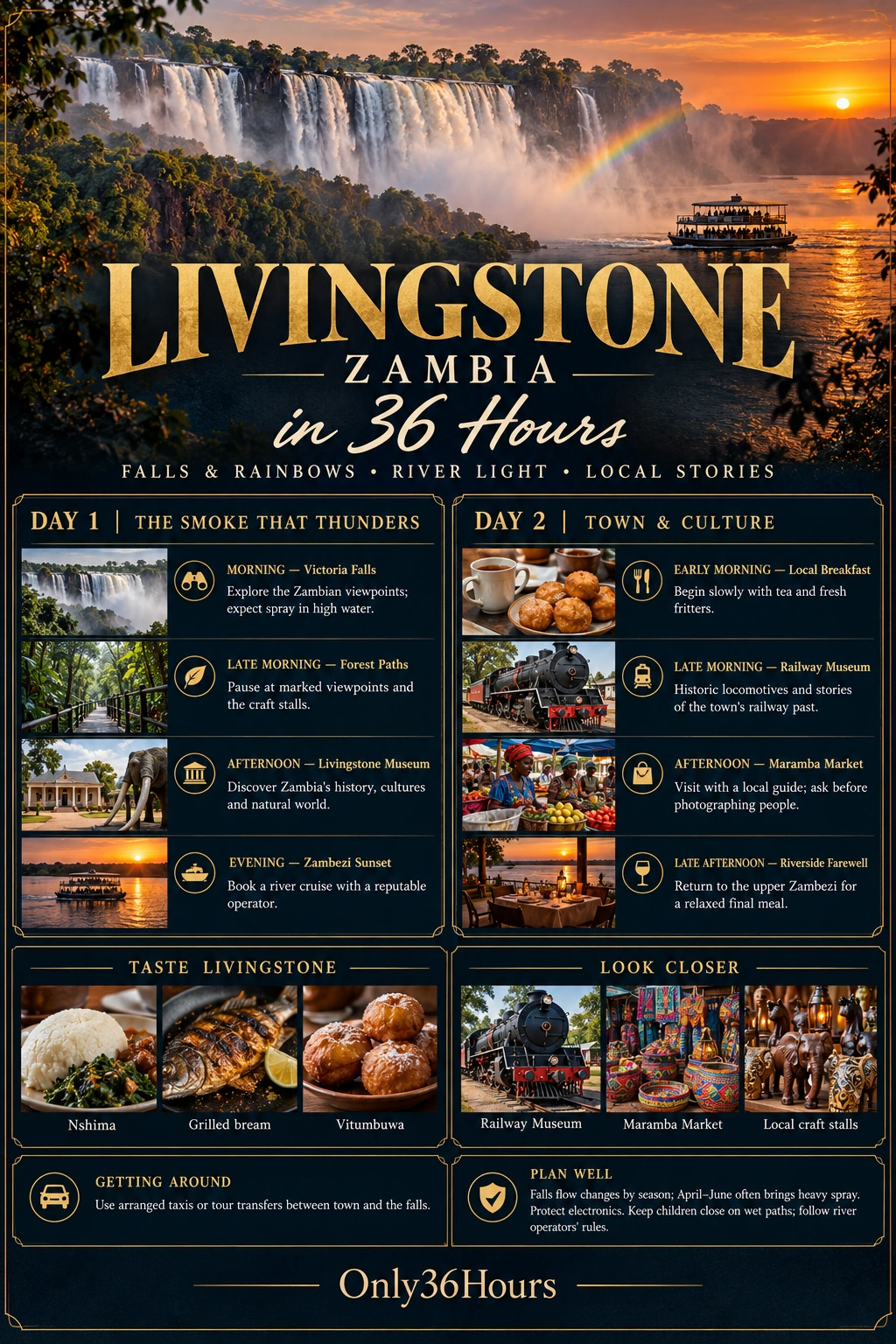
8:30–11:30am: the Zambian falls viewpoints
Arrange a morning pickup for Mosi-oa-Tunya/Victoria Falls. From central Livingstone, allow approximately 20–30 minutes by vehicle, plus time for the entrance and briefing; riverside accommodation can be closer or farther depending on its location. Agree the return pickup and exactly which entrance fees and guide services are included before leaving.
Give the marked visitor paths around two hours, adapting the route to water levels and current access. A guide can help interpret the landscape and choose appropriate viewpoints, but neither a guide nor a barrier makes it safe to step beyond designated areas. Spray can soak clothing and make surfaces slippery. Wear grippy shoes, protect phones and cameras, and keep young children close. Ask staff about the most manageable route before starting if using a wheelchair or pushchair.
Do not make the Knife-Edge Bridge or a gorge descent a compulsory family challenge. Turn back when visibility, footing or confidence is poor. Stay away from wildlife, secure food against baboons, and never climb barriers for a photograph. The Ministry of Tourism announced safety-barrier improvements in August 2025; that is evidence of a project, not proof that every path is currently open or fully protected. Ministry safety project.
Water levels change the experience dramatically. High water brings powerful spray and can obscure views; later in the dry season, especially around October, portions of the Zambian side may have much less water. Ask about actual conditions rather than expecting a promotional photograph in every month. The falls were known to local communities long before David Livingstone's visit; treat that history as central to the place. Regional landscape and seasonality, falls history.
Noon–2pm: lunch, dry clothes and a break
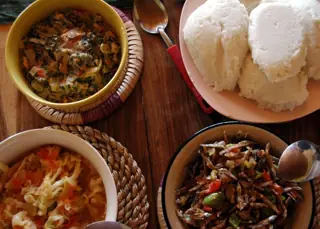
Return to town or your accommodation. Try nshima, the maize staple, with vegetables, beans, fish or meat according to the menu. Ask which accompaniments contain groundnuts if allergies are relevant, and request a small serving or mild option for children. Choose freshly prepared food and safe drinking water. Keep the early afternoon restful, particularly during the hot dry season, rather than adding an exposed walk along the main road.
2–4pm: Livingstone Museum
Visit Livingstone Museum for 60–90 minutes, leaving time before its 4:30pm close. Its permanent galleries cover archaeology, ethnography, natural history, history and David Livingstone. Start with the subjects that interest you most; the museum should broaden the story beyond a single European explorer. For children, choose a few objects to discuss rather than trying to read every display.
The museum's own site lists daily opening from 9am–4:30pm, except 25 December and 1 January. It states that public areas are wheelchair-accessible and that guides are complimentary when available, not guaranteed. Confirm any particular assistance or tour in advance. Livingstone Museum, National Museums Board.
6–9pm: an easy dinner
Have dinner at your accommodation or a restaurant reached by arranged transport. Ask about local fish availability rather than assuming a dish is freshly caught from the Zambezi. Keep this evening flexible: the combination of heat, travel and spray can be tiring. FCDO advises pre-arranging transport and avoiding walking at night; do not turn the return from dinner into an unplanned roadside stroll. Safety and security advice.
Day 2: railway history and a river afternoon
9–11:30am: two museums in one precinct
After breakfast, take an arranged car to the Railway Museum precinct, budgeting roughly 10–20 minutes from a central hotel including pickup. Confirm access the previous day. The railway displays offer a different way into the city's history: transport, labour and the connections that shaped the region. Keep children off machinery unless staff explicitly permit access; old locomotives are not automatically climbing equipment.
The Gateway Jewish Museum is within the same precinct, so it adds depth without another transfer. Its displays trace Jewish settlement in Livingstone and elsewhere in Zambia and the community's economic, cultural and political roles. The museum's contact page lists 8:30am–4pm and admission included in the Railway Museum ticket, but does not spell out a weekly holiday calendar; confirm both museums will be open for your visit. Allow 30–45 minutes here within the morning's combined visit. Museum background, visitor contact and hours.
11:30am–3pm: lunch and genuine downtime
Return for lunch and a shaded break. This is useful time to look at crafts in a staffed shop, read more about the morning's exhibits or simply rest. Ask before photographing vendors or their work. Avoid an improvised walk down an unfamiliar riverbank: hippos, crocodiles and other wildlife make the water's edge a place for managed access, not casual exploration.
Mid-afternoon–sunset: a pre-booked Zambezi cruise
Choose a larger sightseeing cruise suited to your group and confirm pickup, boarding access, departure and return times. Allow a two-to-three-hour activity window plus transfers, adjusted to the operator's actual schedule. The pleasure is the changing light and river landscape; wildlife sightings are possible rather than promised.
Families should confirm age acceptance, properly sized life jackets, toilets, supervision and whether the boat layout is suitable for their child. An operator's child discount is not a substitute for those checks. Also ask whether park fees and transfers are included: SAFPAR's published 2026 information lists separate park charges for its cruises. Stay aboard as instructed and never swim from the boat. If the cruise is cancelled or unsuitable, use a supervised riverside restaurant or your accommodation's managed viewing area instead. Operator cruise information, 2026 activity conditions.
Return by arranged transport for a final dinner. This itinerary does not include Devil's Pool, rafting or a walking safari: these require separate decisions about conditions, minimum ages, competence and insurance, rather than being spontaneous additions.
Three quieter worthwhile stops
- Livingstone Museum: the most substantial introduction to Zambia's history and natural heritage in this route.
- Railway Museum: a slower look at the transport network behind the town's development.
- Gateway Jewish Museum: a focused, smaller collection that adds a distinct community perspective in the same precinct.
Before travelling
Check visa and entry requirements for your nationality; crossing into Zimbabwe is a border crossing with separate formalities. Consult a travel-health professional about malaria prevention and routine travel preparations well before departure, and arrange insurance with appropriate medical evacuation cover. Do not rely on river water being safe for drinking or swimming. Official health advice.
Research checked: 16 October 2026. Primary museum and operator material and official travel advice were reviewed. Seasonal water levels, museum exceptions, fees and activity conditions require fresh confirmation; transfers are approximate planning ranges.
Sources & travel planning
Research checked 2026-10-16. This date describes the guide’s research, not a guarantee of current conditions. Opening hours, prices, access, transport and travel advice can change. Recheck the official sources before booking and departure. Walking and journey times are planning estimates.
- gov.uk ↗
- mot.gov.zm ↗
- zambiatourism.com ↗
- zambiatourism.com ↗
- livingstonemuseum.org ↗
- nmb.co.zm ↗
- gov.uk ↗
- jewishmuseumofzambia.org ↗
- jewishmuseumofzambia.org ↗
- safpar.com ↗
- safpar.com ↗
- gov.uk ↗
Found a change? Contact Only36Hours about a correction.