36 Hours in Lugo: Roman Walls and a Galician Table
Source-checked: 16 October 2026. Suggested visit: 09:00 on Day 1 to 21:00 on Day 2, with one overnight. Walking times are practical allowances, not guaranteed accessible routes.
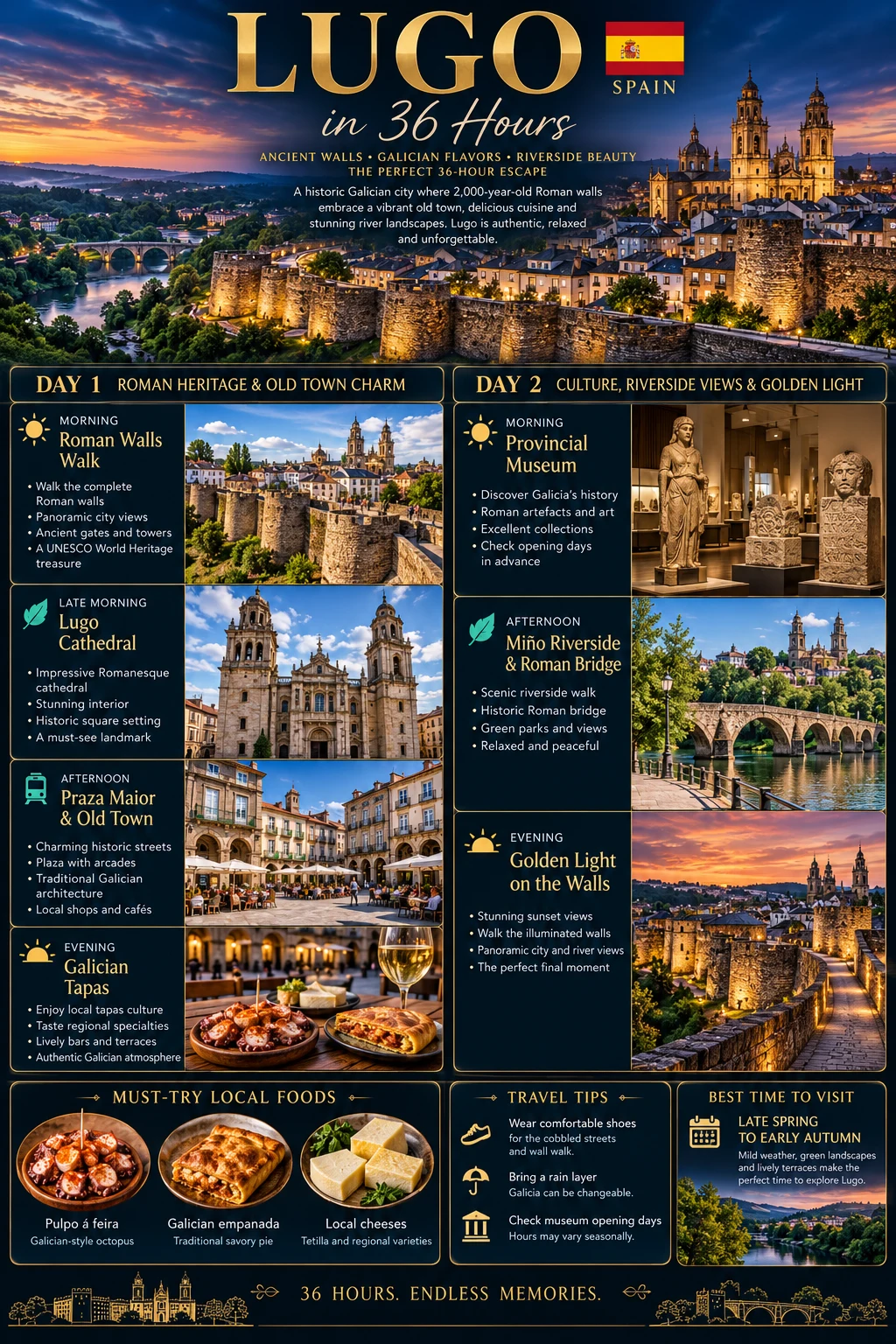
Lugo has a wonderfully clear starting point: walk above the city, then go down and investigate what you saw. Its Roman wall encloses a living centre of shops and restaurants. The Spanish tourism board's city overview connects the Roman remains, cathedral and former convent buildings. This itinerary gives those layers room without requiring a car or a packed sequence of museums.
Before you arrive
Stay inside the wall or just outside a convenient gate. Check the actual distance from your train or bus arrival point rather than assuming both stations are beside the historic centre. A taxi can be worth using with luggage, especially in rain or when the route climbs. Once settled, most first-day journeys are short walks; the river excursion on Day 2 is a separate decision because returning involves a climb.
Plan museum days first. Church sightseeing remains subordinate to services. Keep a waterproof layer handy even outside winter. The old centre's stone paving and the wall walk can be slippery, while exposed sections offer little shelter from wind or strong sun.
Day 1: Walk the outline, then look underneath
09:00–11:30 | Breakfast and the Roman wall
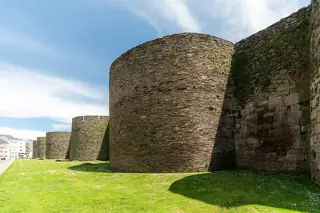
Begin with breakfast near the old centre, then find a signed public access point to the wall. Use the most suitable ramp or steps for your party and check conditions before committing to a circuit. The Ministry of Culture's description explains the exceptional survival of the enclosure. Today, its practical attraction is how clearly it shows the city around you.
Allow roughly an hour for a relaxed wall walk, longer if you stop frequently. A shorter section works well with young children: look for a gate, a tower and the contrast between buildings inside and outside. Keep everyone away from edges, never climb parapets, and descend if gusts or rain make the outing uncomfortable. Seeing the whole circuit is less important than enjoying a safe section.
11:30–14:00 | Cathedral quarter and lunch
Return to ground level near the cathedral. Give the exterior and surrounding squares a proper look before deciding whether to enter during permitted visiting hours. Avoid treating a worship space as a shortcut through the itinerary. Nearby lanes lead naturally towards Praza do Campo, where a seated lunch provides a useful break from stone and history.
Try Galician cooking: pulpo if you enjoy octopus, an empanada with a filling you can identify, or a vegetable dish and local bread. Seafood and meat are common, so ask clearly about stock and fillings if vegetarian. Tapas customs vary by establishment. Children may prefer a simple tortilla or a small shared plate rather than a long bar-hopping lunch.
14:00–17:30 | Roman rooms below street level
Rest, then visit A Domus do Mitreo from 16:30 Tuesday–Saturday (16:00 in summer). Its calendar limits Sunday/holiday visits to 11:00–14:00 and closes Mondays: move this stop before lunch on Sunday, or swap days for Monday stays. The remains show domestic and religious life alongside the wall's structure, making this a more focused choice than another broad historical survey. Allow around an hour, plus a short walk from the cathedral quarter.
The operator says guided visits last about 40 minutes and require a minimum of five adults. A family of two adults and children should not assume it can book the same guided format; ask about an individual visit or an available group. The described route includes stairs and lower excavation levels, so confirm suitable access if using a wheelchair or stroller. Keep children close around platforms and barriers.
18:00–21:00 | Evening streets and dinner
Walk through Praza Maior and nearby shopping streets, letting everyday activity provide the evening's interest. Dinner in Spain may begin later than younger children expect, so check kitchen times and arrange an earlier meal where possible. Reserve if you want a specific restaurant on a busy weekend. A short post-dinner stroll through the lit squares is enough; there is no need to repeat the exposed wall after dark.
Day 2: Museum courtyards and open air
09:00–12:30 | A slower historical morning
After breakfast, head towards the Provincial Museum. It closes Mondays: use the outdoor old-town alternative below, or move the visit to another day. On other days, check holiday exceptions; if open, concentrate on the former convent setting and a few collections that interest you. Allow about 90 minutes rather than filling the morning with every room. Let children choose one object to remember.
If the museum is unavailable, the old town still provides a useful route through smaller squares and church exteriors. Use the extra time for coffee, browsing or a second short section of wall in better weather, not an improvised drive to a distant attraction.
12:30–16:30 | Park first, river optional
Have lunch, then walk approximately 15 minutes from the cathedral area to Parque Rosalía de Castro. Take the park slowly, with room for children to move and adults to sit. Its trees and open spaces make an effective counterweight to the enclosed centre.
If everyone wants a longer outing, continue towards the Miño riverside using a mapped public route. Budget roughly 30 minutes downhill and longer for the uphill return, or arrange a taxi back. Stay on established riverside paths and avoid flooded sections after heavy rain. Do not build swimming into this city visit. Families with tired children can remain in the park without missing the afternoon's purpose.
16:30–21:00 | Three places to pause
Choose the museum cloister when accessible, a bench in Rosalía de Castro park and an established Miño riverside path as three quieter alternatives to the central eating streets. They differ in access and effort, so pick what fits rather than trying to collect all three.
Return for an early final meal, collect your bags and leave a margin for your onward connection. Lugo works best when the wall is a starting point for attention, not a lap you must complete at speed.
Sources & travel planning
Research checked 2026-10-16. This date describes the guide’s research, not a guarantee of current conditions. Opening hours, prices, access, transport and travel advice can change. Recheck the official sources before booking and departure. Walking and journey times are planning estimates.
- spain.info ↗
- cultura.gob.es ↗
- adomusdomitreo.com ↗
- adomusdomitreo.com ↗
- museolugo.org ↗
- concellodelugo.gal ↗
Found a change? Contact Only36Hours about a correction.