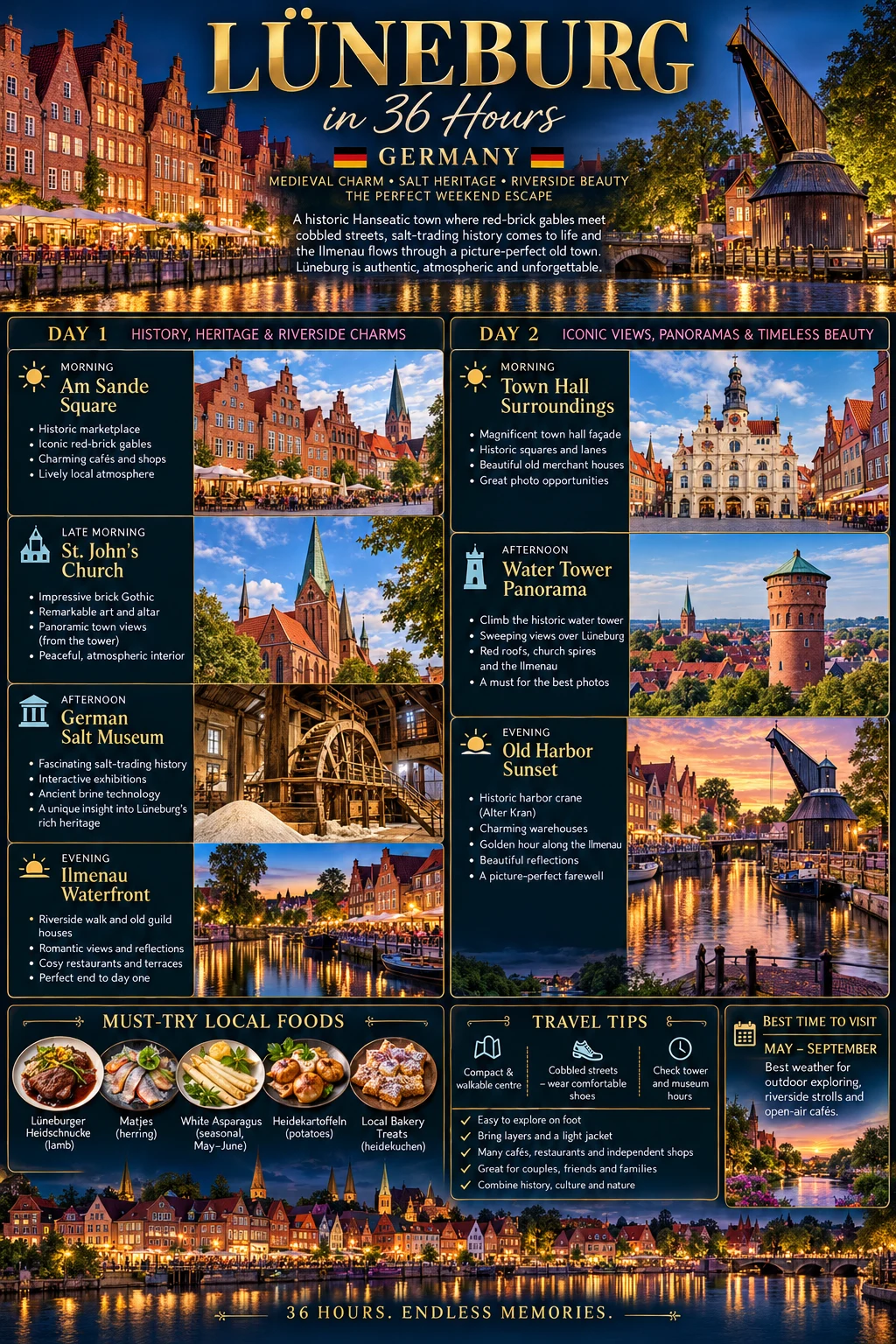
36 Hours in Lüneburg: Salt, Brick Gables and the Ilmenau
Source-checked: 16 October 2026. Suggested schedule: 09:00 on Day 1 to 21:00 on Day 2, including one overnight. Walking durations are planning allowances.
Lüneburg's handsome streets make more sense once you understand the salt. The town's wealth came from an industry whose traces are still visible in its museums and distinctive buildings. This route combines that story with the pleasures of simply walking between brick gables, the river and small parks. You do not need a heathland excursion to make the stay feel complete.
Arrange the practical pieces
Choose accommodation in the centre or between the station and Am Sande. Much of the visit is walkable, though uneven paving can slow small stroller wheels or anyone with limited mobility. The water-tower operator puts the station walk at five to ten minutes; allow more with luggage. For the salt museum, expect a longer walk across the centre or use local transport after checking the day's route.
The German Salt Museum's visitor page lists regular Tuesday–Sunday opening and specific Christmas and New Year closures. Swap the museum day if your stay includes Monday. The museum describes itself as partially accessible rather than fully barrier-free, so contact staff about the areas you want to see. Do not assume a free child's ticket also covers a separately booked workshop.
Day 1: Find your bearings above the rooftops
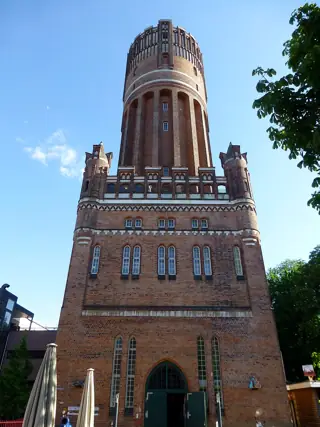
09:00–11:30 | Breakfast and the water tower
Leave your bags, eat breakfast and start around Am Sande, where the façades make an immediate introduction to the town. Walk a few minutes to the water tower for a view if the weather is clear and the attraction is open. The operator's access information is unusually useful: the lift reaches level six, but the final viewing platform still requires twenty steps. A lift is therefore not a guarantee of a step-free summit.
Allow roughly an hour for the visit, including the water-related exhibits. Children can engage with the practical question of how a town gets water rather than only looking at a skyline. If the last stairs are unsuitable, use the accessible levels as advised by staff or skip the tower and enjoy the view upwards from the square.
11:30–14:00 | Gables, market square and lunch
Walk through the centre towards the Rathaus and market square, allowing about fifteen minutes plus browsing time. Take a slow exterior circuit; a town-hall interior tour needs its own confirmed schedule. A municipal notice dated 16 May 2025 reported that the Rathaus arcades had been closed since March 2025 and that façade supports would remain for several years; check current access before visiting. Look for variations in brickwork and roof shapes, and let children choose a favourite façade rather than counting every historical date.
For lunch, consider a northern German fish dish, potatoes with a seasonal accompaniment, or a substantial soup. Ask what is local and fresh rather than assuming every restaurant serves the same regional menu. A bakery is useful for a later snack, but take a seated lunch now so the afternoon is not governed by hunger. Check allergens in cakes and sauces, particularly nuts, dairy and mustard.
14:00–17:00 | The old town at street level
Explore the western old-town lanes, making your way towards St Michael's and then back through the small streets. Allow an hour to wander rather than following a rigid sequence. Enter churches only during visitor access and keep services undisturbed. Notice how a short turn away from the main shopping streets changes the sound and scale of the town.
Return to your accommodation or take a café break. In winter, an indoor pause is essential rather than optional padding. Families can use this interval for a nap or quieter activity before another outdoor walk.
17:00–21:00 | Along the Ilmenau
Head towards the waterfront around the old crane and harbour streets. From Markt, allow ten to fifteen minutes, longer if you stop along the way. Look at the river and warehouse setting from public paths without entering working or private areas. Keep children close beside the water and avoid wet edges.
Choose dinner nearby or return to the centre. Reserve if a specific restaurant matters on a weekend. After eating, a brief walk through the lit old town is enough; save the longer green-space outing for daylight tomorrow.
Day 2: Why salt mattered
09:00–12:30 | Breakfast and the German Salt Museum
After breakfast, walk to the museum for a late-morning visit during its published opening period. Allow about twenty minutes from the central squares and around ninety minutes inside. The displays explain why an everyday ingredient could shape a town's economy and landscape. Pick a few processes to understand rather than reading every label.
Check whether any demonstration is actually scheduled before promising one to children. The visitor page distinguishes the museum from the boiling hut, which has a shorter daily window. Staff can advise on suitable family activities and the sections that avoid stairs. Children under eighteen currently enter free, but confirm conditions when booking.
12:30–16:00 | Lunch and the green side of town
Have lunch, then choose a modest walk from the tourism board's walking suggestions. Kurpark makes an easy pairing with the salt-museum side of town: allow around fifteen to twenty minutes depending on the route. Spend time sitting, looking at planting or following a short path loop rather than aiming for a distant landmark.
If you prefer to stay north of the centre, use Liebesgrund instead. The official listing describes routes beside the surviving fortification and a playground farther into the park. Pick the lower or upper path according to conditions and mobility; there is no need to complete every variation.
16:00–21:00 | Three quieter choices and departure
Kurpark, Liebesgrund and a short public path beside the Ilmenau are three ways to balance the busy centre. Choose one or two, with the third saved as an alternative. None requires travelling out to the heath, and none should be treated as guaranteed quiet during events.
Finish with cake or an early supper, collect your bags and check your onward train. If heavy rain makes park paths unappealing, extend the museum or café time instead. Lüneburg's most satisfying contrast is between the industry that built its wealth and the gentle town you can enjoy on foot today.
Sources & travel planning
Research checked 2026-10-16. This date describes the guide’s research, not a guarantee of current conditions. Opening hours, prices, access, transport and travel advice can change. Recheck the official sources before booking and departure. Walking and journey times are planning estimates.
Found a change? Contact Only36Hours about a correction.