36 Hours in Maputo: Railway History, Shaded Gardens and Mozambican Flavours
Verified: 18 October 2026.
Maputo makes a rewarding short break when you give its buildings, food and everyday creativity time to connect. This route pairs the lower city's railway history with gardens, a museum morning and contemporary craft. It stays in the capital rather than squeezing in an island crossing or wildlife excursion. The suggested times are planning blocks, not reservations or promises about traffic. Arrive the previous evening if you want two full sightseeing days and an overnight between them.
Before you arrive
Choose a Tuesday-to-Saturday start so both museum visits fall outside Monday closures. Arrange airport transfers and a dependable driver through your accommodation, then use short, locally advised walking stretches within each stop. Ask about child seats before booking. A central base is convenient, but confirm the specific street and evening arrangements rather than assuming every central block is suitable for walking.
Read the current Mozambique travel advice before committing. It identifies street crime in Maputo, demonstrations that can disrupt transport, and particular risks after dark. Keep valuables discreet, avoid isolated stretches and gatherings, and plan dinner at your accommodation or return before dark. This city itinerary is not a safety assessment for other Mozambican regions. Check entry requirements and obtain individual pre-travel health advice separately.
Day 1
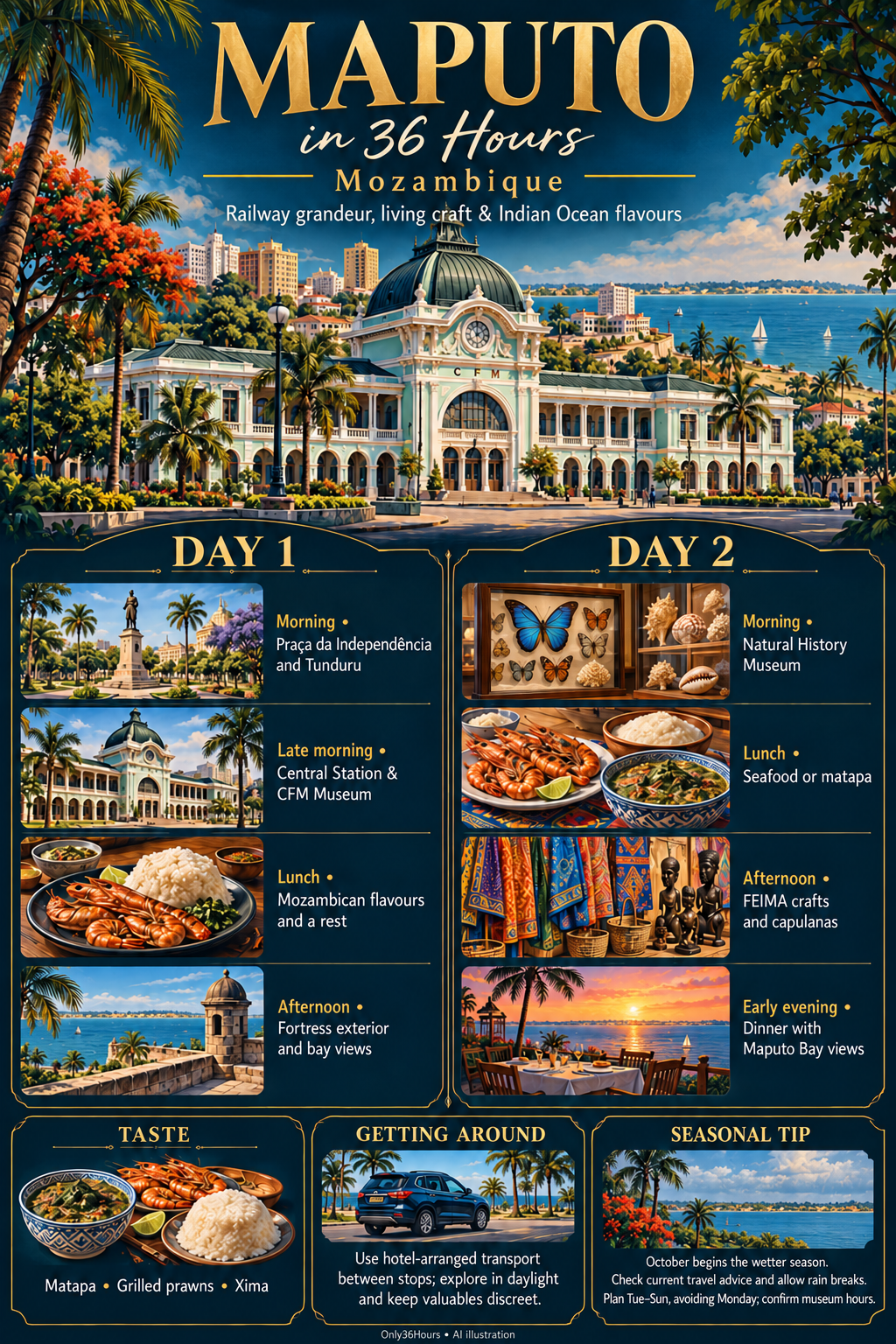
09:00–10:15 | Independence Square and a shaded start
Begin at Praça da Independência, where the monument to Samora Machel introduces the country's independence story. Look at the surrounding city before moving into nearby Tunduru Garden. The official Maputo guide identifies both places and the garden's tourist-information point. A local guide can help connect the civic buildings with colonial rule, resistance and the independent capital without reducing the visit to architectural styles.
Keep the first hour gentle. Ask children to compare a shaded leaf, a building outline and a street sound, rather than expecting them to absorb a long history lecture. Tunduru is the first of three slower stops on this route: choose a short, open, well-used path and a rest, not a search for an isolated corner. Confirm current garden access locally. Photography near government premises is restricted; ask before raising a camera and respect any instructions.
10:30–12:00 | Central Station and the railway museum
Transfer to Praça dos Trabalhadores for the CFM Museum, housed in Maputo Central Station. The operator dates the station's inauguration to 1910 and the completion of its familiar architecture to 1916. Look up at the façade, then use the collection to explore how railways and the port shaped movement through the city and region. Avoid repeating the popular but unsupported claim that Eiffel designed the station.
The museum currently lists Tuesday–Friday visits from 10:00 to 17:00 and weekends and holidays from 10:00 to 16:00, with Monday closure. Confirm before travelling, especially for a guided visit. Allow children to choose one transport object to investigate rather than completing every display. This is a museum stop, not a promised train excursion; stay within visitor areas and follow station staff directions.
12:15–14:30 | Lunch and a proper pause
Try grilled fish or prawns with rice or xima, or ask whether matapa is available. Mozambique's tourism authority describes xima as a maize- or cassava-flour accompaniment and matapa as cassava leaves cooked with peanuts, often with crab or prawns. Do not assume a vegetable-looking dish is vegetarian or free from shellfish. Explain allergies directly, request chilli separately if helpful, and choose a kitchen that can answer ingredient questions.
Return to your accommodation for the hottest part of the day if anyone needs a nap. A short itinerary improves when rest is a real appointment rather than the first thing sacrificed to another attraction.
15:00–17:00 | Fortress context and the bay
Make a brief exterior stop at Fortaleza de Nossa Senhora da Conceição, then take a locally advised bay-view stop before returning. The official city guide describes the fortress's history of destruction and rebuilding and its association with colonial-era objects. Discuss why monuments move and whose histories they represent. Interior admission is not assumed here; check with the operator if you want to replace the exterior stop with a visit.
Keep the waterfront portion short and in daylight. This is a view of a working coastal city, not a swimming recommendation. Finish with an early dinner or eat at your accommodation, leaving the evening free for rest.
Day 2
10:00–12:00 | Natural history, with time to look
Visit the Natural History Museum, administered by Eduardo Mondlane University. Do not rely on old reports of its renovation closure: the Italian Embassy's reopening announcement scheduled reopening for September 2025, and the university currently posts visitor information. Confirm that day's hours directly; official schedules and exceptional notices should take precedence over an old travel listing.
The collections include preserved animals, so prepare sensitive children for specimens rather than live wildlife. The renovation announcement describes educational space, updated displays, ramps and a lift. Ask whether the lift and required accessible route are operating, rather than treating those improvements as a guarantee of every facility. If open, the museum garden is your second slower stop: the university identifies murals by Malangatana there. Look without touching, and follow photography rules.
12:15–15:30 | Lunch, craft and conversation
After lunch, visit FEIMA in Parque dos Continuadores. The tourism authority identifies this outdoor craft, flower and food market, including capulana textiles and decorative objects. Ask sellers about materials and who made a piece; agree prices politely and request permission before photographing people or their work.
For the third quieter pause, choose a seated refreshment break within the market area rather than adding another cross-city attraction. Stall activity and noise vary, so “slower” describes the pace you choose, not a promise of solitude. Let everyone select a favourite colour or object before deciding whether to buy anything.
16:00–18:00 | A flexible finish
Leave the final block for a relaxed early meal, a missed stop or packing. Do not add a distant beach simply because a map makes the coastline look close. Arrange the return transfer in advance and finish outdoor sightseeing before dark.
Seasons and practical limits
Carry water, sun protection and a light rain layer. The official tourism map describes the wetter period broadly as October–April; current travel advice emphasizes November–April flood and cyclone disruption. Treat these as seasonal planning ranges, not forecasts. After heavy rain, ask about roads before setting out. Check steps, toilets and drop-off points with each venue if mobility needs are important, and shorten the route freely: a museum, a good lunch and one garden can be a full family day.
Sources & travel planning
Research checked 2026-10-18. This date describes the guide’s research, not a guarantee of current conditions. Opening hours, prices, access, transport and travel advice can change. Recheck the official sources before booking and departure. Walking and journey times are planning estimates.
- gov.uk ↗
- visitmozambique.gov.mz ↗
- cfm.co.mz ↗
- visitmozambique.gov.mz ↗
- uem.mz ↗
- ambmaputo.esteri.it ↗
- visitmozambique.gov.mz ↗
Found a change? Contact Only36Hours about a correction.