36 Hours in Matera: Understanding the Sassi, One Stairway at a Time
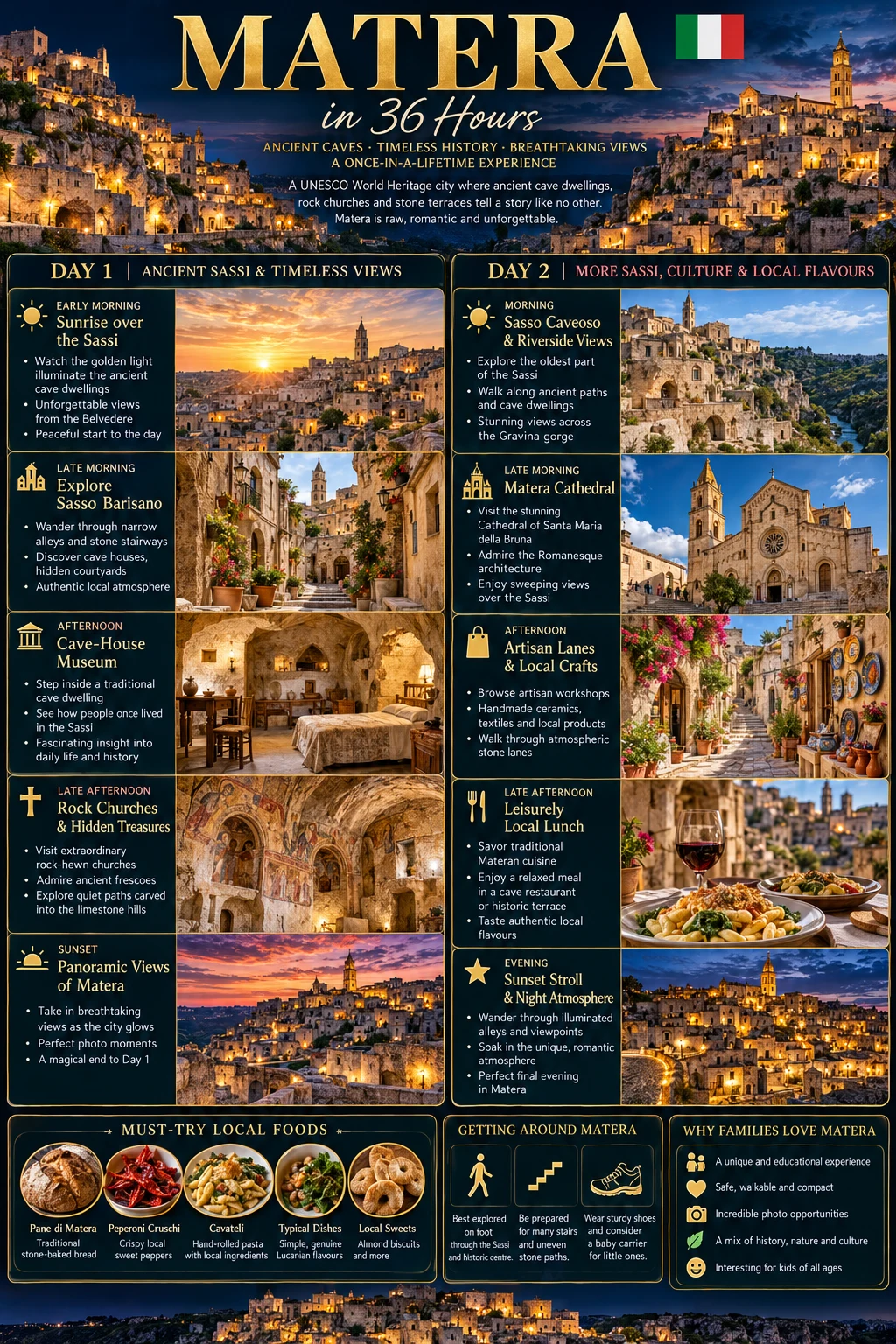
Matera’s first impression is architectural, but its deeper story concerns people: how they lived, collected water, endured hardship and rebuilt a relationship with the Sassi. The cave neighbourhoods should not be reduced to a dramatic film set. This itinerary combines an interpreted introduction with slow walks, a cave dwelling and time to look across the ravine. It stays primarily within the city; a Murgia excursion is an optional replacement, not an extra rushed stop. Base yourself near the upper historic centre if stairs or luggage handling are concerns. The schedule assumes arrival the night before and runs from 9 a.m. on Day 1 to dinner on Day 2.
Day 1: Learn the story before descending
9 a.m. | Orient yourself from the upper town
Begin with breakfast near Piazza Vittorio Veneto. Look toward the Sassi from the upper viewpoints before descending: understanding the relationship between the two historic districts, the Civita ridge and the ravine will make the streets less bewildering. Plan only a short initial loop.
The Sassi and adjoining rupestrian landscape form a World Heritage site, comprising homes, churches and other structures adapted to natural caves. Stick to established visitor sites and respect residential doors and terraces. Italian Ministry of Culture: Matera’s World Heritage landscape
10 a.m. | An interpreted introduction, with a closure fallback
Casa Noha is an excellent potential starting point for its short multimedia account of Matera’s history. However, both FAI visitor pages currently announce a temporary closure for 5–22 October, without an explicit year in the notice. The routine timetable does not override that notice. Do not assume it is open: confirm directly before booking. Its regular weekly closure is Wednesday, and seasonal hours vary. If unavailable, arrange a licensed city walking guide instead and ask for a social-history emphasis. FAI Casa Noha visitor information · Italian booking and opening page
Allow 45–60 minutes for the house visit including arrival, or roughly two hours for a guided walk. Casa Noha has steps and reports difficult access for visitors with reduced mobility, so check the exact approach rather than relying on the short distance from the cathedral.
Noon | Lunch with a view, followed by a rest
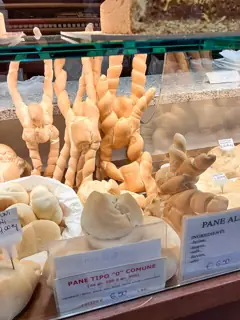
Have lunch on the upper edge of the historic centre. Look for local bread, seasonal vegetables, legumes and pasta; a substantial dish such as pignata, traditionally involving slow-cooked sheep meat, is a different choice from a light lunch. Ask about ingredients rather than assuming everything regional is vegetarian. The national tourism office identifies pignata and Matera DOC wine among the local specialities. Italia.it: Matera guide
2:30 p.m. | Sasso Caveoso and one cave house
Walk into Sasso Caveoso with a specific destination, such as the historic cave-house museum at Vico Solitario, rather than following an endlessly descending route. Allow 90 minutes to two hours for the district, including a 30–45-minute interpreted interior. A cave-house visit makes the domestic realities more legible: sleeping, storage and work shared constrained spaces.
Continue toward the San Pietro Caveoso area and select one officially open rock church, checking the ticket and visitor route locally. Avoid climbing unmarked steps or entering unstaffed cavities. The city’s layered surfaces are particularly slippery after rain. Return uphill slowly, allowing more time than the map suggests, and spend sunset near Piazzetta Pascoli rather than attempting a gorge crossing in fading light.
7 p.m. | Dinner without another climb
Reserve near your accommodation, especially on weekends. Ask your host for an approach that avoids unnecessary stairs. After dinner, a short upper-town walk gives you the illuminated Sassi without turning the evening into a second hike. Residents still live here; late-night voices carry between stone buildings.
Day 2: A different district, then a considered landscape choice
9 a.m. | Sasso Barisano
After breakfast, explore Sasso Barisano for 90 minutes, taking a different route from yesterday and pausing at workshops or open churches that genuinely interest you.
11 a.m. | Water below the square
Return to Piazza Vittorio Veneto for a potential Palombaro Lungo visit. This great underground cistern adds the story of water management to yesterday’s domestic history. Check departure times, ticket arrangements and stair access on site or with the operator, and allow 45–60 minutes including waiting. Anyone uncomfortable in enclosed or dim spaces can stay above ground for coffee without missing the logic of the itinerary.
1 p.m. onward | Choose town or Murgia, not both
After lunch, either visit the museum at Palazzo Lanfranchi and linger near Piazzetta Pascoli, or arrange a guided afternoon on the Murgia side with transport. Allow at least three hours for the latter including transfers, interpretation and a short walk. Ask which churches can actually be entered, what footwear is required and whether the route suits children.
The park authority describes trail 406 as descending to the Gravina, crossing a suspension bridge and climbing to Murgia Timone. It is a real hike, not a level pedestrian shortcut. Check the park’s current notices; skip it in heat, storms or unsuitable footwear, and never make the last return in darkness. The visitor centre and guided alternatives provide a better option for many short-stay travellers. Park authority: trail 406 · National tourism: Murgia landscape
Three quieter worthwhile pauses
- Piazzetta Pascoli outside sunset’s busiest interval: return in morning light to study the same landscape.
- Casa Noha, when confirmed open: a small-scale introduction rather than another panoramic stop.
- A guided Murgia viewpoint away from the main photo crowd: choose it as an afternoon replacement, with safe transport and an agreed return.
Practical essentials
Matera’s upper centre and Sassi require different access planning. Ask accommodation about vehicle restrictions, luggage assistance and exact stair counts before committing to a cave room. A baby carrier is often more practical than a stroller, but steep stone steps still demand care. Allow generous connection time when arriving from Bari; consult the actual operator’s timetable rather than assuming a direct mainline train. Summer calls for a midday rest; winter and rain favour shorter walks. Carry water and shoes with grip in every season.
Verified: 16 October 2026. Official heritage, tourism, FAI and park sources checked. Casa Noha’s temporary closure notice requires direct reopening confirmation. Walking and visit times are editorial estimates.
Sources & travel planning
Research checked 2026-10-16. This date describes the guide’s research, not a guarantee of current conditions. Opening hours, prices, access, transport and travel advice can change. Recheck the official sources before booking and departure. Walking and journey times are planning estimates.
Found a change? Contact Only36Hours about a correction.