36 Hours in Mérida, Spain: Roman Spectacle and the City Between the Ruins
This is Mérida in Extremadura, Spain, where Roman buildings interrupt ordinary streets rather than standing in a single isolated archaeological park. The theatre is the obvious beginning, but the bridge, domestic remains and water engineering make the city more comprehensible. A full short break allows those themes to breathe. Stay in the central area between the theatre and Plaza de España, arrive the evening before, and begin at 9 a.m. The plan finishes with dinner on Day 2 and includes a substantial midday pause for hot weather.
Day 1: Public spectacle and private lives
9 a.m. | Theatre and amphitheatre first
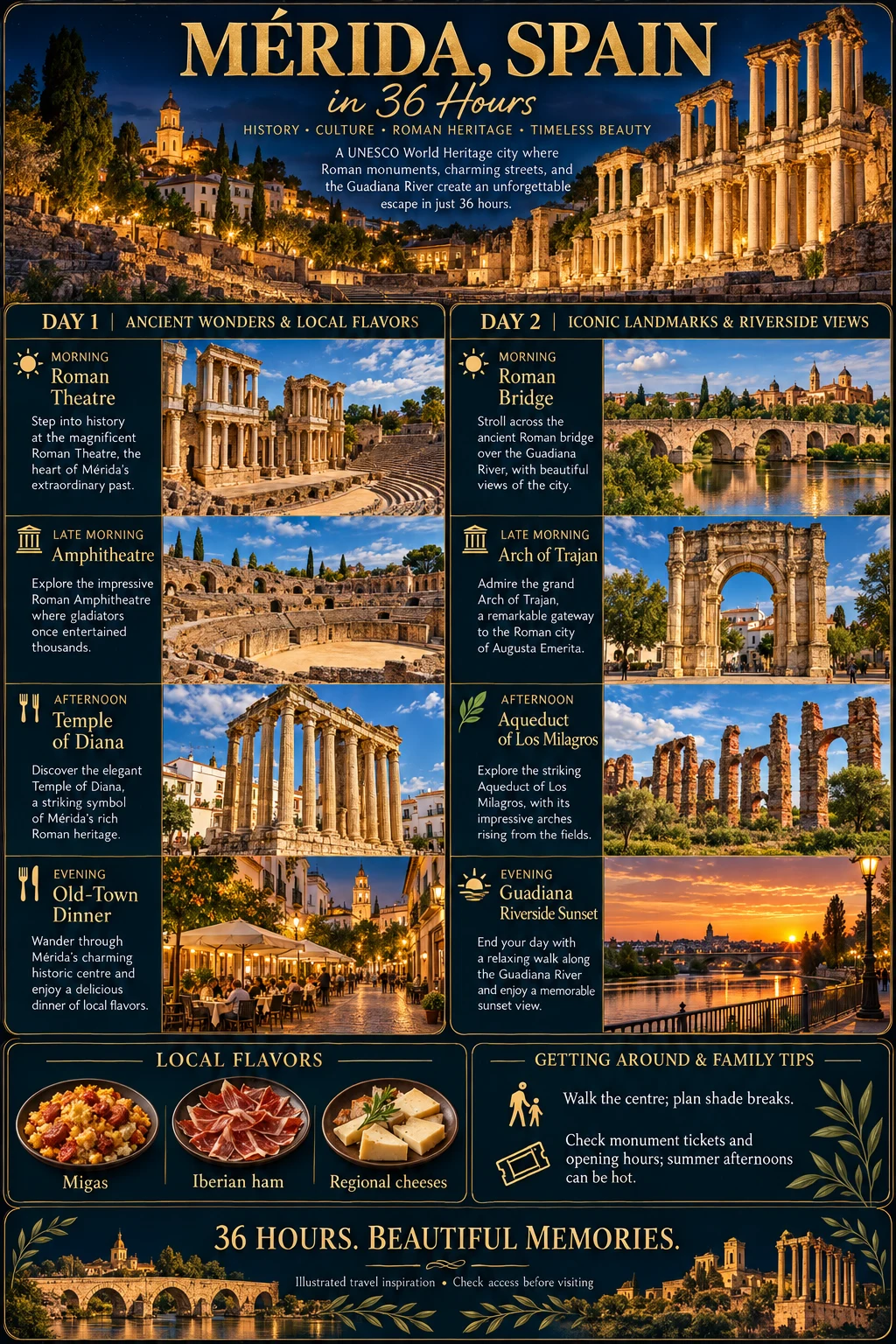
Reserve admission through the Consortium’s official channels and make the theatre-and-amphitheatre complex the main morning visit. Allow two to 2½ hours rather than treating the pair as a photograph stop. They served different forms of public entertainment; pause to understand the seating, circulation and relationship between spectators and performance spaces. A licensed guide can help distinguish original remains, reconstruction and interpretation.
The archaeological complex and the national museum have different ticketing and closing arrangements. Decide whether a combined monument ticket suits the sites you will actually enter, rather than buying it as an obligation to visit everything. The Consortium’s current booking information uses different summer and winter closing times and ends admission before closing. Check the date-specific notices, including events in the theatre. Consortium visitor information · Official ticketing and seasonal hours
With children, discuss the amphitheatre’s violent historical use in age-appropriate terms and follow designated paths. Archaeological surfaces can be uneven and exposed. Ask the operator which route is accessible now instead of assuming every part can be reached because the main entrance is step-free.
11:30 a.m. | Coffee, then the Roman museum
Take a short break before the Museo Nacional de Arte Romano, nearby. Allow 90 minutes to two hours for a focused visit to sculpture, mosaics and everyday objects that give the outdoor ruins a human scale. The museum advertises family activities; check the current language and booking arrangements if you want one.
Monday is its regular closure, and Sunday/public-holiday hours are shorter. The museum’s crypt has its own access information at the desk. If visiting on a Monday, move the museum to Day 2 and use this slot for lunch and a longer rest. National museum opening information · Current family and exhibition programme
1:30–4:30 p.m. | Lunch and shade
Eat in the central streets and give yourself an actual break. Look for regional dishes such as migas, local cheeses or a vegetable-based plate, asking how each is prepared: migas often arrives with meat, and small tapas can still be substantial. In summer, the outdoor ruins are not the place to prove endurance; take water and move the second walk later.
Late afternoon | Temple of Diana and the centre
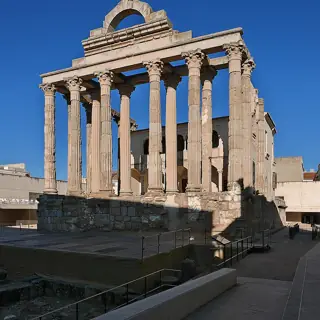
Walk toward the Temple of Diana and enjoy the contrast between monumental columns and everyday city life. The exterior view and the ticketed visitor area are different experiences; check whether you want the latter before arriving near closing. Continue to Plaza de España for a drink and unhurried people-watching. Allow 60–90 minutes for this small circuit, not including dinner.
If a theatre performance is part of your trip, book it separately and review language, running time and child suitability. A daytime monument ticket does not imply evening-event admission.
Day 2: The Guadiana and water engineering
9 a.m. | Alcazaba and the Roman bridge
After breakfast, visit the Alcazaba if its current route interests you, allowing about an hour. This adds a later historical layer to a trip that could otherwise become exclusively Roman. Then walk onto the Roman bridge over the Guadiana. Go far enough to understand its relationship with the river and city, but turn around whenever it suits; crossing and retracing the entire length is not compulsory. Allow another 45–60 minutes for the river interval. Mérida’s official monument guide · Roman bridge background
Keep children away from edges, and avoid low riverside paths when local conditions or barriers indicate flooding. In strong sun, the open bridge can feel hotter than the streets. A short crossing followed by a shaded café is perfectly sufficient.
11:30 a.m. | Choose domestic archaeology
For another substantial site, head toward Casa del Mitreo and its associated funerary area, allowing approximately 20–30 minutes of walking from the bridge vicinity and 60–90 minutes on site. The appeal is a different scale of Roman life from the theatre: the organisation and decoration of a house rather than a public spectacle. Check the current visitor route, any restoration restrictions and the access guide before committing. Official Casa del Mitreo information · Municipal accessibility guide
If you moved the national museum from Monday, use this block for that instead.
Afternoon | Aqueduct and an easy finish
After lunch and a rest, walk or take a short taxi ride to Los Milagros aqueduct. From the centre, allow roughly 20–30 minutes each way on foot. Give the setting an hour: stand back to see how the surviving piers span the landscape and consider the infrastructure required to supply a Roman city. The tourism authority identifies it as part of the supply from the Proserpina reservoir system. Los Milagros aqueduct
Return for dinner rather than adding the distant reservoir. If departing by train, confirm the actual station and service, collect luggage and leave a separate connection margin.
Three quieter worthwhile pauses
- Los Milagros’ surrounding open space outside event periods: engineering in a landscape rather than another enclosed room.
- The Guadiana riverbank on a safe, open public path: a relaxed alternative to a complete bridge crossing.
- Casa del Mitreo: a more domestic counterpoint to the headline monuments, subject to current access.
Practical details
Spring and autumn usually make this walking-heavy plan easier; summer demands early outdoor visits and a long rest. Wear shoes with grip and carry water. Winter monument hours are shorter. Check Consortium notices separately from the national museum calendar, and book accommodation ahead during major theatre events. Families should choose two significant interiors per day at most and use the river or aqueduct for outdoor breathing space.
Verified: 16 October 2026. Official Consortium, municipal tourism and Ministry of Culture sources reviewed. Walking and visit times are editorial estimates; seasonal access and event arrangements require reconfirmation.
Sources & travel planning
Research checked 2026-10-16. This date describes the guide’s research, not a guarantee of current conditions. Opening hours, prices, access, transport and travel advice can change. Recheck the official sources before booking and departure. Walking and journey times are planning estimates.
- consorciomerida.org ↗
- consorciomerida.sacatuentrada.es ↗
- cultura.gob.es ↗
- cultura.gob.es ↗
- turismomerida.org ↗
- turismomerida.org ↗
- turismomerida.org ↗
- turismomerida.org ↗
- turismomerida.org ↗
Found a change? Contact Only36Hours about a correction.