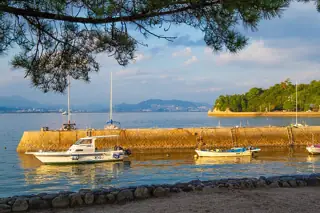
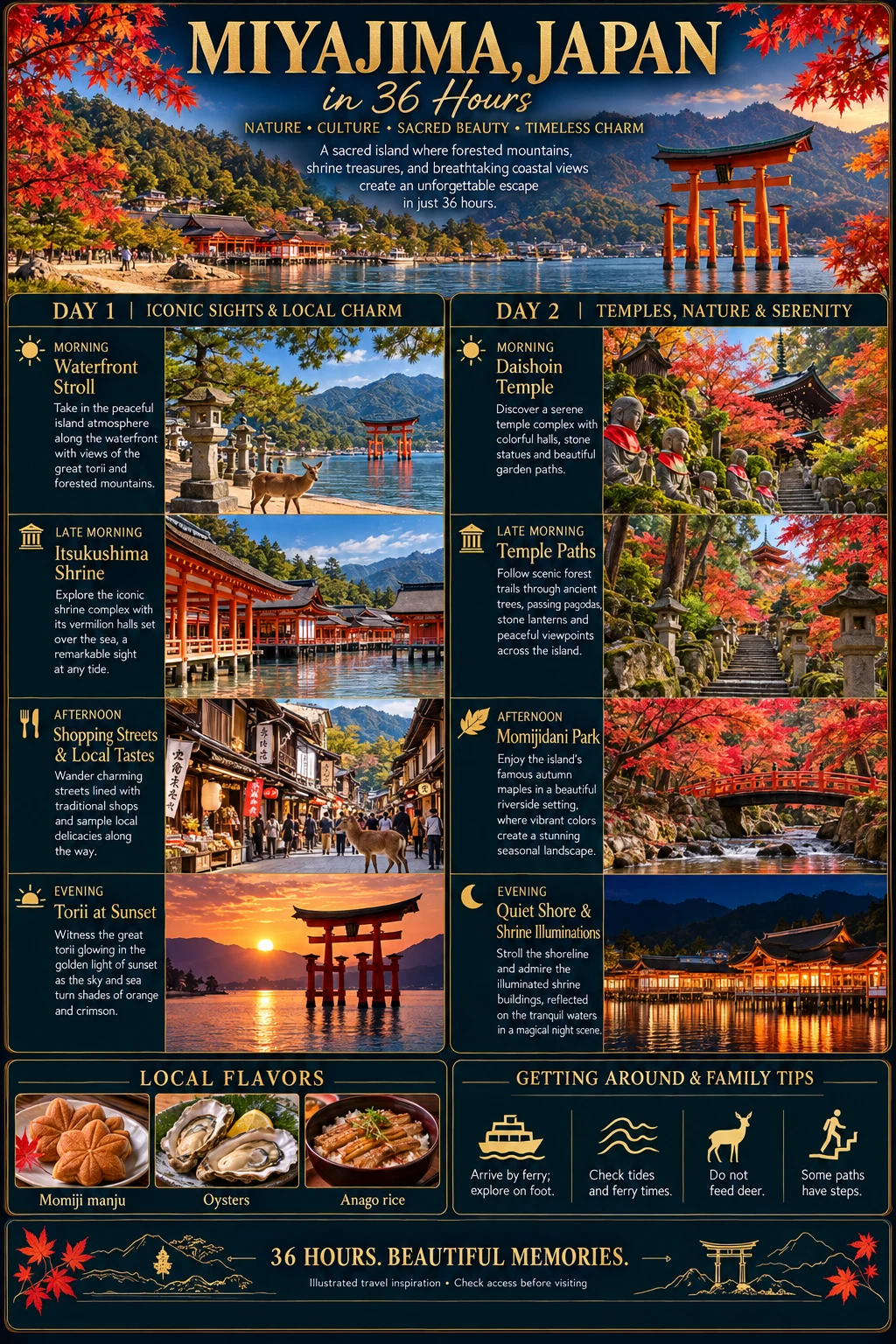
36 Hours on Miyajima: Tides, Temple Paths and an Unhurried Island Night
Miyajima is an island destination, not a neighbourhood to rush through between trains. Staying overnight gives time to see the waterfront at different tides and enjoy the settlement after many day visitors leave. This itinerary uses accommodation near the ferry-and-shrine area and treats Mount Misen as a weather-dependent choice. For a true 36-hour stay, arrive the previous evening or plan a second island night; otherwise, shorten the final evening to match your confirmed ferry and onward transport.
Day 1: The shrine and the lanes behind it
9 a.m. | Let the tide influence the order
After breakfast, walk along the waterfront toward Itsukushima Shrine, roughly 15–25 minutes from the ferry terminal with pauses. Check the local tide table before deciding when to visit: higher water changes the visual relationship between the buildings and sea, while lower water reveals the shore. Neither guarantees a particular photograph, and the shrine’s opening hours are separate from public waterfront access.
Allow 60–90 minutes for the shrine and its surroundings. Follow the visitor route, keep voices low and leave room for worshippers. Do not assume ceremonies or restricted walkways are open to tourists. The shrine’s architecture is best appreciated as a sequence of covered spaces and changing views rather than a single torii image. Miyajima Tourist Association: Itsukushima Shrine
11 a.m. | A small detour and lunch
Take a short walk through the shopping streets, then sit down for lunch before queues become your main activity. Anago-meshi, grilled conger eel over rice, is a local speciality; oysters are another prominent choice. Ask about sauces and soup stock if dietary restrictions matter. A maple-leaf-shaped momiji manju makes a manageable sweet snack later. Official local-food guide
Keep food and paper safely tucked away around deer. They are wild animals, not pets: do not feed, tease or crowd them, and supervise children closely. Give animals with antlers and mothers with young especially generous space. The tourism association’s map explicitly reminds visitors that the deer are wild. Official island map
1 p.m. | Daishoin at your own pace
Walk behind the shrine toward Daishoin, allowing 15–25 minutes for the approach and an hour or more in the temple grounds. The approach and internal routes involve steps, so this is a separate mobility consideration from the waterfront. Take time over the small details, statues and wooded setting without treating religious objects as props. The temple’s historical relationship with Itsukushima Shrine helps explain why Buddhist and Shinto heritage both matter on the island. Tourism association’s island heritage brochure
For families, make this the final substantial visit of the day. Return to your accommodation for a break, then choose a gentle walk rather than adding another climb. Anyone who avoids steps can remain in the lower streets and meet the group afterwards at an agreed point.
4 p.m. onward | Watch the waterfront change
Return to the shore for a second view under different light and, if the tides align, different water conditions. Do not walk into restricted or submerged areas or assume low tide makes every surface safe. Let the scene determine the length of the stop.
Arrange dinner in advance, particularly if your accommodation offers half board. Many businesses focus on day visitors, so an island overnight should not depend on finding a late restaurant by chance. Confirm meal times, allergies and children’s portions with your host. After dinner, a brief waterfront stroll is enough; keep the mountain for daylight.
Day 2: Mount Misen, if the conditions are right
9 a.m. | Check operation before walking to the ropeway
Start with the ropeway’s same-day operating notice. Weather and maintenance can stop services; on designated busy dates, advance boarding reservations are mandatory. The operator publishes those dates and the current last ascent and descent. Book only after understanding the rules and leave a generous return margin. Miyajima Ropeway: official operation and reservation information
Allow three to four hours for the entire outing from the settlement, including the approach, queues, both ropeway sections and time at the upper area. The ropeway does not deliver you to Mount Misen’s summit. The tourism association estimates about 30 minutes on foot from Shishiiwa Station to the summit, but that is walking time without generous breaks and involves slopes and steps. Budget at least 60–90 minutes for the summit return walk, more with children. Official ropeway-and-walking route
Wear suitable shoes, carry water and turn back if visibility, heat or footing deteriorates. Do not begin a descent on an unfamiliar mountain trail simply because the ropeway closes soon. A full hike from town is a different undertaking and should replace this plan, with a proper trail map and daylight margin.
Noon | The low-level alternative
If the ropeway is closed or the walk unsuitable, spend the morning in Momijidani’s lower park paths and the settlement’s heritage streets. Autumn foliage can bring crowds; a park is not guaranteed quiet during peak season. Choose a museum or aquarium only after checking its current opening and family arrangements. There is enough interest at sea level to avoid turning a cancelled cable-car ride into an unsafe hike.
Afternoon | Lunch, rest and a final tide
Have a late lunch, collect any shopping and return to the waterfront at a comfortable pace. Keep the afternoon flexible rather than adding a second major excursion. If staying another night, enjoy dinner locally; if departing, collect luggage well before your chosen ferry and allow time for the mainland connection.
The ropeway operator reports no elevators and says visitors cannot board the circulating ropeway while using a wheelchair or stroller; these devices are stored at the Momijidani station office. Confirm assistance needs directly before committing to the mountain outing.
Three quieter worthwhile places
- Takinokoji Alley, between the shrine area and Daishoin: an atmospheric approach where residents’ privacy still matters.
- Yamabe Path: an alternative historical approach away from the busiest shopping flow, with slopes to consider.
- Lower Momijidani paths outside peak foliage periods: choose a short walk, not an improvised mountain route. These are described in the official island heritage brochure above.
Ferry and family essentials
JR’s Miyajimaguchi crossing takes about ten minutes, but queues and the walk from the railway station add time. Check the correct regular, busy-day or holiday timetable; do not rely on a remembered last sailing. The visitor tax is separate from the fare, including for qualifying rail-pass users; preschool children are exempt according to the operator. Confirm the pass and child rules for your party. JR ferry timetable · Fares and visitor tax
Verified: 16 October 2026. Official tourism, ferry and ropeway sources reviewed. Suggested visit durations are estimates; tides, weather and operating calendars control the final order.
Sources & travel planning
Research checked 2026-10-16. This date describes the guide’s research, not a guarantee of current conditions. Opening hours, prices, access, transport and travel advice can change. Recheck the official sources before booking and departure. Walking and journey times are planning estimates.
- miyajima.or.jp ↗
- miyajima.or.jp ↗
- miyajima.or.jp ↗
- miyajima.or.jp ↗
- miyajima-ropeway.info ↗
- miyajima.or.jp ↗
- jr-miyajimaferry.co.jp ↗
- jr-miyajimaferry.co.jp ↗
Found a change? Contact Only36Hours about a correction.