36 Hours in Nagasaki: A Trading Port, a City of Memory and Harbour Views
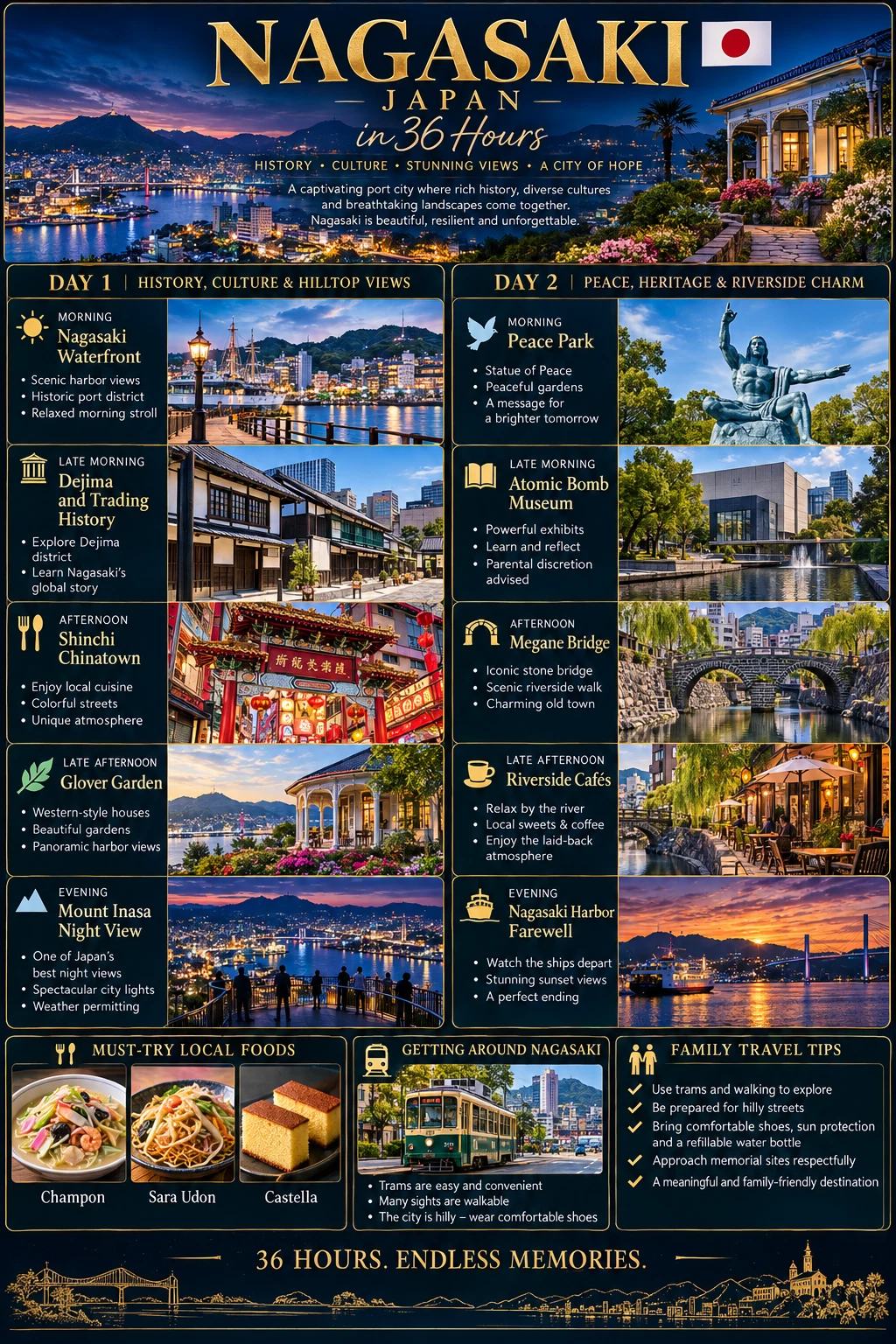
Nagasaki’s history cannot be reduced to one event or one foreign influence. Its reconstructed trading post, hillside houses, Chinese connections and peace memorials deserve different kinds of attention. This itinerary gives the port’s international history a first day and reserves an unhurried second morning for the atomic bombing and its human consequences. Arrive the previous evening and stay near a central tram stop for a two-day visit ending after dinner.
Day 1: Trade, hillside houses and the harbour
9 a.m. | Dejima
After breakfast, begin at Dejima and allow 90 minutes to two hours. The restored buildings help explain regulated trade with Europe and the movement of knowledge as well as goods. This is a reconstruction project with surviving historical elements, not an untouched island: land reclamation changed the surrounding geography. Pick a few interiors for close attention and leave time to understand the site plan. Dejima’s official history and visiting information
Check notices for temporary building or entrance changes. The site currently opens throughout the year, but maintenance can restrict individual spaces, and admission does not allow re-entry. Ask for the accessible route if needed rather than assuming every upper floor is reachable.
11:30 a.m. | Chinatown lunch
Walk approximately 10–15 minutes toward Shinchi Chinatown. Try champon, a substantial noodle soup, or sara-udon, noodles with a topping whose texture differs by preparation. Seafood, pork and other animal ingredients may appear together, so vegetarian diners and anyone with allergies should ask specifically about broth, sauces and toppings. Choose one generous dish before adding snacks. These foods are part of Nagasaki’s distinctive culinary identity. Official Nagasaki introduction
1 p.m. | Glover Garden
Travel toward the Ōura area by tram or taxi, allowing 20–35 minutes including the uphill approach. Spend around 90 minutes at Glover Garden, looking at the relationship between houses, gardens and the working port. Do not assume the hill is effortless because moving walkways exist. The operator notes stone paving and gradients and recommends assistance for wheelchair users; ask about the best entrance and route. Glover Garden official visitor guide
Normal opening extends to early evening, with later opening on designated seasonal dates. Check the actual calendar if hoping for night views. Children may enjoy the outdoor spaces more than every interior, so let the visit remain selective. An exterior look at nearby Ōura Cathedral can accompany the approach, but an interior visit needs its own time, ticket and respectful behaviour.
3:30 p.m. | Rest by the water
Return toward the waterfront and take a proper break. A short walk in the Seaside Park area is a useful contrast to the hillside. For an indoor alternative, check the current exhibition and calendar at the Nagasaki Prefectural Art Museum. Its rooftop garden is another possible harbour viewpoint when accessible; the museum normally closes on the second and fourth Mondays, with holiday adjustments, and over New Year. Museum facilities and closure calendar
Evening | Dinner, with an optional mountain view
Have dinner before deciding whether Mount Inasa suits the weather and everyone’s energy. Allow two to three hours for the complete outing from central accommodation, including transfers and queues. The ropeway and slope car are different services with different departure points; confirm the route and last return before setting out. Official Mount Inasa transport guide
At verification, slope-car services are reopening in stages during October 2026, with daytime interruptions during works. Check the latest notice rather than relying on a general “daily operation” listing. If cloud or wind makes the outing unappealing, enjoy the harbour from ground level instead. Current city service notice
Day 2: Peace history and everyday Nagasaki
9 a.m. | Atomic Bomb Museum
Take the tram toward the museum area, allowing around 25–40 minutes from the central waterfront including walking. Spend roughly two hours at the Atomic Bomb Museum, longer if you want to read extensively. The exhibits concern the bombing, its victims and the continuing pursuit of peace. This is emotionally demanding material, and some displays may distress children; adults should review suitability and allow a shorter visit or split the group if needed. Nagasaki City’s official peace visitor site
Seasonal opening hours vary, and the museum is normally closed December 29–31. Confirm the current calendar, especially around memorial events. Do not book a timed attraction immediately afterwards. Official visitor hours summary
11:30 a.m. | Hypocenter and Peace Park
Walk slowly through the nearby memorial areas, allowing an hour with pauses. These are places for reflection, not a backdrop for playful photographs. Follow any ceremony arrangements and give visitors space. Afterwards, have lunch locally and take time to talk or sit quietly before moving on.
Afternoon | Spectacles Bridge and a smaller city circuit
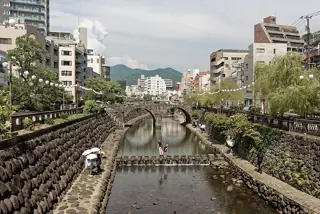
Return toward central Nagasaki by tram, then walk to Megane-bashi, the Spectacles Bridge. Allow 45–60 minutes around the river and nearby streets. The twin arches and their reflections explain its familiar name, but the surrounding urban scene is as interesting as the single photograph. Stay on safe public paths; do not descend to slippery water-level areas during rain or high water. Japan National Tourism Organization: Megane-bashi
If you want one more cultural stop, choose Sōfukuji and allow about an hour including the approach. Its Chinese architectural heritage adds another dimension to the port’s story. Check closing time before walking uphill; the tourism board currently lists a 5 p.m. closure. Otherwise, browse the central shopping streets and enjoy a café break. Official Sōfukuji information
Finish with dinner and, if desired, a slice of castella from a bakery. Do not add a Gunkanjima boat excursion to the margins of this route: it needs a separate substantial block and weather-dependent planning.
Three quieter worthwhile places
- The Prefectural Art Museum’s rooftop garden, when open and weather permits.
- Sōfukuji’s visitor areas outside group arrivals, with respect for the religious setting.
- The Nakashima River streets beyond the busiest Spectacles Bridge photo spot.
Practical details
Use the tram operator’s current instructions: normally board at the rear and leave at the front, with payment or card validation as directed. Transfer concessions depend on payment method; do not assume cash includes a free transfer. Check low-floor services for mobility needs. Official tram guide
Rain, summer humidity and typhoon disruption can change outdoor plans. Keep flexible evening bookings, carry water and avoid overloading the peace-museum day.
Verified: 16 October 2026. Official city, prefectural tourism, attraction and transit sources checked. Route times are editorial estimates; temporary closures and service notices require reconfirmation.
Sources & travel planning
Research checked 2026-10-16. This date describes the guide’s research, not a guarantee of current conditions. Opening hours, prices, access, transport and travel advice can change. Recheck the official sources before booking and departure. Walking and journey times are planning estimates.
- nagasakidejima.jp ↗
- discover-nagasaki.com ↗
- glover-garden.jp ↗
- nagasaki-museum.jp ↗
- discover-nagasaki.com ↗
- at-nagasaki.jp ↗
- nagasakipeace.jp ↗
- discover-nagasaki.com ↗
- japan.travel ↗
- discover-nagasaki.com ↗
- naga-den.com ↗
Found a change? Contact Only36Hours about a correction.