36 Hours in Nara: Great Temples, Lantern Paths and Naramachi Houses
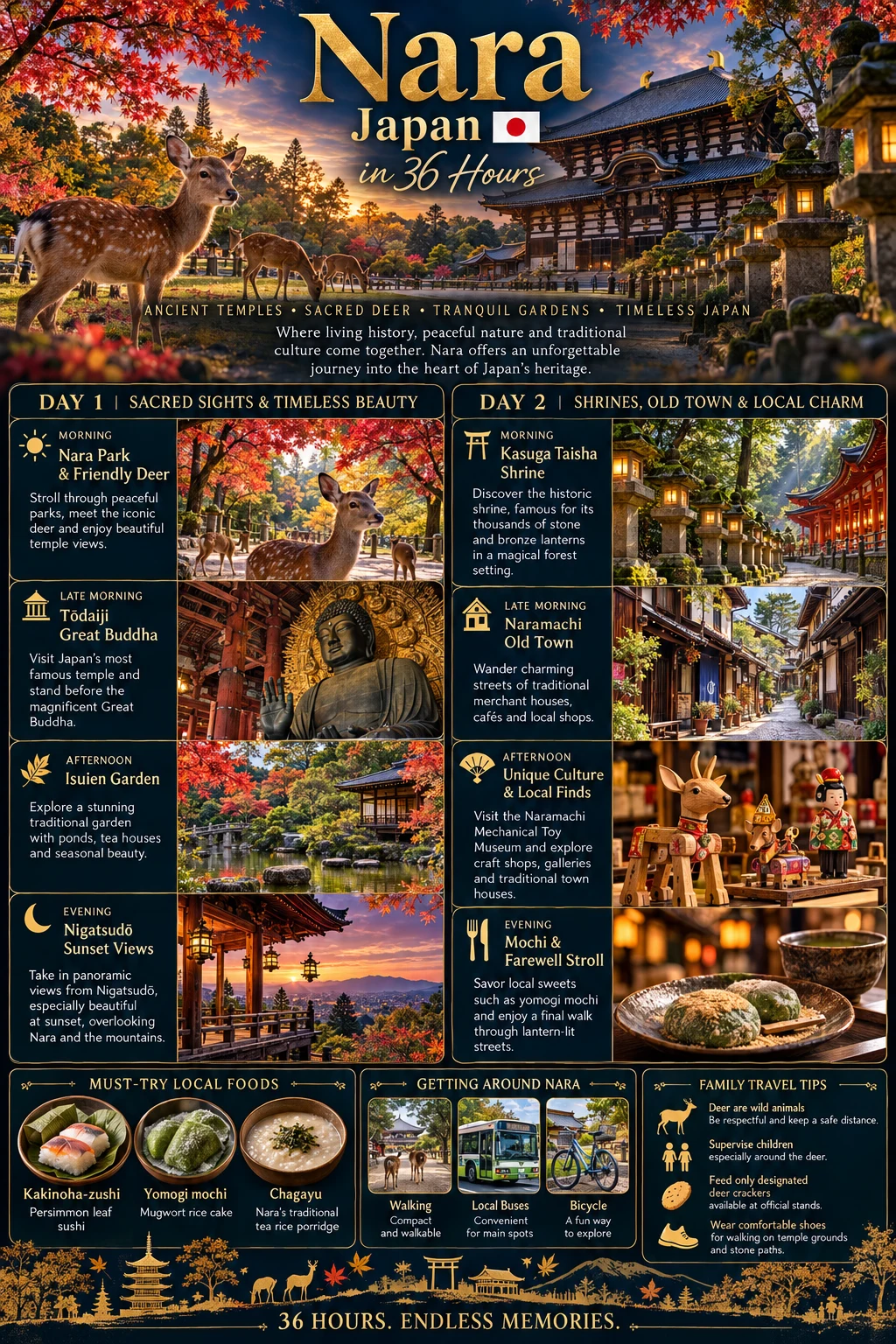
An overnight stay lets Nara become more than a hurried encounter with deer. Its major temples deserve time, but so do the small houses and shops of Naramachi. This itinerary divides the park and shrine district from the older town, with one garden and plenty of breaks. Arrive the previous evening and stay near Kintetsu Nara, JR Nara or the central streets between them. The two stations are distinct; check which your train uses before choosing accommodation.
Day 1: The Great Buddha and the lantern approach
9 a.m. | Breakfast, then Tōdai-ji
Begin after breakfast rather than trying to visit every monument at sunrise. From Kintetsu Nara, allow roughly 25–35 minutes on foot to the Great Buddha Hall, longer from JR Nara. A bus can shorten the approach, but queues and the final walk still need time. Travel light and leave large luggage at your accommodation.
Allow 90 minutes for the approach through Nandaimon and the Great Buddha Hall. The scale is striking, but pause to understand the temple’s religious purpose instead of treating it only as a monumental building. A guide or interpretation can help; paid areas have separate or combined tickets. The hall opens earlier than the museum, and winter closing is earlier than summer closing. Tōdai-ji official hours and admissions
11 a.m. | Nigatsudō, if the stairs suit you
Continue uphill toward Nigatsudō for a different view of the temple precinct and city. Allow 45–60 minutes for the detour and a pause. This is optional for anyone managing fatigue, steps or a stroller; staying around the lower precinct is a perfectly worthwhile alternative. The park is extensive, and short lines on a map can add up to a tiring morning. Official Nara Park area guide
Noon | Lunch away from the deer
Sit down for lunch in a café or restaurant rather than opening food beside animals. Try kakinoha-zushi, pressed sushi wrapped in persimmon leaves, commonly made with fish such as mackerel or salmon. Remove the leaf before eating and check the specific filling. It is a regional speciality, not necessarily a freshly cooked fish dish suitable for every dietary need. Japan’s agriculture ministry: kakinoha-zushi
1:30 p.m. | Kasugataisha’s wooded approach
Walk toward Kasugataisha at a relaxed pace, allowing approximately 30–45 minutes from the Tōdai-ji area with stops, then an hour at the shrine. The lantern-lined approach is part of the visit, not just the route to the ticket counter. Follow worship etiquette and do not assume every inner area is open.
The shrine distinguishes general worship from special admission, whose normal hours are 9 a.m.–4 p.m. Ceremonies cause regular exceptions: the special area closes on specified dates and for mornings including the 1st, 11th and 21st of each month. Check the operator’s calendar rather than relying on older tourism listings. The lantern festivals are special events, not nightly illuminations. Kasugataisha official visitor information
Late afternoon | Return and rest
Take a bus back toward your accommodation if everyone has walked enough. A full loop on foot is unnecessary. Have dinner in the central shopping streets or Naramachi, checking opening times because smaller restaurants may close early or require reservations. Keep the evening quiet enough to enjoy tomorrow’s neighbourhood visit.
Day 2: A garden and the lived-in city
9:30 a.m. | Isuien, when open
After breakfast, visit Isuien for about an hour. Its two garden sections offer different historical tastes, and the framed views reward slow looking. Stay on paths and keep children close near water. The garden is not wheelchair accessible; choose a level park route or an accessible museum instead, confirming the particular entrance and route beforehand. Garden access Confirm the current calendar: Tuesday closure, holiday adjustments and maintenance periods mean the garden is not an all-season daily certainty. If closed, replace it with a longer park walk or an open museum rather than waiting for an unadvertised opening. Isuien official garden information
11 a.m. | Kōfuku-ji and Sarusawa Pond
Walk back toward Kōfuku-ji and choose one accessible hall or collection rather than attempting the whole complex. Its five-storey pagoda is undergoing major conservation and is enclosed for work, so do not expect the familiar unobstructed skyline photograph. The project’s current material gives a much later completion horizon than some older announcements; confirm progress rather than planning around an outdated reopening year. Official temple conservation project
Continue toward Sarusawa Pond for a short pause, then lunch. Keep this block to around 90 minutes including walking, leaving any substantial museum visit as a replacement for the afternoon programme.
1 p.m. | Naramachi’s houses and small shops
Explore Naramachi on foot, giving the neighbourhood two to three hours including tea. Choose one house interior and a few shops rather than collecting every small attraction. Koshi-no-Ie is a reproduction of a traditional townhouse, useful for understanding narrow-fronted domestic space; it is not an untouched historic residence. It normally closes Monday, with additional holiday and New Year rules. Nara City tourism: Koshi-no-Ie
An alternative is Nigiwai-no-Ie, an early-twentieth-century merchant house with seasonal displays. Check its own calendar rather than assuming both houses share opening days. Remove shoes where requested and respect areas reserved for activities. Nigiwai-no-Ie official site
For a snack, choose a café sweet or a small local speciality and eat it seated. If watching mochi-making, keep behind the designated viewing area and remember that sticky rice cakes need particular care for small children. Finish with an early dinner and time to collect luggage before onward travel.
Three quieter worthwhile places
- Nigatsudō’s approach outside ceremonies, if the climb suits your group.
- Isuien’s garden paths on an open day.
- A confirmed Naramachi house visit, away from the busiest park circuit.
Deer, families and practical planning
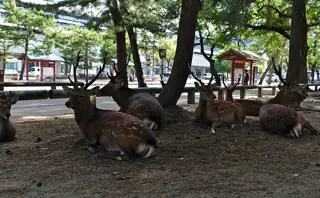
The deer are wild animals. Feed only official deer crackers if choosing to feed them at all; do not tease, chase, hug or corner them. Keep paper, food and bags secure, and supervise children closely. Spring mothers protecting fawns and autumn stags can be especially dangerous. Observing from a distance is often the better family experience. Nara City’s deer-safety guidance
Spring blossoms and autumn colour bring crowds, while summer heat makes breaks essential. Check each temple and garden separately, carry some cash and ask about step-free approaches before committing to hillside routes.
Verified: 16 October 2026. Official temples, garden, city tourism and government sources checked. Walking and visit durations are editorial estimates; ceremony closures and conservation access require reconfirmation.
Sources & travel planning
Research checked 2026-10-16. This date describes the guide’s research, not a guarantee of current conditions. Opening hours, prices, access, transport and travel advice can change. Recheck the official sources before booking and departure. Walking and journey times are planning estimates.
- todaiji.or.jp ↗
- visitnara.jp ↗
- maff.go.jp ↗
- kasugataisha.or.jp ↗
- isuien.or.jp ↗
- isuien.or.jp ↗
- kohfukuji-project.jp ↗
- narashikanko.or.jp ↗
- naramachi-nigiwainoie.jp ↗
- city.nara.lg.jp ↗
Found a change? Contact Only36Hours about a correction.