36 Hours in Narbonne: Roman Stories, Market Lunches and the Canal de la Robine
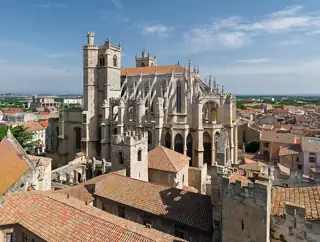
Narbonne’s Roman past is not immediately obvious from a skyline dominated by cathedral and palace. Its best short visit connects the objects at Narbo Via with underground remains in the centre, then makes time for the market and canal. Stay centrally and arrive the previous evening for two full days ending after dinner. This route deliberately leaves the coast and Fontfroide for another visit rather than turning a compact city break into a driving schedule.
Day 1: Market morning and the monumental centre
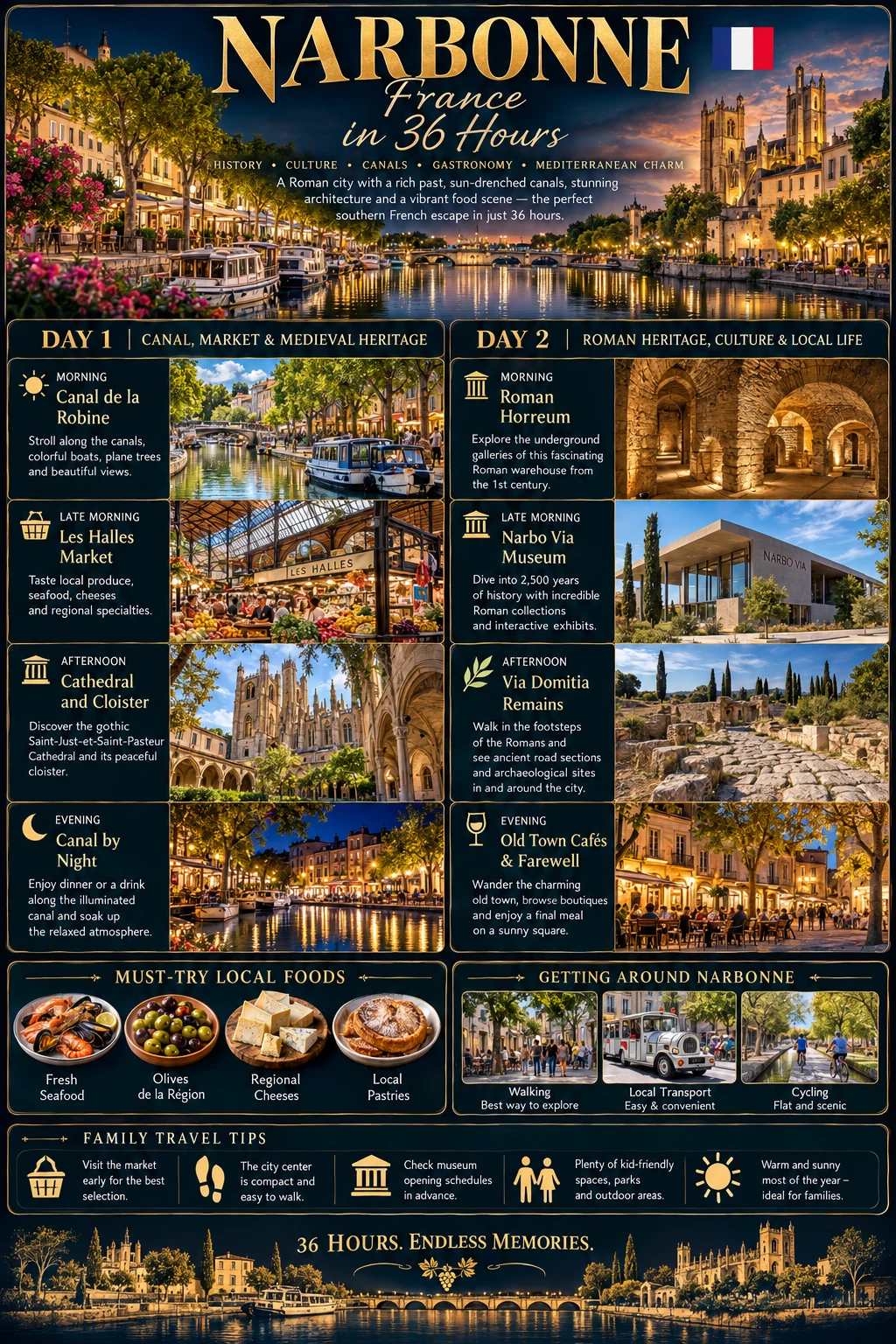
9 a.m. | Les Halles
Begin with breakfast and a look around Les Halles. Go in the morning: general traders typically finish around 1 p.m., while food service may continue until 2 p.m.; Mondays have reduced service. Individual food counters can have their own arrangements, so an open building does not guarantee every trader is serving. Browse before buying, ask where produce comes from and leave time to return for an early lunch. Market association’s opening information
The market is especially good for assembling a small meal: cheese, bread, seasonal fruit or prepared food, depending on what is available. Seafood lovers can investigate oysters and other shellfish, while a grilled dish may suit children better. Ask about allergens and cooking rather than assuming all counters can adapt dishes. Official market food counters
10 a.m. | Palace, cathedral and cloister
Walk roughly 5–10 minutes to the monumental centre and allow 90 minutes to two hours. Choose the palace’s art route, then see the cathedral and cloister as access permits. The palace combines former residential and defensive functions, and its interiors deserve attention beyond the exterior towers. Do not expect the old Roman archaeological displays here: those collections have moved to Narbo Via, while parts of the Palais Vieux are being reorganised. City’s current palace-museum information
The art route normally closes Tuesday outside June–September and has a midday break during much of the year. Some other components retain Tuesday access, but that does not mean the museum route is open. Check the specific spaces you want to see. The Gilles Aycelin keep is an optional stair climb, not an essential family challenge; ask about access and choose the ground-level complex if stairs are unsuitable.
Noon | Lunch before the market closes
Return to Les Halles for lunch or choose a nearby restaurant if the counters are full. Arrive well before closing rather than expecting leisurely service at 2 p.m. Order a few things to share and take a proper seat. A glass of local wine can accompany lunch for adults, but there is no need to add a tasting trip to an already satisfying city day.
2:30 p.m. | The Horreum
After a break, walk to the Horreum and spend approximately 45–60 minutes underground. These Roman galleries lay beneath a building whose precise function is not entirely certain; describing them simply as a fully understood warehouse oversimplifies the evidence. The enclosed setting makes the ancient city tangible in a way that detached objects cannot. Horreum official visit information
The galleries are not accessible to visitors with motor disabilities, although the interpretation centre is. Children who dislike dark or confined spaces may prefer to skip them. The site closes Monday and has seasonal split hours, including special summer arrangements; check your date rather than transferring Narbo Via’s timetable to this site. Operator accessibility details
4 p.m. | Garden and canal
Pause in the Jardin de l’Archevêché, then walk along the Canal de la Robine toward the Pont des Marchands and Promenade des Barques. Allow an hour with stops. The formal garden beside the monumental complex offers a different atmosphere from the busier canal cafés. City garden guide
Have dinner in the centre. A short evening walk is enough; do not turn the canal path into an improvised long-distance outing after dark.
Day 2: Narbo Via and the quieter streets
9 a.m. | Breakfast and the walk to Narbo Via
After breakfast, allow roughly 25–35 minutes to walk from the central canal area to Narbo Via, depending on your route and pace. The museum’s official directions also describe Citadine shuttle connections, but these do not run on Sundays and public holidays. Check the live service before relying on it. A taxi is an alternative when heat or mobility makes the walk unappealing. Museum access and opening information
10 a.m. | A Roman city brought together
Give Narbo Via two to three hours, including a rest. Its large display of carved stone fragments establishes the scale of Roman Narbonne, while domestic decoration and everyday objects make the story more personal. Choose one or two themes, such as trade and the home, rather than reading every label. Families can look for animals, ships and evidence of daily routines. Official permanent-collection overview
The operator currently lists Tuesday–Sunday opening, 10 a.m.–6 p.m. year-round, plus specified annual closures. This is more current than listings with different summer hours. The modern museum is accessible to visitors with motor disabilities; contact staff for specific sensory or supported-visit needs. Compare ticket combinations only after deciding what you genuinely want to visit.
1 p.m. | Lunch and a slower afternoon
Return to the centre for lunch, allowing the same generous walking time. If you have already spent the morning in a museum, resist adding another large collection. Explore the streets south of the canal and consider the Basilique Saint-Paul when open to visitors. Its published municipal schedule normally excludes Sunday and includes a midday break. Treat worship respectfully and keep the visit to about half an hour unless the architecture particularly interests you. Municipal Saint-Paul visitor information
Spend the remaining afternoon browsing shops, sitting by the canal or returning to the garden. A seasonal boat trip can replace some walking, but verify the actual operator, departure and duration; it is not a guaranteed year-round service. Finish with an early dinner and collect luggage separately from the sightseeing blocks.
Three quieter worthwhile places
- Jardin de l’Archevêché, for a seated pause beside the major monuments.
- The cathedral cloister when open and outside group visits.
- Basilique Saint-Paul and its surrounding streets, away from the main palace circuit.
Practical details
From the railway station, allow around 15–20 minutes on foot to the historic centre. Monday and Tuesday require careful rearrangement: Narbo Via and the Horreum close Monday, while the palace art route usually closes Tuesday outside summer. Keep children close beside the unfenced canal, carry water in summer and check wind or heavy-rain warnings before longer walks.
Verified: 16 October 2026. Official museum, municipal, market and tourism sources checked. Travel and visit durations are editorial estimates; component-specific closures and transport require reconfirmation.
Sources & travel planning
Research checked 2026-10-16. This date describes the guide’s research, not a guarantee of current conditions. Opening hours, prices, access, transport and travel advice can change. Recheck the official sources before booking and departure. Walking and journey times are planning estimates.
- narbonne.halles.fr ↗
- narbonne.halles.fr ↗
- narbonne.fr ↗
- narbovia.fr ↗
- narbovia.fr ↗
- narbonne.fr ↗
- narbovia.fr ↗
- narbovia.fr ↗
- narbonne.fr ↗
Found a change? Contact Only36Hours about a correction.