36 Hours in Nizwa: Fort Walls, Working Souqs and Oman's Inland Story
Verified: 16 October 2026. Travel and visiting durations below are estimates, not guaranteed schedules.
Before booking: Current UK government advice reports strikes and retaliatory attacks affecting Oman since July 2026, with further escalation, airspace closures and flight disruption possible. Check your own government's current advice, insurance and flight arrangements before using this itinerary. Follow local instructions and avoid military or security facilities. This guide is a sightseeing plan, not an assurance of safe travel. Current Oman travel advice
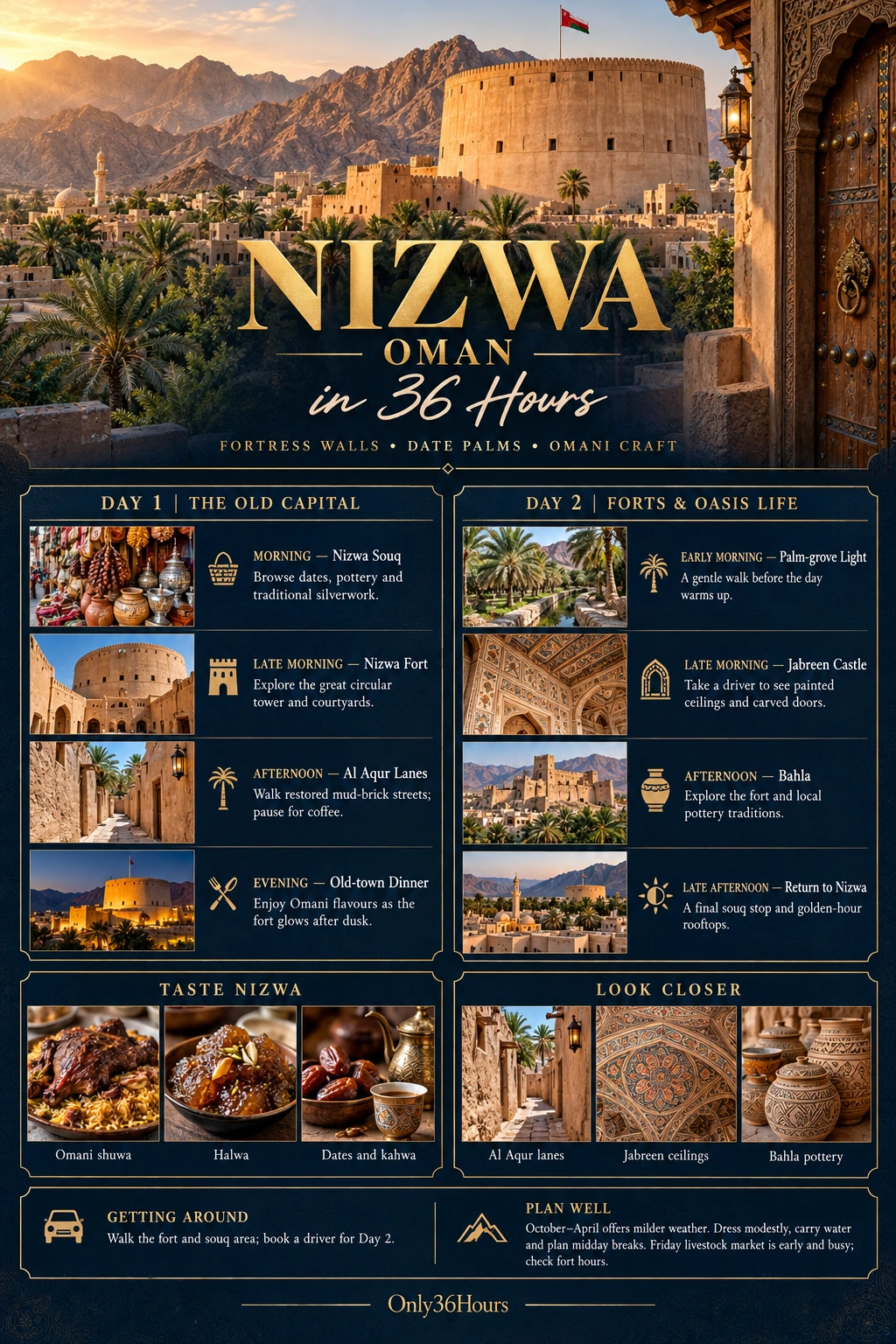
Nizwa works best when treated as a place to stay rather than a quick photograph on the road to the mountains. Its fort, market and surrounding irrigation landscape tell connected stories about defence, trade and water. With one night already behind you, a full day in town and a second day visiting a nearby museum give those stories room to develop.
Base yourself near the fort and souq if walking convenience matters; some hotels carrying the Nizwa name are a drive away. Arrive the previous evening, allowing approximately 1½–2½ hours from Muscat depending on your starting point and traffic. Arrange a driver or suitable rental car for the outlying stops. This is not a plan that assumes taxis will be waiting at every attraction.
Day 1: Fort and market, with a proper midday pause
09:00–11:00 | Nizwa Fort
Start at Nizwa Fort before the strongest heat. The great circular tower is the obvious landmark, but spend time in the associated rooms and courtyards rather than only climbing for the view. The fort operator describes a narrow defensive staircase interrupted by doors and turns. This is useful context for appreciating how movement through the building was controlled, and a warning that the upper route is unsuitable for every visitor. Fort architecture
Allow 90 minutes to two hours, shortening the visit for young children. Ask which craft demonstrations are actually operating that day; workshops listed among facilities are not necessarily continuous performances. Although the national tourism listing labels the site wheelchair accessible, the narrow historic staircase means the whole attraction cannot be treated as step-free. Confirm which lower areas are accessible before buying admission.
The tourism page's Friday timetable contains an apparent AM/PM error alongside a split afternoon session. Do not rely on that line literally: confirm Friday admission with the fort, and avoid planning a visit around midday prayers. This morning block is easiest Saturday–Thursday. Official tourism listing
11:00–12:30 | Souq browsing
The souq is adjacent, so no vehicle transfer is necessary. Look at dates, silverwork, pottery and household goods; ask where an item was made rather than assuming everything sold here is local. Seek permission before photographing sellers or customers, and leave room for normal trading.
On Friday, the livestock market is an optional early-morning replacement for the first part of this day. Ask your hotel the previous evening for that week's practical timing and arrange transport if necessary. The national tourism authority confirms the Friday-morning auction, but it is a working market, not a staged petting activity. Keep children out of the animals' route and skip it if crowds or animal trading would be upsetting. Oman's traditional markets
12:30–16:00 | Lunch and a cool rest
Try an Omani rice dish, or ask whether shuwa, slowly cooked spiced meat, is available that day. It takes lengthy preparation, so do not assume a restaurant can produce it on demand. Dates, coffee and a small portion of halwa make an easier introduction for a mixed-age group. Check nuts and other ingredients with the maker if allergies matter. Tourism authority's food guide
Return to your accommodation for the hottest part of the day. In warm weather this is the sensible centrepiece of the schedule, not wasted time. Plan children’s meals and drinking water in advance; during Ramadan, seek local advice about where daytime food and drinks may be consumed.
16:00–18:00 | Water rather than another fort
Arrange a short drive, roughly 15–25 minutes from the centre depending on traffic, to Falaj Daris and its public park area. Look at the water channel from a safe path. Aflaj use gravity to distribute water, with systems of shared management as important as the engineering. UNESCO's listed irrigation landscapes provide the wider context. Do not enter channels, climb barriers or walk into private cultivated plots. UNESCO irrigation heritage
Return before dark and eat around 19:00. Make any purchases you postponed earlier, provided the relevant shops have reopened; souq traders do not all keep identical hours.
Day 2: Oman across the ages
09:00–12:30 | A museum with room to absorb it
Drive approximately 25–40 minutes to the Oman Across Ages Museum in Manah. Book or obtain the appropriate dated admission and allow 2½–3 hours, with breaks. Its History Gallery includes the land's formation, early settlement, maritime connections and aflaj: subjects that make yesterday's fort and water channel easier to understand. History Gallery
Crucially, general building hours are not gallery hours. Galleries normally open Saturday–Thursday 09:00–17:00 and Friday 13:30–19:00. If day two is Friday, have a slow morning in Nizwa and lunch first, then visit from 13:30; omit the extra afternoon excursion below. The museum lists accessible toilets, a nursery and other visitor facilities, with a separate access guide. Museum admission and gallery schedule
12:30–17:30 | Lunch and one optional village stop
After lunch, either return to Nizwa for a quiet afternoon or arrange a short visit to Birkat Al Mouz. Allow roughly 30–45 minutes from the Manah museum area, depending on the route. Keep to public village approaches and confirmed visitor spaces. A café stop at Bait Al Sabah, a heritage inn in Al Saybani, offers a gentler focus than climbing deteriorating buildings; confirm opening and stair access beforehand. Do not enter abandoned houses or private gardens. Bait Al Sabah
Return to Nizwa with time for a rest and a final dinner around 19:00–21:00. A Jebel Akhdar mountain excursion needs its own transport and time planning, so leave it for a longer trip.
Three quieter worthwhile places
- Falaj Daris public park: A short look at living irrigation heritage, with close supervision beside water.
- Bait Al Sabah, Birkat Al Mouz: A confirmed café visit rather than unrestricted access to the surrounding old settlement.
- The museum garden in Manah: A pause between displays when conditions allow; avoid lingering outdoors in extreme heat.
Practical considerations
October–April is generally more comfortable for outdoor sightseeing. Carry water, use sun protection and wear modest clothing. Avoid wadis and low crossings during rain or flood warnings. Friday prayers and Ramadan change the rhythm of visits and meals; ask locally rather than treating published hours as immutable. For family road travel, arrange the correct child restraints in advance. Official safety and cultural guidance
Sources & travel planning
Research checked 2026-10-16. This date describes the guide’s research, not a guarantee of current conditions. Opening hours, prices, access, transport and travel advice can change. Recheck the official sources before booking and departure. Walking and journey times are planning estimates.
- gov.uk ↗
- nizwafort.om ↗
- experienceoman.om ↗
- experienceoman.om ↗
- experienceoman.om ↗
- whc.unesco.org ↗
- oaam.om ↗
- oaam.om ↗
- baitalsabah.com ↗
- gov.uk ↗
Found a change? Contact Only36Hours about a correction.