36 Hours in Patan: Palace Courtyards, Newar Craft and Living Shrines
Verified: 16 October 2026. Suggested durations and transfer ranges are estimates. Confirm festival closures and current local conditions before travel.
Patan, also called Lalitpur, deserves more than a hurried stop on a Kathmandu Valley circuit. Its appeal lies in the relationship between monumental palace spaces and everyday neighbourhood life: a metalworker’s shop, a shrine in a courtyard, a quiet meal between busy streets. Base this short stay near the historic centre and resist adding Bhaktapur or a mountain excursion. Those deserve their own time.
From Kathmandu’s airport or the Thamel area, allow roughly 30–60 minutes by arranged car, potentially considerably longer in heavy traffic. Ask your accommodation to arrange a driver and a suitable drop-off near its entrance; the last stretch may be on foot. Request working passenger seatbelts, and arrange a child seat explicitly if needed rather than assuming one is available. Avoid demonstrations, which can disrupt transport at short notice. Official Nepal safety and transport advice
Day one
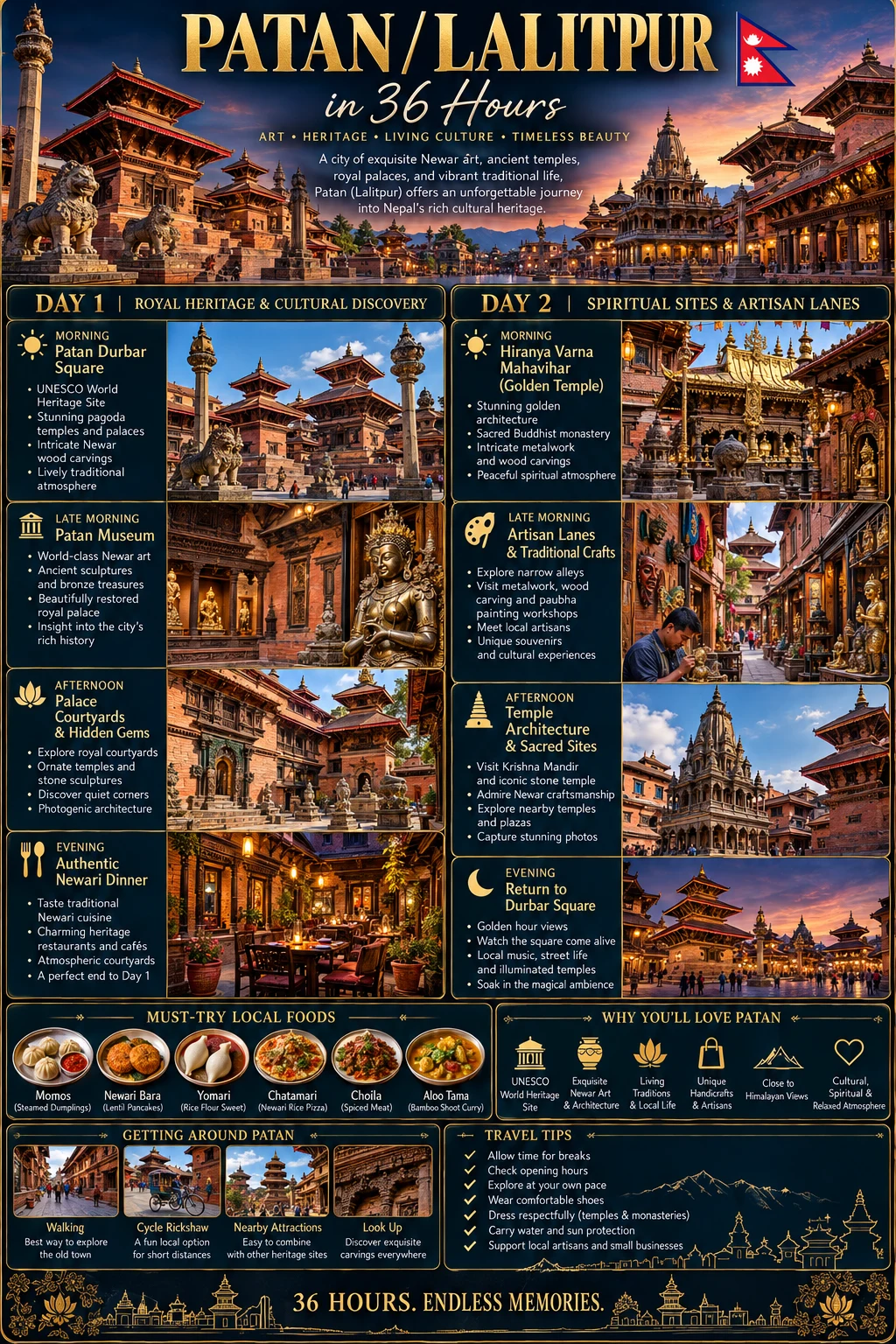
09:00–10:30 | Durbar Square before the museum
Begin with breakfast at your accommodation, then walk into Patan Durbar Square. Buy the required heritage ticket at the official counter and ask exactly what it includes, whether it permits re-entry and how long it remains valid. Different visitor categories apply, and older tourism fee tables should not override the current ticket office.
Spend the first hour outside. Look at the relationship between the palace frontage, Krishna Mandir and the surrounding public space instead of moving immediately from entrance to entrance. A licensed local guide for this first morning can help explain the traditions and identify what is a public route, a place of worship or a restricted threshold. The Nepal Tourism Board describes Patan as a centre of traditional metalwork and other craftsmanship. Tourism board’s Patan introduction
10:30–12:30 | Patan Museum and the palace
Give Patan Museum a full two hours. Its religious sculpture is easier to appreciate when you choose a few objects and read their interpretation rather than trying to absorb every room. Continue through the palace spaces included in your ticket, asking staff which galleries and courtyards are accessible that day.
The museum publishes long daytime opening hours, but its website mixes recently revised admission information with an old winter-hours notice and dated festival closures. This mid-morning visit avoids relying on the uncertain edges of the day. It also specifically lists the Sundari Chowk galleries as closed Wednesdays. Confirm the current festival calendar directly, especially around Krishna Janmashtami and Holi; do not reuse the site’s old festival dates for a future year. Museum’s official visitor information, Museum homepage
The palace is also a story of conservation. Kathmandu Valley Preservation Trust documents the restoration of courtyards, temples and water features, a useful introduction to why craft skills remain essential here. Notice the building as carefully as its contents. Palace restoration project
12:30–15:00 | Lunch, then a proper break
Choose a nearby restaurant for dal bhat tarkari, rice with lentil soup and vegetables, with accompaniments explained by the staff. Keep achar, the pickle or relish, separate if you prefer less heat. Order freshly cooked food and use safely treated drinking water; do not assume a public stone spout is a drinking-water source. Nepal Tourism Board’s food and cultural introduction
Return to your room or sit in a staffed café. For families, this break is important: traffic, thresholds and repeated shoe removal make a short temple walk more tiring than its distance suggests.
15:00–17:00 | The Golden Temple and northern lanes
Walk roughly 5–10 minutes north from Durbar Square to Hiranya Varna Mahavihar, commonly called the Golden Temple. This is a working Buddhist monastery, not simply a decorated courtyard. Follow the entrance instructions, ask about leather items and photography, and give worshippers room. Any local ceremony takes precedence over the proposed schedule.
Continue through nearby lanes only as far as your energy allows. Ask before entering a courtyard that looks residential, and never photograph children or people at prayer without permission. The tourism board’s heritage overview provides context for the monastery and its metalwork. Kathmandu Valley heritage guide
18:00 onward | A local dinner
Try momo with a clearly identified filling and sauce on the side. For dessert, look for yomari, a steamed rice-flour dumpling whose fillings can include molasses, sesame or milk solids. Availability varies, so treat it as a welcome find rather than a guaranteed daily menu item. Tell staff about sesame or dairy allergies before ordering. Tourism board’s momo and cuisine guide, Yomari introduction
Day two
09:00–11:30 | Mahabouddha and Uku Bahal
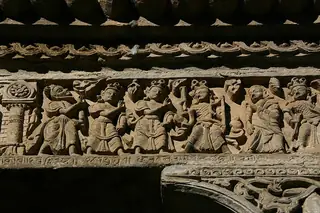
After breakfast, walk southeast toward Mahabouddha, allowing 15–25 minutes from the square with lane-finding and stops. Its terracotta Buddha imagery rewards looking closely. Continue to nearby Rudra Varna Mahavihar, also called Uku Bahal, for a different courtyard and sculptural setting. The tourism board includes both in its Patan heritage route. Allow time for local entry arrangements, but do not assume universal opening hours or unrestricted shrine access. Official Patan heritage walk
These stops work best as a slow two-site morning. If one is closed for worship or maintenance, enjoy the surrounding public lanes and return toward the centre rather than chasing replacement temples across the valley.
12:00–15:30 | Lunch and a craft-focused finish
Have lunch, then arrange a short visit with a craftsperson through your accommodation or guide. Confirm that a workshop genuinely welcomes visitors; a shop selling metalwork is not necessarily a working studio. Ask before photographing tools or work in progress, and do not expect a demonstration simply because a door is open.
Leave time for packing and your onward transfer. An airport journey needs the airline’s required check-in margin on top of the traffic allowance, not inside it.
Three quieter pauses
- Bhandarkhal garden and tank: within the palace visit, subject to the day’s access. The restored water features offer a different perspective from the principal galleries. Conservation trust’s palace account
- Uku Bahal’s courtyard: quieter moments depend on worship and community events, not an assumed absence of people.
- Public lanes between Mahabouddha and Durbar Square: a worthwhile walk without entering private courtyards.
Practical choices
Expect uneven paving, steps and constrained entrances; this is not a reliably step-free route. Wheelchair users should arrange a locally checked itinerary and confirm specific museum access before booking. A carrier may be easier than a stroller for some families, but choose what is safe and comfortable for your child.
Dress with shoulders and knees covered at holy places, and respect restrictions on non-Hindu entry. Monsoon rain can disrupt roads and make paving slippery. Current official advice also records serious flooding in parts of Nepal outside this city route; do not assume a Patan stay establishes the safety of an onward mountain journey. Check conditions separately before extending the trip. Current Nepal travel advice
Sources & travel planning
Research checked 2026-10-16. This date describes the guide’s research, not a guarantee of current conditions. Opening hours, prices, access, transport and travel advice can change. Recheck the official sources before booking and departure. Walking and journey times are planning estimates.
- gov.uk ↗
- ntb.gov.np ↗
- patanmuseum.gov.np ↗
- patanmuseum.gov.np ↗
- kvptnepal.org ↗
- trade.ntb.gov.np ↗
- trade.ntb.gov.np ↗
- trade.ntb.gov.np ↗
- ntb.gov.np ↗
- kvptnepal.org ↗
- gov.uk ↗
Found a change? Contact Only36Hours about a correction.