36 Hours in Port Vila: Market Flavours, Living Culture and Time by the Harbour
Verified: 18 October 2026.
Port Vila is more rewarding when a market conversation and a leisurely lunch count as part of the itinerary. On Efate, Vanuatu's capital brings together island produce, contemporary art and living kastom, the customs that continue to shape community life. Its history includes the Anglo-French Condominium and independence in 1980, but the city is not an open-air colonial museum. Begin with people and food, then leave enough time to notice the harbour and gardens between organised visits. Vanuatu Tourism Office's country introduction provides useful background.
This plan runs from breakfast on day one to dinner on day two, with one night in Port Vila. It suits a family that wants cultural encounters and outdoor breaks without attempting an entire round-island tour. Choose accommodation according to the transfers you need, rather than assuming every place described as Port Vila is a short walk from the market.
Before you arrive: book the important parts
Reconfirm the exact location and operating arrangements of your accommodation and excursions. The tourism office's earthquake update remains useful recovery background, but its latest dated entry is May 2025. It should not be read as a live October 2026 street-access map. The Ministry of Internal Affairs' July 2025 newsletter subsequently confirmed the Market House reopening. Follow current barriers and local directions, and leave extra margin for airport transfers.
Book Ekasup with a confirmed departure and return transfer. Also contact the Suzanne Bastien Foundation about your intended visit: its published hours are Tuesday–Saturday, 10am–4:30pm, while the botanical tour has a stated minimum of five participants. Do not assume a smaller family can simply arrive for that tour.
Local transport guidance explains that B-plate minibuses have no fixed routes or schedules; shared journeys may take an indirect route. Taxis are normally T-plated and do not use meters. Agree the destination, fare, waiting time and return arrangement before setting off, and carry small amounts of vatu. For excursions, ask explicitly about child restraints and whether admission is included.
Day one, 8:30–11am: breakfast, produce and the waterfront
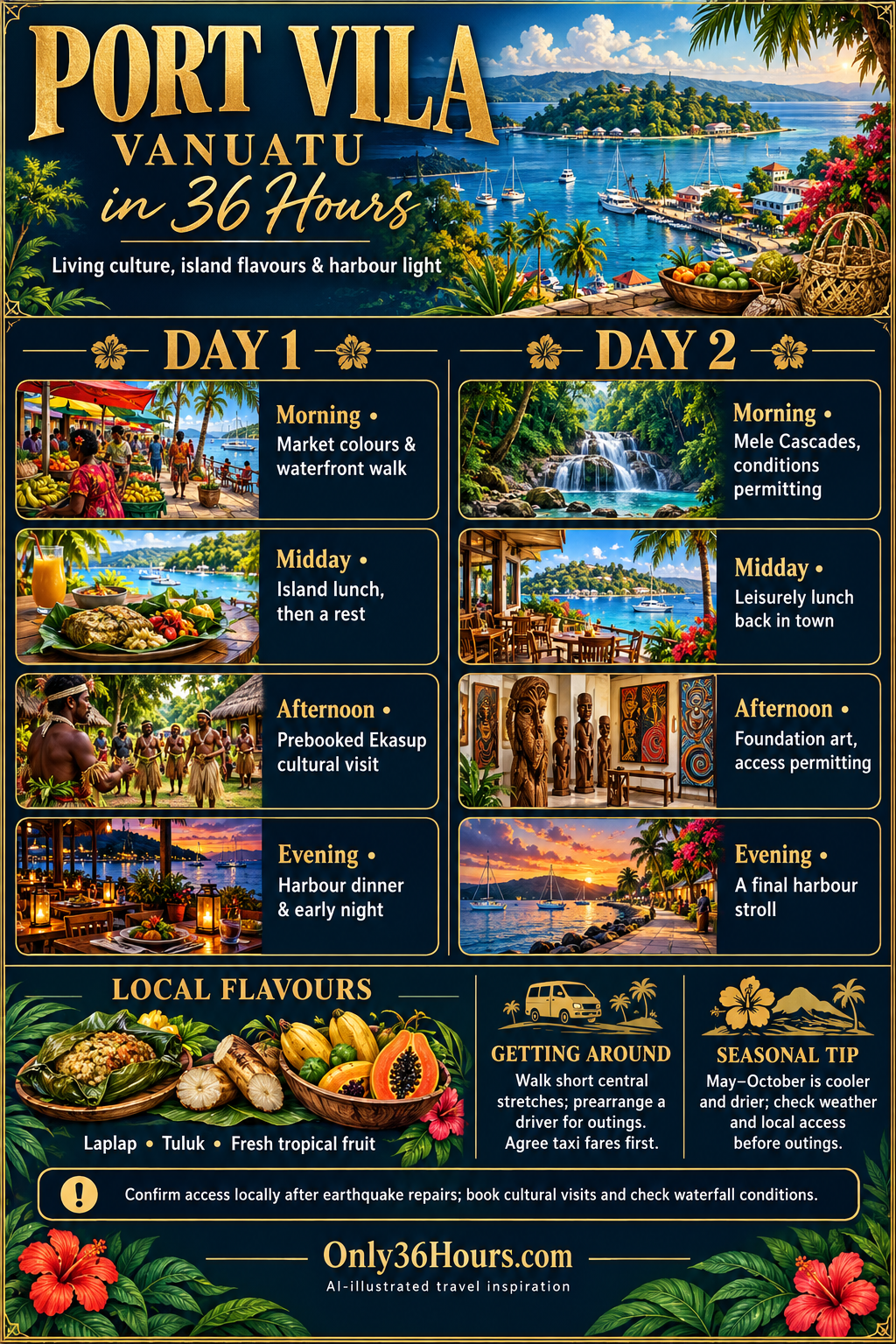
After breakfast, make the central market your first substantial stop. The reopening matters because this is a working food market serving residents, not just a visitor attraction. Look at the day's root vegetables, fruit and greens, buy something you can eat or take back to your accommodation, and ask before photographing sellers. Avoid blocking stalls while deciding on a picture.
Let children choose one unfamiliar ingredient and find out its name or how it is cooked. There is no need to sample everything at once. Keep cash ready, carry drinking water and take a shade break before anyone becomes tired. Then walk a short, currently accessible section of the harbourfront rather than committing to a long route through streets whose arrangements may have changed.
11am–1pm: lunch and a little breathing space
Ask what is being prepared that day. The tourism office's food guide describes laplap, made with grated root crops and coconut cream, sometimes with meat or fish, and simboro, grated tubers enclosed in leaves. Tuluk is another possibility: a savoury parcel with a root-crop outer layer and meat filling. Availability and recipes vary, so ask about ingredients rather than assuming a dish is vegetarian or suitable for an allergy.
A modest shared tasting followed by a familiar meal can work better with children than several large orders. Have lunch before the cultural excursion, then return briefly to your accommodation if needed. This deliberate gap is what keeps a warm, humid day enjoyable.
1–4pm: an arranged Ekasup visit
Use your confirmed tour slot for Ekasup Cultural Village, in the Erakor area outside central Port Vila. The tourism listing describes a guided introduction to aspects of village life, including food production and practical knowledge. Ask your hosts how the skills being demonstrated relate to life today; one organised visit cannot represent every community or island in Vanuatu.
The advertised welcome includes performers carrying traditional weapons, and some historical storytelling may be unsettling for small children. Discuss the format and age suitability when booking, along with terrain, duration and any mobility needs. Ask permission before close portraits or recording demonstrations. Leave the afternoon timing flexible around the operator's actual departure, rather than expecting an unscheduled walk-in experience.
4–8:30pm: harbour light and an early dinner
Return for a rest before dinner. Choose a convenient restaurant whose opening you have confirmed and ask about the day's fish, vegetables or Vanuatu beef. A harbour-facing table can be pleasant, but a manageable journey and a menu everyone can use matter more than chasing a particular view. Keep the evening simple and save your energy for tomorrow.
Day two, 8:30am–1pm: choose one outdoor outing
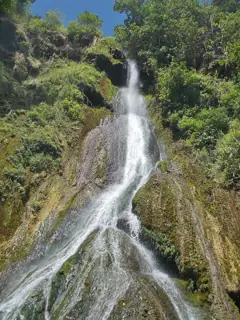
After breakfast, consider Mele Cascades only once a current operator has confirmed the open route, water conditions, admission and return transport. The tourism office's Efate itinerary identifies the falls as an excursion from town, but its older description is not a guarantee that every pool or path is available today.
Wet rock and changing flow call for caution. Do not make swimming or reaching the upper falls a requirement; ask whether the available route actually suits your children and mobility. If conditions or access are unsuitable, stay in town and bring forward the art visit below. Avoid replacing one cancelled outing with a rushed cross-island drive. Return for lunch and a shaded rest.
1–4:30pm: art and three quieter choices
Visit the Fondation Suzanne Bastien on Pango Road if your date and booking are confirmed. It gives contemporary art a place alongside the cultural experience of the previous day. Ask what exhibition is currently available rather than expecting a particular past show.
For slower moments across the two days, choose among these three places:
- The foundation's gardens: arrange the botanical tour if the minimum group requirement can be met. The operator describes forest, shoreline, ornamental and food-garden areas. Confirm the route and access rather than assuming independent garden entry.
- Fatumaru Park: a short public-space pause, subject to current access and events. The government's urban greening plan identifies it among the city's parks; that planning document does not establish today's facilities or swimming conditions.
- Independence Park: another open-space option identified in the same plan. Use accessible public areas respectfully and make way for gatherings, sport or official activities. Quiet is not guaranteed.
Finish gently, and let the weather decide
Return for a final meal and leave time for packing or onward travel. The meteorological department's climate overview describes May–October as the cooler, drier season. November–April is the main cyclone season; check current warnings and follow local instructions in any month. Carry rain protection, keep bookings flexible and regard a slower afternoon as a good use of these 36 hours, not a failed itinerary.
Sources & travel planning
Research checked 2026-10-18. This date describes the guide’s research, not a guarantee of current conditions. Opening hours, prices, access, transport and travel advice can change. Recheck the official sources before booking and departure. Walking and journey times are planning estimates.
- vanuatu.travel ↗
- vanuatu.travel ↗
- moia.gov.vu ↗
- vanuatu.travel ↗
- vanuatu.travel ↗
- vanuatu.travel ↗
- vanuatu.travel ↗
- fondationsuzannebastien.com ↗
- duap.gov.vu ↗
- content.vmgd.gov.vu ↗
- vmgd.gov.vu ↗
Found a change? Contact Only36Hours about a correction.