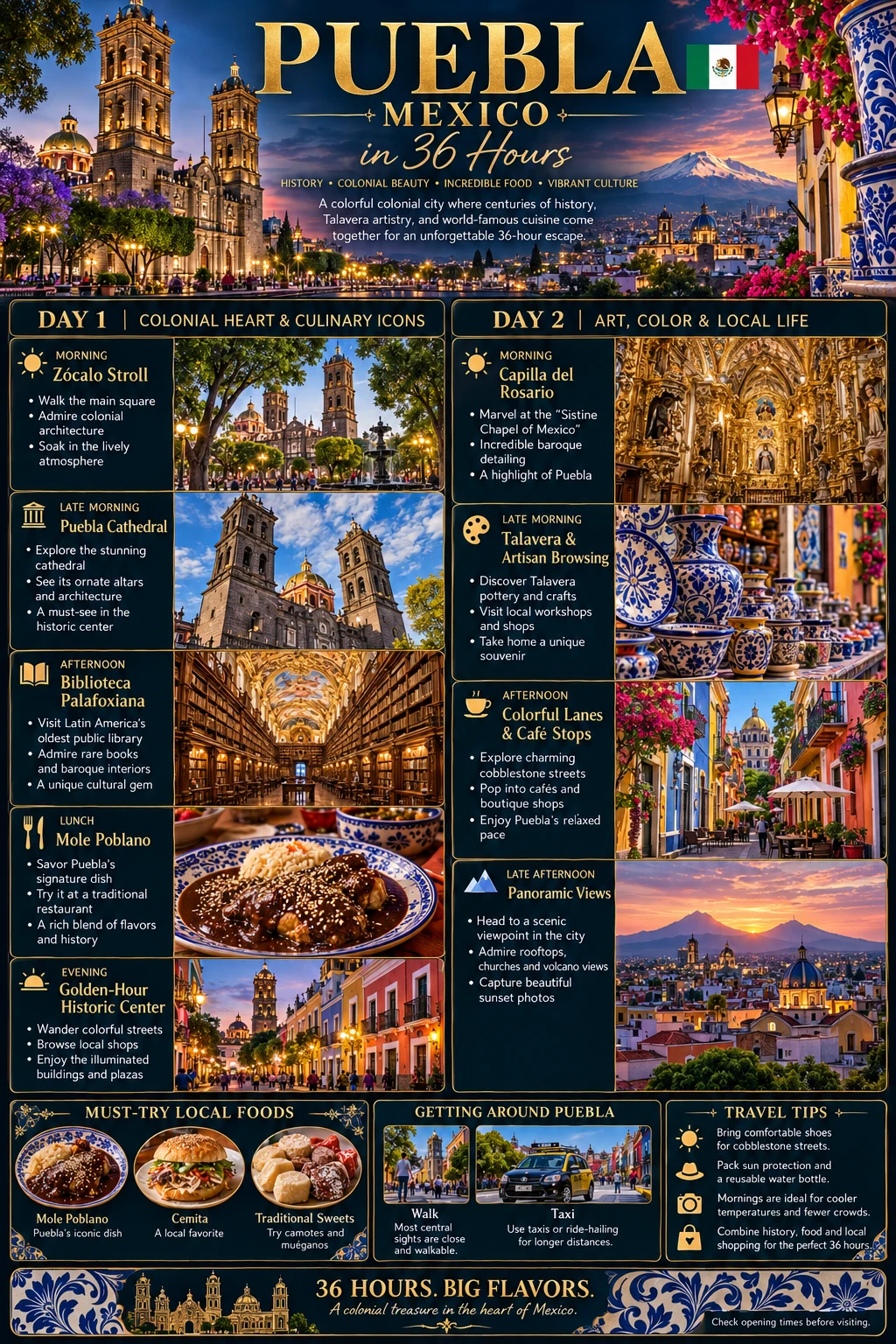
36 Hours in Puebla: Painted Tiles, Great Food and Rooms Full of History
Verified: 16 October 2026. Visit windows are planning suggestions; religious services and temporary exhibitions can change access.
Puebla is a city to examine closely. Tilework turns a façade into a pattern book; a library becomes a statement about learning; lunch can explain the place as persuasively as a museum. A short stay works best inside the historic centre, with two substantial interiors and time to sit down between them. Cholula and the surrounding countryside deserve another day rather than being squeezed into this one.
Arrival, safety and pacing
Choose a central hotel with a staffed reception and ask it to arrange your arrival transfer or recommend an authorised taxi service. Intercity terminals are not part of the walkable sightseeing core. Allow around 25–45 minutes by vehicle from CAPU to a central hotel, potentially longer in traffic; confirm with your accommodation. Most stops below are 5–20 minutes apart on foot.
Check the current official Mexico travel advice, use reputable transport, keep valuables discreet and avoid isolated routes after dark. Ask locally about demonstrations, road disruption and volcanic ash conditions before travelling; do not add an improvised volcano outing. At Puebla’s elevation, begin gently, drink water and take breaks rather than turning the first afternoon into a march.
Museum closure days shape the order: Biblioteca Palafoxiana normally closes Monday, Museo Amparo Tuesday. On a Monday–Tuesday stay, visit Amparo on Monday and Palafoxiana on Tuesday. This simple swap prevents the two principal interiors from becoming locked-door photographs.
Day 1: The centre in detail
09:00–10:00 | Breakfast and the Zócalo
Start with breakfast near the Zócalo and watch the centre wake up. Look across to the cathedral and take time with the surrounding façades. Enter the cathedral only when sightseeing is permitted, dressing respectfully and keeping clear of worshippers. Services, especially on Sundays, are a reason to return later rather than to photograph over someone’s shoulder.
The square is a useful orientation point, but do not assume all surrounding streets are pedestrian-only. Families should cross together at designated crossings and take extra care where pavement edges narrow.
10:00–11:30 | Biblioteca Palafoxiana
Walk a few minutes to Biblioteca Palafoxiana. Its long book-lined room is best appreciated slowly: look at the arrangement of shelving and reading equipment rather than treating it as a backdrop for a quick photograph. This is a historic collection, not a lending library where visitors handle the books.
The state museum operator publishes Tuesday–Thursday 10:00–17:00 and Friday–Sunday 10:00–18:00. Verify holiday exceptions and the current admission arrangement. The room is upstairs in the Casa de la Cultura; confirm step-free access directly if needed rather than assuming a modern lift serves every historic space. Young children may enjoy finding details in the woodwork, but keep the visit short enough to preserve their interest.
11:30–14:00 | Rosary Chapel, then a proper lunch
Walk roughly 10–15 minutes to Santo Domingo and the Capilla del Rosario. The exuberant decoration deserves more than a glance. Choose one element to follow through the interior and let your eyes adjust before taking photographs, if permitted. Confirm visitor access that day; parish use takes precedence and generic tourism-office opening hours are not the chapel’s timetable.
Make lunch the day’s main meal. Mole poblano is an obvious starting point, but ask about ingredients and heat: recipes can contain nuts, seeds and other allergens, and a dark sauce is not simply “chocolate sauce.” A cemita or a plate of chalupas offers a different scale of meal. The city’s gastronomy guide is a useful starting point for local kitchens rather than choosing solely by a view of the square.
14:00–17:00 | Artists, crafts and a café
Continue east to the Barrio del Artista and El Parián, allowing 15–20 minutes from the Santo Domingo area with stops. Browse slowly and ask before photographing artists or their work. When buying ceramics, distinguish a souvenir you like from a claim of certified Talavera production; ask the seller about origin and documentation if authenticity matters to you.
The municipality lists El Parián daily, while artists’ studio hours vary and are shorter on weekends. A closed studio does not make the surrounding public streets inaccessible. Choose one or two shops, then stop for coffee or something sweet instead of turning shopping into a checklist. Municipal craft-market information.
18:00–20:00 | Dinner close to home
Have a lighter meal near your hotel and arrange transport if returning through unfamiliar streets after dark. In summer, ask whether chiles en nogada are in season: the fruit-and-nut ingredients make this a seasonal dish, not an all-year promise. It traditionally contains a meat filling and walnut sauce, so it is neither automatically vegetarian nor suitable for nut allergies. Federal food information.
Day 2: A major museum and smaller cultural corners
10:00–12:30 | Museo Amparo
After breakfast, spend a focused morning at Museo Amparo. Its pre-Hispanic collection and later art allow you to connect Puebla with a much longer Mexican history. Pick a handful of objects to examine carefully; children often engage better with a question about how an object was made or used than with a long sequence of labels.
The museum opens Wednesday–Monday 10:00–18:00 and closes Tuesday. Its library has a different schedule, so do not confuse the library’s Sunday closure with the museum’s. Check special holiday hours. The café and terrace can provide a break if open, without requiring another journey.
Amparo lists lifts or ramps on every level, adapted toilets and loan wheelchairs. Strollers are permitted generally but must be left at the entrance to the Viceregal and nineteenth-century rooms. Staff can advise on the best route. No-flash rules protect the works, and bags are subject to the visitor regulations. Operator access and family guidance.
12:30–14:00 | Lunch and Los Sapos
Walk towards Los Sapos for lunch and a look at the colourful streets. Its antiques market is a weekend event; a weekday visit should not promise the same stalls. Allow time to look at shops without feeling obliged to buy. Carry only what you can comfortably manage on uneven pavements and keep children away from fragile objects.
14:00–16:30 | Choose one smaller stop
For a final cultural visit, try Capilla del Arte UDLAP, a short walk back towards the centre. The university venue publishes free admission Tuesday–Sunday, 11:00–19:00; Monday is closed, and exhibitions can change between installations. On Monday, substitute a café and a slower architectural walk around the Zócalo. Leave a sensible buffer to collect luggage and reach your terminal.
Three quieter places worth considering
- Capilla del Arte UDLAP: The final-day option offers a smaller-scale encounter with current art; check the programme rather than expecting a particular exhibition.
- Patio de los Azulejos: A rewarding tilework detour south of the central squares, but confirm current admission before walking over. National cultural inventory.
- Museo Amparo’s terrace: Already on your route, it gives the skyline a quieter frame without adding another taxi ride. Weather or events may affect access.
Bring a rain layer as well as sun protection. Build indoor visits around wet afternoons when useful, but keep museum closure days ahead of the weather in your planning. Puebla is most satisfying when there is enough space between looking, learning and eating to notice how they connect.
Sources & travel planning
Research checked 2026-10-16. This date describes the guide’s research, not a guarantee of current conditions. Opening hours, prices, access, transport and travel advice can change. Recheck the official sources before booking and departure. Walking and journey times are planning estimates.
- gov.uk ↗
- museospuebla.puebla.gob.mx ↗
- museoamparo.com ↗
- visita.pueblacapital.gob.mx ↗
- visita.pueblacapital.gob.mx ↗
- gob.mx ↗
- museoamparo.com ↗
- museoamparo.com ↗
- udlap.mx ↗
- sic.gob.mx ↗
Found a change? Contact Only36Hours about a correction.