36 Hours in Ronda: Above the Gorge and Through the Old Town
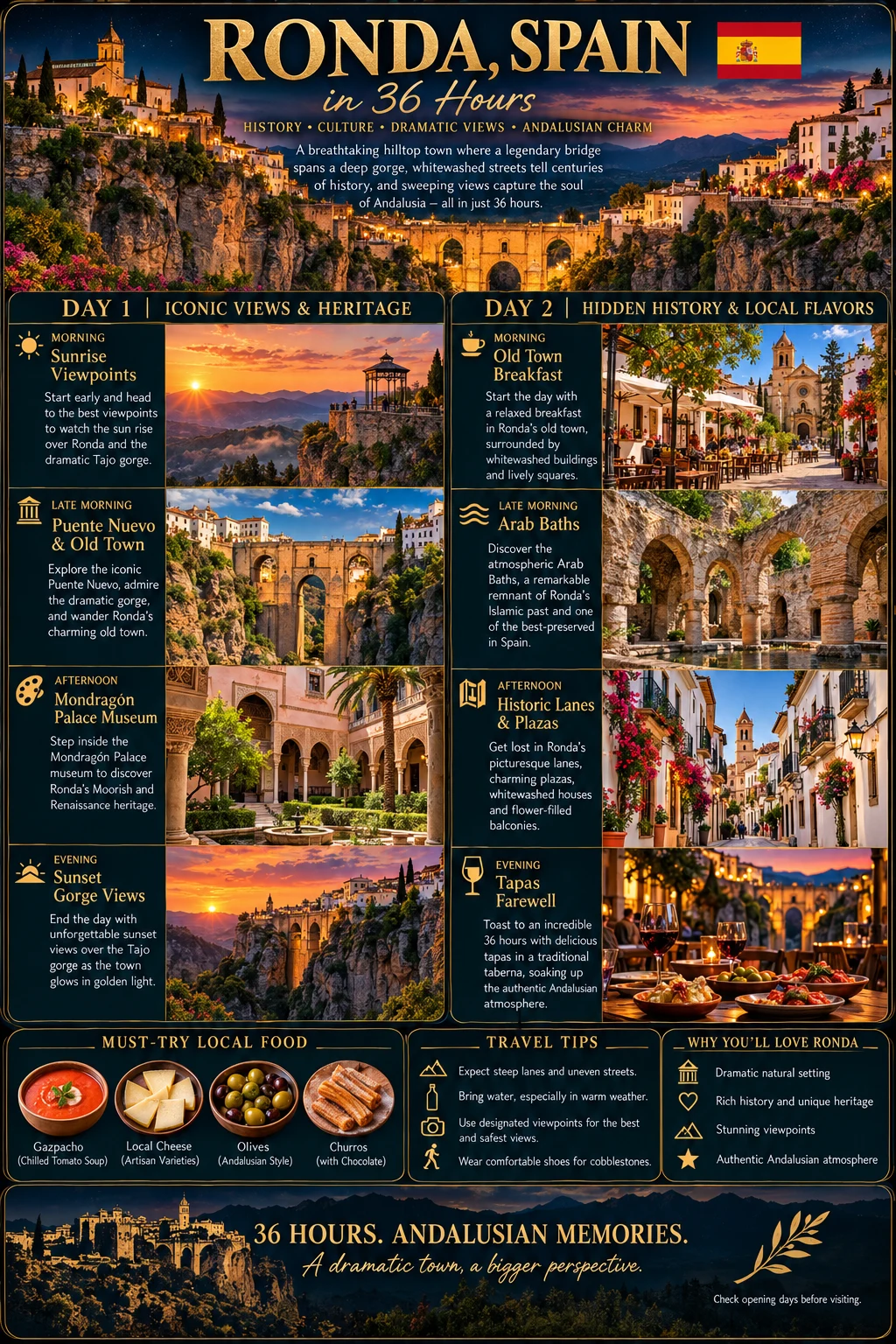
Verified: 16 October 2026. Ronda’s bridge is spectacular, but the town is most rewarding when you stop returning to it every twenty minutes. Beyond the gorge are shaded squares, a palace museum and the remains of a sophisticated medieval bath complex. An overnight stay lets you see these places at a sensible pace, then enjoy the streets after many day visitors have left. This route keeps the steepest descents optional and does not combine Ronda with a rushed circuit of white villages.
Arrive with time to spare
Stay near the centre if walking is your priority, and ask about stairs, parking and the final approach to your accommodation. A room described as being in the old town may involve uneven lanes and a substantial walk from the nearest vehicle access. From the railway station, allow roughly 20–25 minutes on foot to Puente Nuevo; the bus station is also within walking distance of the centre. A taxi is sensible with luggage or mobility needs.
Check actual rail services through Renfe and use the municipal transport-information page for local guidance. Do not assume there is a frequent direct train from every Andalusian city. If driving, leave the car in an appropriate public car park rather than following navigation into narrow historic lanes.
Day 1: Bridge, palace and a slower afternoon
09:30–11:00 | Puente Nuevo from the top
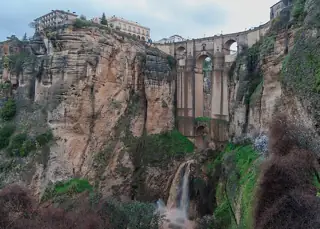
After breakfast, walk to Puente Nuevo and take in the relationship between the bridge, cliff faces and buildings. Stay behind barriers and keep children beside you; the height is real, and no photograph requires leaning over a parapet. Cross carefully and continue to a nearby public viewpoint instead of blocking the pavement for a prolonged photo session.
The bridge’s small interpretation centre is a separate visit. The municipal listing classifies it as not accessible, so do not assume the public bridge and the exhibition inside it share the same access conditions. This itinerary works without entering.
11:00–12:30 | Mondragón Palace
Continue into the older quarter, allowing 10–15 minutes to reach Palacio de Mondragón. Its courtyards, gardens and municipal museum provide a more intimate experience than the gorge viewpoints. Give it around an hour, concentrating on the parts that interest you rather than trying to read every panel.
The city announced a museum refurbishment in February 2026. Other work has also been planned in the palace complex, so check the current rooms and visitor route. Municipal monuments may have split hours on Mondays and Saturdays and shorter Sunday opening; this late-morning visit avoids the usual midday gap. Confirm your date using the latest tourism-office schedule, especially around holidays. Ask specifically about accessible entrances and which levels can be reached.
12:30–15:30 | Plaza Duquesa de Parcent and lunch
Walk to Plaza Duquesa de Parcent and sit for a while before lunch. The surrounding civic and religious buildings make an appealing setting without requiring another ticket. If Santa María la Mayor is open to visitors, you can make a brief respectful visit, but do not assume church access during worship.
For lunch, look for seasonal vegetables, a local cheese plate or a slow-cooked meat dish. Ronda’s regional cooking is substantial; sharing a few tapas often leaves more energy for the afternoon than a succession of large courses. Ask about pork, stock and dairy if you have dietary restrictions. A glass of local wine is optional, and drivers should choose a non-alcoholic drink. The tourism office’s food section introduces the area’s cuisine.
Return to your accommodation or a shaded café during the hottest part of the day. Summer heat makes this break part of the plan, not wasted time.
15:30–18:00 | Alameda del Tajo, or the bullring museum
Walk back towards Alameda del Tajo for trees and broad views. The upper promenades are a good alternative to a strenuous descent. Keep the walk short in strong wind and respect temporary barriers.
If you are interested in equestrian and bullfighting history, replace part of the park time with the Real Maestranza’s bullring and museum. The operator lists daily opening from 10:00 with seasonal closing times, but also carries a notice about consolidation works. Confirm what is accessible before buying. This is a museum visit, not a promise of a performance. Bullfighting imagery and its treatment of animals may be uncomfortable for some children or adults; the park route is an equally worthwhile choice.
19:00 onwards | Dinner after the day-trip rush
Choose dinner in the centre or old quarter and finish with a brief walk near the bridge. Winter evenings can feel cold despite sunny afternoons, so bring a layer. There is no reason to descend an unfamiliar gorge path after dark for an alternative view.
Day 2: The baths and the lower town
09:30–12:00 | Down to the Arab Baths
After breakfast, walk towards the lower bridges and the Arab Baths, allowing 20–30 minutes from the central bridge area and longer if you stop often. The descent is uneven and the return climbs back up. Travellers who find slopes difficult should arrange a taxi drop-off near the baths and confirm the entrance route beforehand, or stay with the upper-town alternative below.
The Andalusian heritage authority describes cold, warm and hot rooms, water infrastructure and an explanatory audiovisual. Allow 45–60 minutes to understand how the complex worked. These are archaeological baths, not a functioning spa.
The current schedule gives Monday and Saturday 10:00–14:00 and 15:00–18:00, and Sunday/holiday 10:00–15:00; Tuesday–Friday hours vary by season. Fixed holiday closures include 1 and 6 January, 1 May, and 24, 25 and 31 December. Verify special dates rather than relying on older brochures with different Christmas arrangements. Small interior capacity can create a wait.
12:00–14:30 | A gradual return and lunch
Return uphill slowly, choosing pauses around the older bridges and lanes. Jardines de Cuenca provide terraced views when open, but their steps mean they are not a step-free shortcut. In rain, polished surfaces and steps can be slippery. Skip the gardens if the climb is already enough, and stop for lunch before another walk.
14:30–18:30 | Upper-town choices and departure
Use the afternoon for a favourite square, shopping or a café. For a less strenuous Day 2, replace the baths descent with the Alameda, old-town streets and one confirmed open interior. The Casa del Rey Moro water mine and gorge walks are separate physical outings with stairs, access conditions and possible weather closures; they are not casual additions to this route. The city’s Casa del Rey Moro page also distinguishes the garden and mine from the house, which it describes as under restoration.
Collect luggage with a generous margin before your train or bus. A connection out of Ronda is more important than one final viewpoint.
Three quieter places
- Plaza Duquesa de Parcent: A garden square for a slower old-town pause.
- Jardines de Cuenca: Terraced gorge views, subject to gates, steps and suitable footing.
- The interior paths of Alameda del Tajo: A greener break away from the busiest railing viewpoints.
The municipal botanical walks connect these spaces and explain their planting. Choose sections rather than treating the full routes as mandatory. Spring and autumn often suit walking best; in summer keep climbs early, and in winter favour daylight and dry paths.
Sources & travel planning
Research checked 2026-10-16. This date describes the guide’s research, not a guarantee of current conditions. Opening hours, prices, access, transport and travel advice can change. Recheck the official sources before booking and departure. Walking and journey times are planning estimates.
- renfe.com ↗
- info.turismoderonda.es ↗
- info.turismoderonda.es ↗
- info.turismoderonda.es ↗
- info.turismoderonda.es ↗
- info.turismoderonda.es ↗
- rmcr.org ↗
- juntadeandalucia.es ↗
- info.turismoderonda.es ↗
- info.turismoderonda.es ↗
Found a change? Contact Only36Hours about a correction.