36 Hours in Safranbolu: Timber Houses, Workshop Lanes and Saffron Sweets
Verified: 16 October 2026. Primary tourism and museum sources checked on this date. Walking and driving times are estimates; confirm operating days and seasonal arrangements before visiting.
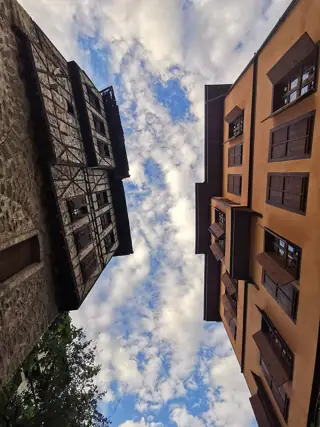
Safranbolu is best understood at walking pace. Projecting upper rooms lean above cobbled streets, workshops cluster around the old market, and rooflines follow the folds of the valley. Its preserved houses are more than a scenic backdrop: their rooms and seasonal neighbourhoods explain how a prosperous Ottoman town worked. Spend the night in or near the old Çarşı district and leave room for tea between visits.
Plan the arrival before the sightseeing
Reach Safranbolu by road, allowing a separate travel block rather than treating the journey from İstanbul as part of these 36 hours. Intercity coaches may use terminals away from the historic centre; confirm the final stop and arrange a taxi or local transfer. The tourism bureau's transport page is useful for orientation, but contains legacy airport references and undated local departure times, so check those directly with the carrier. Official transport overview
Allow roughly 10–15 minutes for a local taxi transfer from the modern town area, depending on your accommodation. Within the old centre, many stops are 5–15 minutes apart, but steep gradients and cobbles make distances deceptive. Ask a mansion hotel about luggage access, steps, bathroom layout and heating. A traditional house may have considerable charm and no lift.
Day 1: How the houses and markets worked
9:30–11:00 | Breakfast and Kaymakamlar House
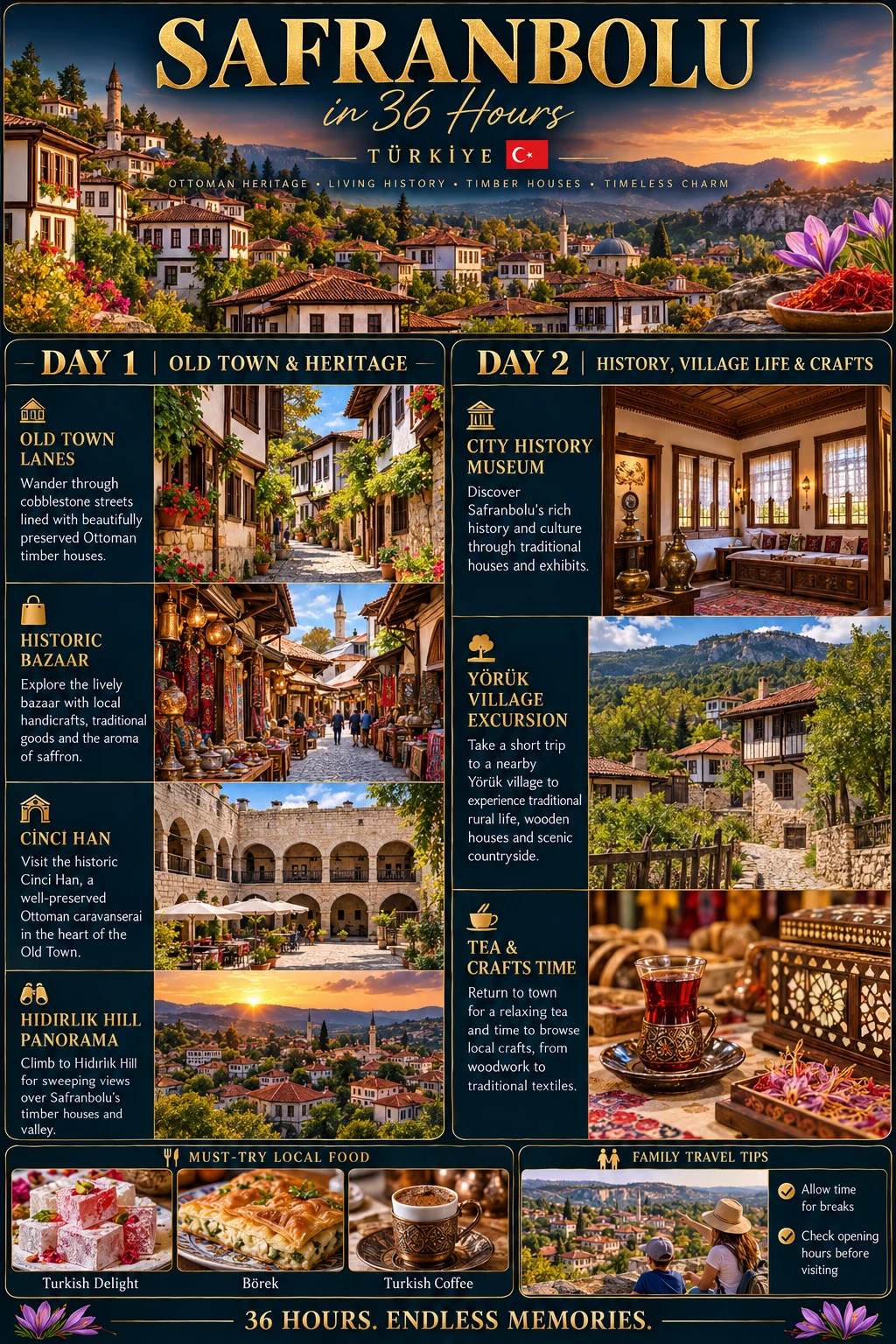
Begin with breakfast at your accommodation, then visit Kaymakamlar Museum House. Its rooms show how household life fitted around a central hall, with built-in storage, seating and a revolving serving cupboard. Look at the practical arrangements as closely as the carved ceilings: the building becomes more interesting when you imagine how the same room changed use throughout the day.
Allow 45–60 minutes. The local tourism bureau lists 09:00–17:30 in winter and 09:00–19:00 in summer, without precise seasonal changeover dates; confirm your day's admission locally. The three-storey layout involves stairs, so it isn't a dependable step-free interior. Children can look for the serving cupboard and storage spaces without touching displays. Kaymakamlar House
11:15–13:30 | The arasta and a slow lunch
Head down into the Yemeniciler Arastası, historically associated with shoemakers, and the neighbouring market streets. Browse before buying: ask which items are made locally and request permission before photographing a craftsperson at work. Around the Demirciler area, stay clear of hot metal, sharp tools and working doorways. These are places of trade, not demonstrations guaranteed to run for visitors. Official bazaar guide
For lunch, look for peruhi, filled dough parcels served with butter, or a local bükme pastry. Fillings and recipes vary, so ask rather than assuming a dish is vegetarian. The regional tourism guide describes peruhi with strained yoghurt and mint; dairy and wheat are important considerations for allergies. Finish with tea rather than immediately adding another substantial stop. Regional food guide
14:00–15:30 | Mosque courtyard and Cinci Han
Visit the courtyard of Köprülü Mehmet Paşa Mosque when access permits and look for its sundial. If entering the mosque, avoid prayer times, remove shoes where required and dress modestly; women should carry a head covering. Worshippers take priority, particularly around Friday midday prayers.
Continue to Cinci Han, the seventeenth-century caravanserai. Check which areas are open to day visitors and whether there is an admission charge before entering. A courtyard pause helps connect the market outside with the town's history of travellers and trade. Do not assume the neighbouring historic hamam is included in a han visit. National tourism overview
16:00–18:00 | Hıdırlık, then a real rest
Walk uphill toward Hıdırlık for an overview of the old town, allowing 15–25 minutes at a gentle pace from the bazaar. Take water and use a taxi to reduce the climb if necessary, while checking the remaining access on foot. Visit in daylight and skip the ascent if rain or ice makes the stone uncomfortable. The point is to understand the roofscape, not to pursue a precarious photograph. Hıdırlık visitor context
Return to your accommodation before dinner. With younger children, this break is more useful than adding a cave or canyon to an already full day.
19:00 | Dinner and saffron flavours
Choose a restaurant with a small regional menu and ask what is freshly prepared. Try saffron-flavoured lokum or zerde, a rice dessert, if available. Not every yellow sweet contains the same amount of saffron, and nuts, sesame and dairy can occur in other local confections. Buy a small quantity to taste before choosing a gift box. Saffron flowers normally appear in autumn, but field visits require a current arrangement with the grower; flowering is not a year-round attraction. Saffron information
Day 2: Civic history and the quieter edges
10:00–12:00 | Safranbolu Museum and the clock-tower hill
Walk or take a short taxi toward the old government building on the Kale hill. The Safranbolu Museum, formerly presented as the City History Museum, uses photographs, objects and recreated trades to broaden yesterday's domestic story. Allow 60–90 minutes, then enjoy the surrounding public area and the clock tower's exterior without assuming the tower itself can be climbed.
The current Ministry of Culture museum listing gives 08:30–17:00 opening, last ticket-office service 16:30, and Monday closure. It also currently lists free admission. Older local listings give different hours, so prioritize the operator and recheck before departure. If Day 2 is Monday, visit this museum on Day 1 at 14:00 instead of the han block; keep the mosque courtyard and han for Monday, subject to their access. Current museum listing
12:30–16:30 | Lunch and one optional change of scene
After lunch, choose between another slow old-town circuit and a short trip to Yörük village. The latter lies roughly 11 kilometres away; budget about 20–30 minutes driving each way and 1½–2 hours on foot with tea. Arrange the return journey first, and confirm any house-museum entry you specifically want. This remains a lived-in village: stay on public lanes and don't enter gardens or photograph residents without consent. Tourism bureau's Yörük guide
Choose the town option in bad weather, with limited mobility or before an early coach. Don't combine Yörük with the cave, glass terrace and canyon in the same afternoon; those require their own transport, access checks and time.
Three quieter worthwhile places
- Demirciler lanes: pause away from the busiest souvenir stretch, keeping workshop entrances clear.
- Bağlar's residential streets: the traditional summer-house district offers a different pattern of homes and gardens. Use a taxi for a short separate stroll; gardens are private unless explicitly opened.
- Yörük's side lanes: worthwhile as the afternoon substitution above, not an extra stop to squeeze in.
Spring and autumn usually make walking easier than hot midsummer or icy winter. Public holidays and weekends can still bring heavy crowds. Reserve accommodation early, carry footwear with grip and keep the final hour free for collecting bags and reaching your confirmed departure point.
Sources & travel planning
Research checked 2026-10-16. This date describes the guide’s research, not a guarantee of current conditions. Opening hours, prices, access, transport and travel advice can change. Recheck the official sources before booking and departure. Walking and journey times are planning estimates.
- safranboluturizmdanismaburosu.ktb.gov.tr ↗
- safranboluturizmdanismaburosu.ktb.gov.tr ↗
- safranboluturizmdanismaburosu.ktb.gov.tr ↗
- goturkiye.com ↗
- goturkiye.com ↗
- safranboluturizmdanismaburosu.ktb.gov.tr ↗
- safranboluturizmdanismaburosu.ktb.gov.tr ↗
- muze.gov.tr ↗
- safranboluturizmdanismaburosu.ktb.gov.tr ↗
Found a change? Contact Only36Hours about a correction.