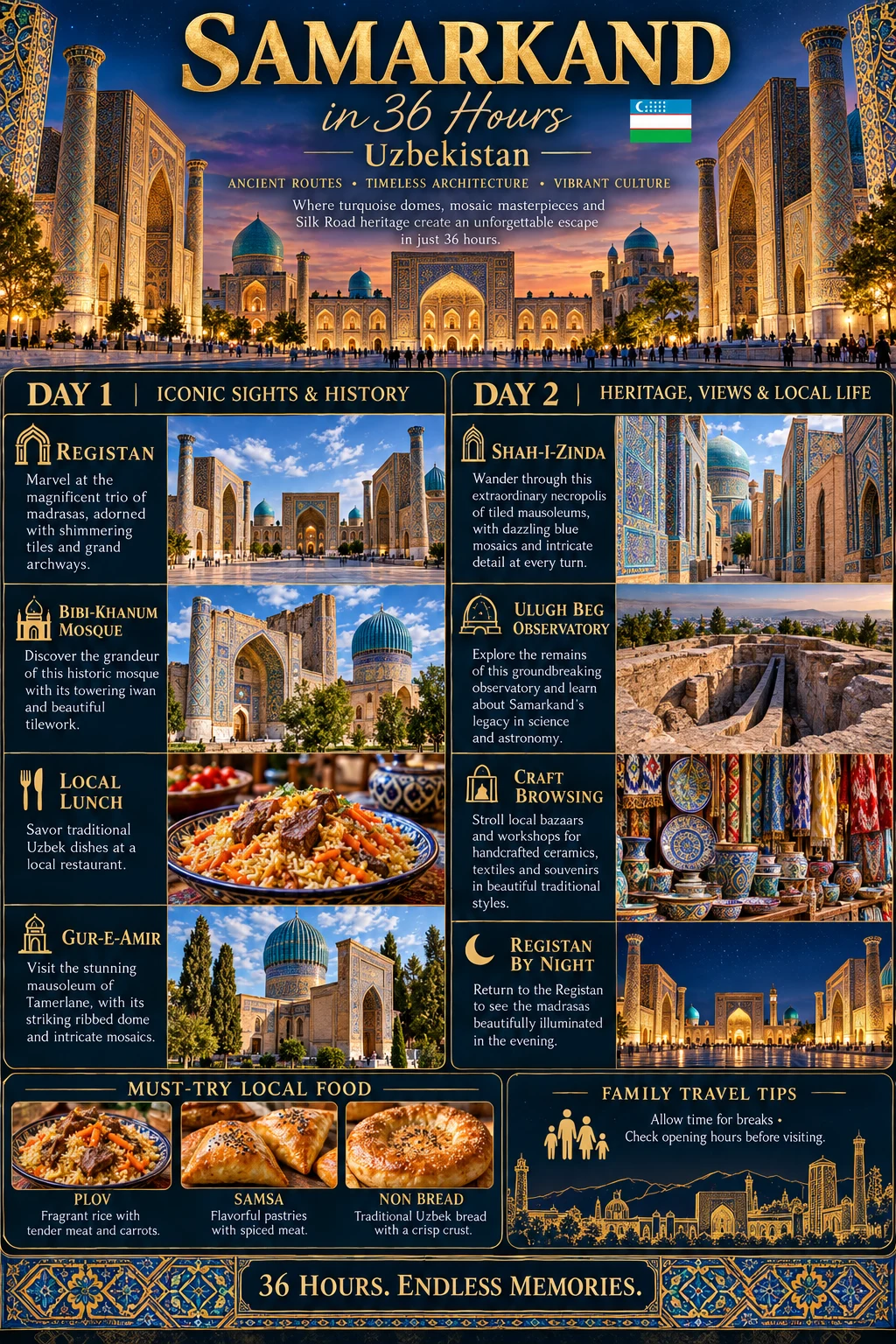
36 Hours in Samarkand: Blue-Tiled Courtyards and Stories Beyond the Registan
Verified: 16 October 2026. National tourism, museum-reserve and railway sources checked. Suggested visiting times are itinerary estimates, not confirmed opening hours for every monument.
Samarkand's famous buildings are larger and farther apart than photographs suggest. A good short visit needs shade, transport and time to look closely, not a race through turquoise domes. This route gives the Registan a full morning, pairs the bazaar with nearby monuments, and leaves room for an older layer of the city at Afrasiab. A knowledgeable local guide is particularly valuable for distinguishing documented history, restoration and legend.
Before you arrive
Book intercity rail through Uzbekistan Railways' official ticket system and check the actual station, departure and ticket conditions. Fast Afrosiyob services are useful for Tashkent and Bukhara, but do not assume the same duration or availability for every train. Allow roughly 20–35 minutes by arranged taxi between Samarkand station and the historic sightseeing area, plus a station arrival buffer. Official railway ticket portal
Stay near the old-city monuments if sightseeing is your priority. Walking works between some stops, but taxis save energy across the wider city. Agree the fare or use a properly booked ride; a hotel-arranged car is useful for Day 2's northern sights. In summer, move the most exposed walking earlier and extend the midday rest. Cold weather can make winter courtyards uncomfortable too.
Hours and tickets: Reliable current public timetables were not available from the checked primary pages for all the main monuments. Have your accommodation or guide confirm your dates, last admission, separate tickets and any event closures. The route below uses conventional daytime visiting blocks; it does not promise sunrise admission, minaret access or a nightly light show.
Day 1: The Registan and the Timurid city
09:00–11:30 | Give the Registan time
Start at the Registan with a guide, then leave time to explore independently. Compare the three madrasas rather than treating the square as a single façade: their courtyards, decorative choices and different histories make more sense at close range. Sit briefly and let your eyes adjust between bright daylight and interiors. Ask which areas are open before buying extras; unofficial offers to climb restricted structures should not be part of your plan. National tourism's Registan overview
With children, turn the visit into a search for colours, patterns and repeated shapes. One well-explained courtyard can be more memorable than a long sequence of dates. Bring water, but observe rules about eating and drinking inside historic rooms.
11:30–14:30 | Lunch and shelter from the heat
Choose a nearby restaurant for plov, the rice dish central to local cooking, or manti if available. Ask when the kitchen serves its main lunch dishes rather than assuming everything remains available all afternoon. Samarkand bread, dried fruit and halva make useful additions in small quantities. Vegetarian diners should specifically ask about meat stock and animal fat, even when a plate appears to contain only rice and vegetables. Official Samarkand food and market overview
Return to your hotel or find a proper shaded café. This long pause is intentional: Samarkand's broad spaces can be exhausting in hot weather, and the afternoon has another important interior.
14:30–16:30 | Gur-e Amir and nearby Rukhabad
Walk roughly 20–25 minutes from the Registan area to Gur-e Amir, or take a short taxi ride. The mausoleum is associated with Amir Temur and his dynasty; a guide can explain the memorial stones, burial arrangements and why the building matters without presenting every popular legend as fact. Allow 45–60 minutes, keeping voices low and following photography instructions. National tourism's Gur-e Amir account
Then pause around the nearby Rukhabad complex, a less overwhelming counterpoint to the larger monuments. Treat an interior as conditional on current access, not guaranteed. The national tourism route pairs these two sites, so this is a natural small addition rather than a cross-city diversion. Official route including Rukhabad
Evening | Dinner and a second look outside
Have an unhurried dinner, then return to the public viewing area around the Registan if convenient. The square's evening appearance is worth seeing, but illumination, performances and paid access can vary. Confirm a show before organising dinner around it; the plan works without one. Arrange a ride back if your hotel is beyond a comfortable, familiar walk.
Day 2: Pilgrimage, a working bazaar and older Samarkand
09:00–10:30 | Shah-i-Zinda
Take a taxi to Shah-i-Zinda and allow 60–90 minutes for the tiled mausoleums. This remains an important pilgrimage place, not simply a photographic set. Wear modest clothing covering shoulders and knees, carry a scarf if requested, and let worshippers pass without obstruction. Ask before photographing people at prayer. Official Shah-i-Zinda description
Steps and narrow passages complicate stroller and wheelchair use. Confirm access in advance and plan a shorter visit if necessary rather than assuming assistance can overcome every barrier. Children should stay close and avoid touching tilework or climbing onto historic surfaces.
10:45–12:30 | Bibi-Khanym and Siyob Bazaar
Allow about 15–25 minutes to walk towards Bibi-Khanym and the neighbouring Siyob Bazaar, or use a short ride in heat. Choose a brief mosque-complex visit if open, then make the bazaar the main event. Look for bread, nuts and dried fruit, ask prices before purchasing, and photograph stalls only with permission. Keep purchases small if your next stop is a museum. The national tourism office identifies the bazaar's location beside Bibi-Khanym and its food specialities. Samarkand visitor overview
13:30–15:30 | Afrasiab Museum, or a craft alternative
After lunch, take a short taxi ride to the Afrasiab Museum. Its account of the earlier city adds context missing from an itinerary devoted entirely to Timurid buildings. Allow 60–90 minutes and confirm that the galleries you most want are accessible. The museum-reserve publishes 09:00–18:00 visiting; its weekend note refers to research staff, not a blanket weekend visitor closure. Recheck holiday or temporary changes. Museum-reserve visitor page
Families preferring a craft demonstration can replace this block with Konigil's Meros paper mill. Arrange transport, the demonstration and return pickup in advance; allow about 2½–3 hours including transfers, rather than adding it after the museum. Mulberry-paper making and the waterwheel give the outing a different rhythm. National tourism's Konigil guide
Three quieter worthwhile places
- Rukhabad's surroundings: a short pause close to Gur-e Amir, with interior access checked locally.
- Afrasiab Museum: an interpretive stop beyond the busiest central monument circuit.
- Konigil's paper-making site: a worthwhile substitute for another museum, with demonstrations booked and no assumption of an empty workshop or included lunch.
Sources & travel planning
Research checked 2026-10-16. This date describes the guide’s research, not a guarantee of current conditions. Opening hours, prices, access, transport and travel advice can change. Recheck the official sources before booking and departure. Walking and journey times are planning estimates.
- eticket.railway.uz ↗
- uzbekistan.travel ↗
- uzbekistan.travel ↗
- uzbekistan.travel ↗
- uzbekistan.travel ↗
- uzbekistan.travel ↗
- samarkandmuseum.uz ↗
- uzbekistan.travel ↗
Found a change? Contact Only36Hours about a correction.