36 Hours in Sighișoara: A Citadel Beyond the Dracula Souvenirs
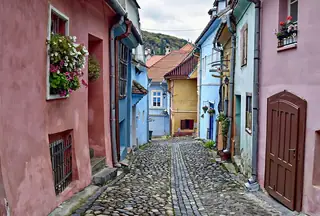
Sighișoara is small enough to cross quickly and layered enough to repay an overnight stay. The best approach is to separate its hilltop citadel from the lower town, walk both without rushing, and leave room for the ordinary life between the façades. UNESCO recognizes the historic centre for its testimony to Transylvanian Saxon culture. That is a richer starting point than treating every building as a Dracula backdrop. UNESCO: Historic Centre of Sighișoara
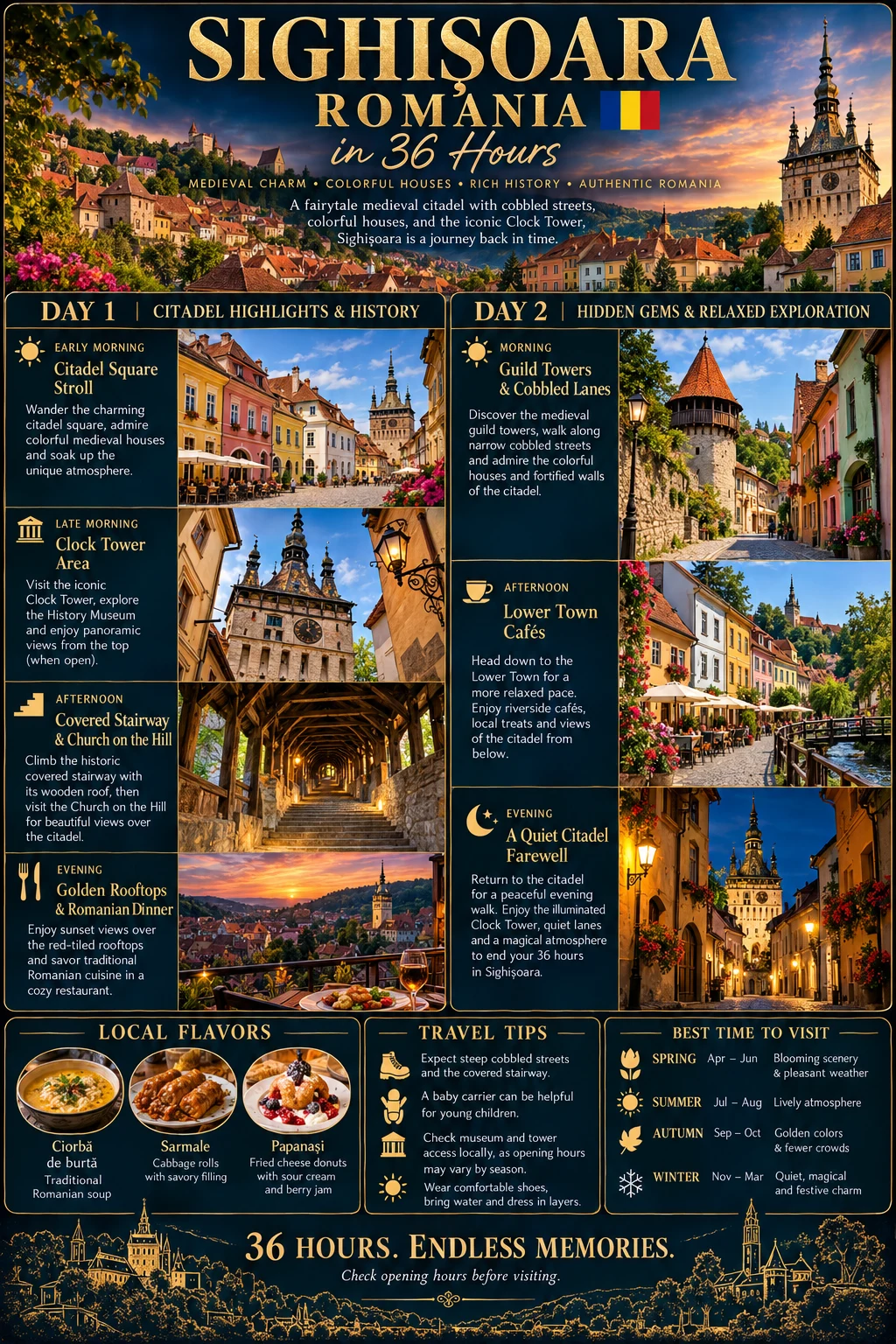
This route runs from breakfast on day one to dinner on day two. It deliberately stays in town: adding Biertan or Viscri requires separate transport, opening checks and several hours. Times below are generous planning estimates; weather, cobbles and mobility needs can change them substantially.
Arrival and a sensible base
Choose accommodation in the citadel for atmosphere or in the lower town for easier luggage handling. Ask about steps, vehicle access and the exact drop-off point before booking. From the railway station, budget roughly 20–30 minutes to the lower centre on foot and another uphill stretch for a citadel hotel. A taxi is worthwhile with heavy bags. Verify your train against the actual travel date through CFR Călători, rather than assuming rail journey times from older itineraries. Reserve a seat where the selected service requires one and leave slack before an onward international connection.
Day one
9am–11am: Enter slowly
Have breakfast in the lower centre around Piața Hermann Oberth, then climb into the citadel. Allow 20–30 minutes for the approach with stops. Begin at Piața Cetății and look at the houses as buildings people use, not just a coordinated palette. A coffee break is a perfectly good way to wait for an attraction to open.
Walk toward the Clock Tower and observe the transition between the defended upper settlement and the streets below. The municipality distinguishes this community-owned tower from those maintained by particular guilds, a useful clue to how the city once organized itself. Sighișoara municipality: citadel towers
11am–1pm: History above the rooftops
Allow 60–90 minutes for the History Museum in the Clock Tower if current access permits. This is the principal paid visit in the plan, rather than the first of several rushed ticketed stops. The museum’s official municipal page lists its location, ticket categories and contact details; check its opening day directly when planning. This guide does not assume a daily opening schedule that the reviewed page did not establish. Municipal History Museum information
The climb is unsuitable for some visitors with limited mobility. With small children, assess the stairs before committing and skip the separately ticketed torture display if its subject is inappropriate. A combined ticket is not a reason to see everything.
1pm–4pm: Lunch and the covered climb
Take an hour for lunch. Look for ciorbă, a sour soup, or sarmale with mămăligă; recipes vary, and meat stock can appear in seemingly vegetable-based dishes. Ask about ingredients rather than relying on an English menu heading.
Afterward, follow Strada Școlii to the covered Scholars’ Stairway and climb toward the Church on the Hill. Break on the ascent instead of turning it into a race. Allow 90 minutes for the stairs, church if open and a short respectful walk near the historic cemetery. The county tourism organization includes these places on its historical walk. Church access can change for worship, events or seasonal staffing; do not treat a sightseeing itinerary as permission to enter.
4pm–9pm: Be here when it softens
Return to your accommodation for a rest. Come out again for the light on the citadel walls and an early dinner, reserving a table on busy weekends. For dessert, papanași are an indulgent choice to share if available. End with a short loop around the central squares. Keep voices low around homes and guesthouses; this is not an outdoor film set maintained solely for visitors.
Day two
9am–noon: The guild-tower edges
After breakfast, follow the outer lanes toward the Tailors’ Tower and Shoemakers’ Tower. Make this an exterior walk, not a promise that the towers can be climbed. Allow an hour to an hour and a half for a slow circuit with photographs, doubling back wherever works or a closed passage interrupt the route. Municipal reporting documents conservation initiatives around the fortifications; barriers and local signs take precedence over any map. Municipal conservation announcement
If the museum was closed yesterday, swap it into this morning after confirming access. Otherwise, spend the remaining time around the Monastery Church and nearby streets, with interior entry conditional on posted arrangements.
Noon–4pm: The lower town deserves time
Descend for lunch and an unstructured look at the lower town. Cross toward the Orthodox cathedral for its exterior and the different perspective back toward the citadel; allow about 15–25 minutes each way from the upper core. Enter only when visitors are welcome, dressed respectfully and without photographing worshippers. Choose a bakery or café stop instead if the weather deteriorates. There is no obligation to manufacture a distant excursion to fill a second afternoon.
4pm–9pm: Your last circuit
Return to whichever lane you liked most, buy a modest local souvenir if something genuinely appeals, and have dinner before collecting luggage. For a late train, confirm luggage storage and taxi arrangements earlier in the day. In winter, move this final walk before dusk and use the evening for a longer meal.
Three quieter worthwhile places
- The lanes around the Shoemakers’ Tower: a calmer view of the defensive edge, from public streets.
- The hilltop cemetery vicinity: contemplative rather than entertaining; follow opening notices and keep to paths.
- The lower-town approach to the Orthodox cathedral: a useful change from the citadel’s compact tourist core.
Families and practical checks
Cobblestones and the covered staircase make a carrier more convenient than a large stroller. Use shoes with grip, especially in rain, frost or snow. Summer festival periods can make a normally quiet lane crowded; reserve accommodation and meals accordingly. Check actual museum and church schedules shortly before arrival, carry some Romanian lei for small purchases, and do not plan the trip around fixed admission prices. Treat stories associated with Vlad as stories unless a reliable historical source establishes the specific claim.
Verified: 16 October 2026.
Sources & travel planning
Research checked 2026-10-16. This date describes the guide’s research, not a guarantee of current conditions. Opening hours, prices, access, transport and travel advice can change. Recheck the official sources before booking and departure. Walking and journey times are planning estimates.
- whc.unesco.org ↗
- cfrcalatori.ro ↗
- primariasighisoara.ro ↗
- primariasighisoara.ro ↗
- visitmures.com ↗
- primariasighisoara.ro ↗
Found a change? Contact Only36Hours about a correction.