36 Hours in Sousse: Mosaics, Medina Walls and the Mediterranean
Sousse is more rewarding when the medina and the coast share the itinerary. Behind the resort image is a walled town whose architecture reflects centuries of maritime trade, defence and religious life. Its archaeological museum adds another layer, showing the ancient world through mosaics and objects found across the region. Give those collections a proper morning, then leave the afternoon for the sea rather than another long excursion.
This guide covers Sousse itself, not a circuit through El Jem, Kairouan and Monastir. It begins around 9am and ends after dinner the next day. The archaeological museum is closed on Mondays; reverse the days when necessary. Walking and transfer ranges are estimates for planning, not guaranteed journey times.
Plan the basics first
Choose a central hotel if the medina is your priority. A resort farther north may provide a better beach setting but adds taxi journeys to every city visit. From a central seafront hotel, allow approximately 10–25 minutes to reach the medina on foot, depending on its exact position. Hotels around Port El Kantaoui are a separate base; budget roughly 20–35 minutes by road in ordinary traffic and allow more at busy times. Confirm airport transfers with the operator rather than assuming all flights use the same airport. The tourism board distinguishes Monastir and Enfidha as regional gateways. Discover Tunisia: Sousse and Port El Kantaoui
Review your government’s current Tunisia advice and insurance conditions before booking. The UK’s official safety guidance notes terrorism risks, occasional demonstrations and theft. Follow local instructions, avoid protests and keep valuables discreet. Regional warnings are not interchangeable with a blanket statement about every Tunisian city; read the location-specific advice carefully.
Day one
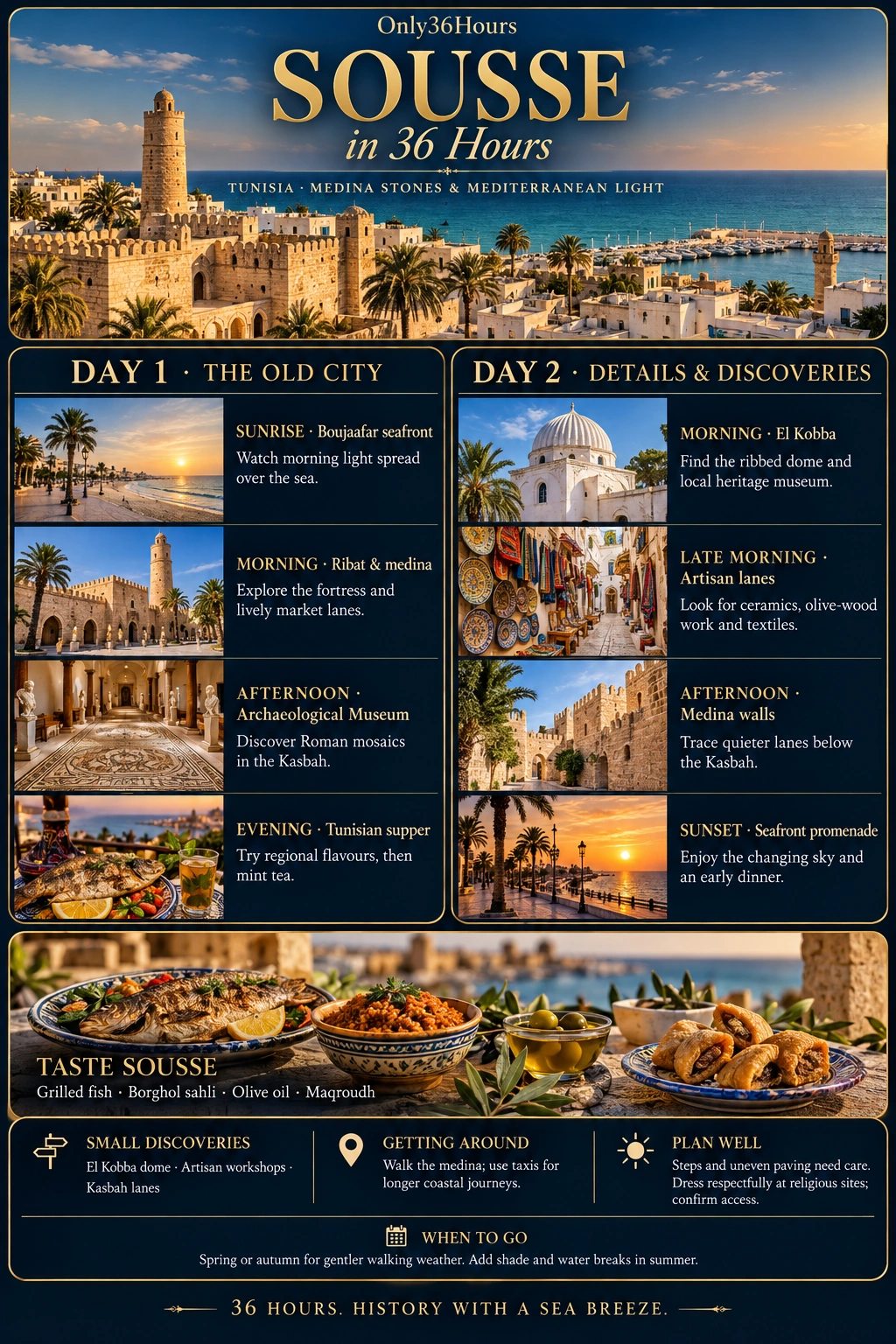
9am–noon: Start with the mosaics
Head to the Archaeological Museum in the kasbah, allowing extra time for the uphill approach. Plan around two hours inside. Rather than rushing through every room, pick out a few mosaics and examine how their imagery represents mythology, belief and everyday activity. The heritage agency explains that the collections include material from ancient Hadrumetum and other regional sites, alongside Punic objects and Roman sculpture. AMVPPC: Sousse Archaeological Museum
Finish in the kasbah garden and look over the medina toward the port. The operator lists seasonal and Ramadan schedules, with Monday closure. Its facilities list includes lifts, but anyone needing step-free access should confirm the full arrival and internal route directly; an elevator listing alone does not establish a barrier-free visit.
Noon–3pm: Lunch, then pause
Descend for lunch, taking your time through the lanes rather than trying to navigate at top speed. Couscous with fish or lamb, grilled fish, or a brik can introduce different sides of Tunisian cooking. Brik commonly contains egg and may include tuna; check fillings and ask for harissa separately if you are unsure about heat. The national tourism board’s food overview also distinguishes Tunisian tajine, an egg-based dish, from the stew many visitors expect.
Take a hotel or shaded café break after lunch. Summer heat makes this useful planning rather than wasted time. Carry drinking water and avoid turning the afternoon into another uphill monument circuit.
3pm–6pm: Medina at a human pace
Return to the medina for an hour or two of street-level exploration. Keep to active public lanes and ask before photographing people or workshop interiors. A licensed guide can add context and reduce the distraction of navigation; agree the duration, scope and fee before starting.
UNESCO describes Sousse’s Ribat, mosques, kasbah and walls as a coherent example of early Islamic coastal architecture. Notice how robust the monuments look, and how different their scale is from the narrow residential passages. UNESCO: Medina of Sousse
6pm–9pm: Seafront evening
Have dinner at a restaurant with a clear menu and prices. A short seafront stroll afterward is enough. Use a taxi for a distant hotel, particularly if the alternative is a long walk through unfamiliar quiet areas. Agree the fare or use the meter as appropriate before setting off.
Day two
9am–noon: The Ribat and Great Mosque area
Give the Ribat 60–90 minutes in the cooler morning. Its courtyard, rooms and defensive form explain the combined religious and military role more effectively than a quick rooftop photograph. The heritage agency lists different summer, winter and Ramadan hours. AMVPPC: Ribat of Sousse
Any tower or upper-level climb is optional. Inspect the steps, supervise children closely and avoid exposed edges. Then walk around the nearby Great Mosque. Visitor access is not the same as worship access, and non-Muslim entry can be limited to permitted areas and times. Ask at the official entrance, dress modestly and do not assume access to the prayer hall. An exterior visit remains worthwhile.
Noon–4pm: A coastal afternoon
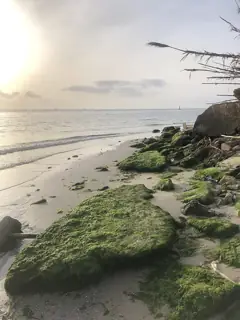
Have lunch, then return to the beach or a comfortable seaside café. Swimming is conditional on the day’s conditions, flags and local advice; a calm-looking sea is not a guarantee. Families should choose a supervised area when available and keep children within close reach. The afternoon also provides a fallback for an interrupted museum visit or a slower meal.
In winter, use this block for a longer café stop and another public-lane walk instead of expecting beach weather. Port El Kantaoui is an optional replacement outing for those who prefer a marina setting, not an essential extra after a full beach afternoon.
4pm–9pm: Last purchases and dinner
If you want olive-wood kitchenware or local food products, return to a shop you have already considered and compare quality and prices. Avoid antiquities or objects sold as archaeological finds. Keep the final dinner near your accommodation if departing early the next morning.
Three quieter worthwhile pauses
- The kasbah museum garden: a reflective finish after the galleries, within the paid museum visit.
- Public lanes near the upper medina walls: a slower alternative to the busiest souk corridors, best in daylight.
- A central seafront bench or café away from the main monument entrances: a reminder that Sousse is also a working coastal city.
Families, seasons and access
Strollers can be awkward on stepped or uneven medina routes; a carrier and short loops may work better. Do not promise tower access to children before assessing it. Ramadan can alter opening and meal arrangements, so reconfirm the plan locally. Summer calls for shade and a midday rest; winter can bring wind and rain. Check museum schedules again before travelling, and let current security or weather advice override this itinerary.
Verified: 16 October 2026.
Sources & travel planning
Research checked 2026-10-16. This date describes the guide’s research, not a guarantee of current conditions. Opening hours, prices, access, transport and travel advice can change. Recheck the official sources before booking and departure. Walking and journey times are planning estimates.
- discovertunisia.com ↗
- gov.uk ↗
- patrimoinedetunisie.com.tn ↗
- discovertunisia.com ↗
- whc.unesco.org ↗
- patrimoinedetunisie.com.tn ↗
Found a change? Contact Only36Hours about a correction.