36 Hours in Split: Roman Streets, Marjan Views and Dalmatian Evenings
The extraordinary thing about Split is that its ancient palace is also a neighbourhood. People cross Roman spaces on the way to work, coffee tables occupy old streets, and the sea is only a few steps away. Give that living centre an unrushed first day, then head west for Marjan and sculpture. Islands, waterfalls and distant fortresses are attractive additions to a longer holiday, but they would consume this short stay.
This itinerary begins at 9am and finishes after dinner the following day. Travel and walking ranges are approximate planning allowances. In high summer, heat and visitor numbers can make a short walk take much longer than the map suggests.
Get the arrival right
Choose a base near the old town without assuming that a room inside the palace walls has car access, a lift or quiet nights. Ask how far luggage must be carried. The ferry port, main intercity bus station and railway station are close to the centre, generally a 10–20-minute walk depending on the property.
The airport is outside the city. Allow roughly 40–75 minutes by road in normal-to-busy conditions, plus waiting and luggage time; severe summer congestion can exceed this. Public bus 37 serves the airport, but its Split stop is not the same as the main ferry-side bus station. Check the operator’s current stop map and day-specific timetable. Promet Split: airport line
Day one
9am–11am: Enter the palace as a city
Have breakfast, then begin at the Riva and walk through the palace’s public lanes toward the Peristyle. You do not need one admission ticket simply to enter the whole old town: individual monuments and museums have their own arrangements. A walking tour can help you distinguish the Roman framework from later buildings, but leave time afterward to retrace a street alone.
Look at the relationships between the gates, central spaces and waterfront rather than trying to photograph every stone. The tourism board identifies Diocletian’s Palace as the city’s essential Roman inheritance. Split Tourism: palace and principal sights
11am–1pm: A mausoleum turned cathedral
Choose the cathedral as the morning’s principal interior. Its reuse of Diocletian’s mausoleum gives the visit a powerful architectural focus. Allow about an hour, more if the ticket you choose includes additional components. Worship takes priority over sightseeing; check access rather than assuming a Sunday morning visit will work. Split Tourism: Cathedral of Saint Domnius
The bell tower is optional. Its stairs and exposure are not suitable for every child or adult, and the city looks good from ground level too. Inspect current entry rules before buying a tower-inclusive ticket. There is no reason to force a climb when tomorrow already includes a hillside view.
1pm–4pm: Lunch and a genuine rest
Eat away from the most congested corners if you want a less hurried meal. Dalmatian options may include pašticada with gnocchi, black risotto or grilled fish with greens. Ask whether fish is priced by weight and confirm the total before ordering. Soparnik, a chard-filled regional speciality, is worth trying when you find a vendor serving it, but availability is not guaranteed at every market stall.
After lunch, take a hotel break or sit somewhere shaded. The stone centre can feel hot even when the waterfront is breezy. A second museum fits here only if you actively prefer it to resting; this is not a blank space that needs filling.
4pm–9pm: Radunica and the Riva
Walk east into Radunica and the surrounding Lučac streets, about 10–20 minutes from the palace core. The smaller scale provides a contrast to the central monuments. Keep to public lanes and respect homes: quieter neighbourhoods are not an invitation to enter courtyards. The tourism board connects Radunica with the history of people arriving from Poljica. Split Tourism: Radunica
Return for dinner and a waterfront stroll. Reserve a restaurant if you have a particular one in mind during the busy season. An evening on the Riva is enough entertainment without a late boat trip added to the schedule.
Day two
8:30am–11am: A measured Marjan climb
After breakfast, approach Marjan through Varoš. Allow roughly 25–40 minutes from the Riva to the first principal viewpoint, including stairs and pauses. Stop there if that is sufficient; the summit and a full peninsula circuit are separate ambitions. Carry water and use shoes with grip rather than beach footwear.
The tourism board describes Marjan as a park-forest with viewpoints and walking paths immediately beside the city. Follow current signs and any fire, weather or maintenance restrictions. In intense heat, keep the outing short and return before the hottest part of the day. Split Tourism: Marjan
11am–2pm: Sculpture by the sea
Descend before continuing west to the Meštrović Gallery, allowing additional walking time or using a taxi if the morning’s climb was enough. Plan 75–100 minutes for the house, sculpture and grounds. This gives the trip a different artistic vocabulary from the Roman centre.
The museum’s official page lists Monday and public-holiday closures, a last-entry cutoff and occasional date-specific changes. It also explains that the ticket includes the separate Crikvine–Kaštilac site; check its access before assuming both are available. Meštrović Gallery: visitor information
2pm–5pm: Lunch and Sustipan
After lunch, choose Sustipan for a quieter green pause on the way back toward town, allowing roughly 20–35 minutes for walking between the gallery area and the park. Its outlook over the sea and harbour is the attraction. Stay back from cliff edges and keep children close. Split Tourism: Sustipan
If the gallery is closed, lengthen this outdoor block or replace it with an open city museum. Poor weather is a reason to change the route, not continue an exposed coastal walk simply to finish a plan.
5pm–9pm: Finish in the old town
Return to the centre, rest and have a final dinner. If leaving by ferry or bus, verify the actual terminal, boarding requirements and service status before the meal. Wind and seasonal timetables can affect marine travel, so avoid a tight connection based on a summer schedule viewed in winter.
Three quieter worthwhile places
- Radunica: a short residential-lane detour east of the palace.
- Sustipan: green space and sea views without a full Marjan circuit.
- Meštrović Gallery grounds: a calmer artistic setting when the museum is open.
Families and seasonal reality
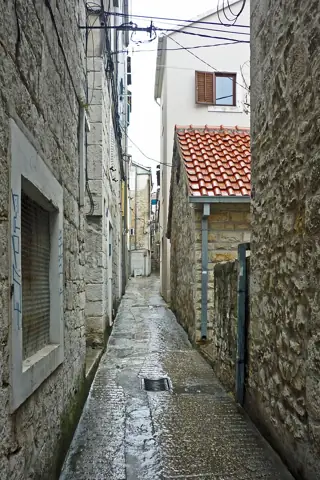
Use a carrier for stair-heavy sections and choose a shorter Marjan route with small children. The palace’s paving can be slippery when wet. Summer needs water, shade and reservations; winter brings reduced services and potentially strong coastal wind. This itinerary does not rely on swimming, a tower climb or an island excursion, so it remains useful when those activities are unsuitable.
Verified: 16 October 2026.
Sources & travel planning
Research checked 2026-10-16. This date describes the guide’s research, not a guarantee of current conditions. Opening hours, prices, access, transport and travel advice can change. Recheck the official sources before booking and departure. Walking and journey times are planning estimates.
- promet-split.hr ↗
- visitsplit.com ↗
- visitsplit.com ↗
- visitsplit.com ↗
- visitsplit.com ↗
- mestrovic.hr ↗
- visitsplit.com ↗
Found a change? Contact Only36Hours about a correction.